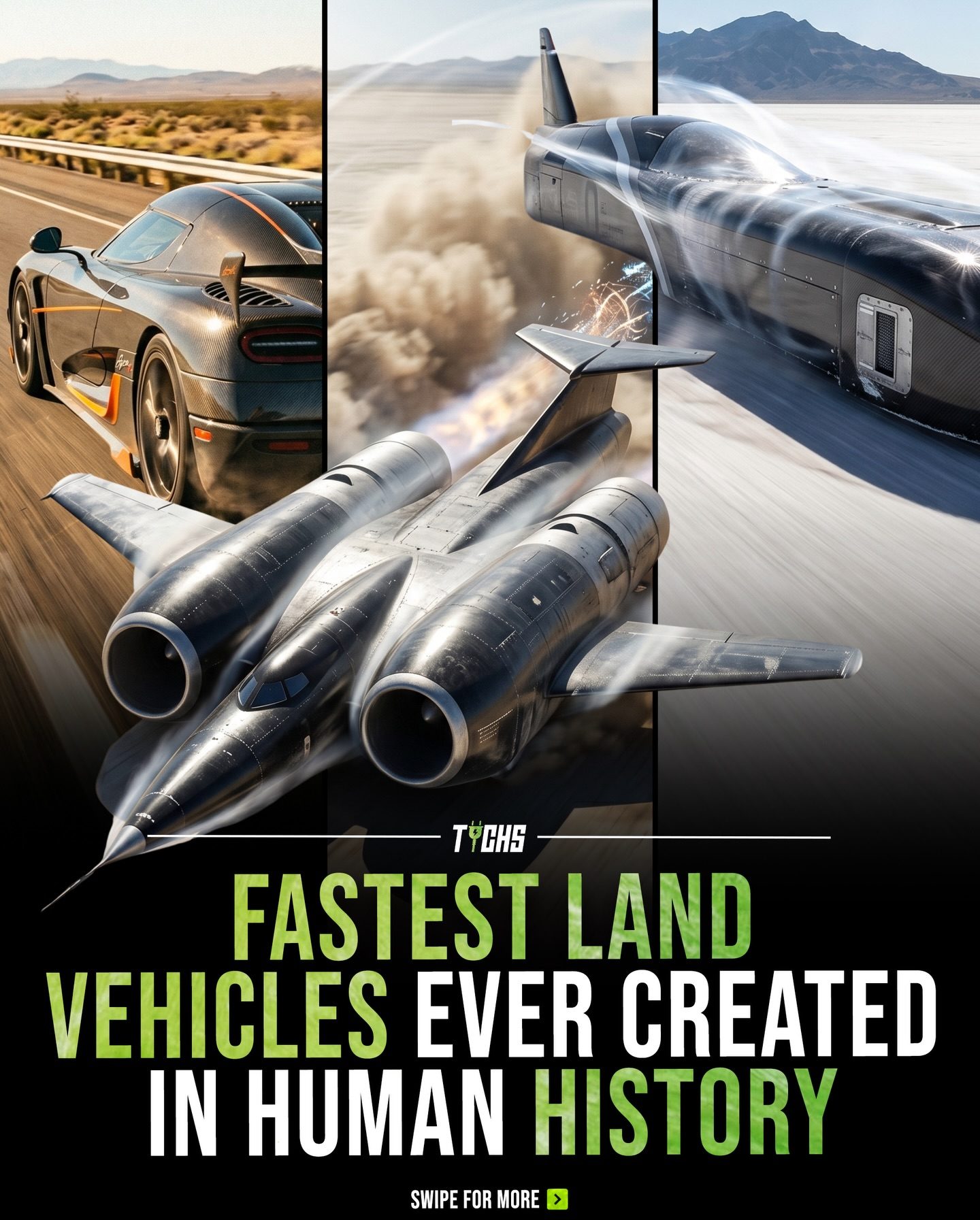
The Evolution of Speed: Fastest Land Vehicles Ever Created
Human ingenuity has always been fascinated by speed, especially when it comes to land vehicles. The pursuit of faster and faster machines has driven significant advancements in engineering, aerodynamics, and propulsion technology. From hypercars to experimental rockets, let's explore some of the fastest land vehicles ever created, focusing on iconic examples like the Venturi Buckeye Bullet 3 and the Bloodhound LSR.
Context: Why Land Vehicle Speed Matters
The quest for speed in land vehicles is not just about breaking records. It’s a testament to human innovation and the relentless pursuit of pushing technological boundaries. These vehicles are more than just machines; they are symbols of human achievement in engineering, aerodynamics, and propulsion. Each new record serves as a benchmark, inspiring future generations of engineers and scientists to innovate and build even more advanced technologies. Additionally, the technologies developed for these high-speed vehicles often have applications in other fields, such as aerospace and automotive industries, contributing to broader advancements in transportation and safety.
The Fastest Land Vehicles
Hypercars: The Pinnacle of Street Legal Speed
Hypercars represent the apex of high-speed, street-legal vehicles. These machines are designed to combine cutting-edge technology with luxurious, high-performance capabilities. Two standout examples are the Koenigsegg Agera RS and the Bugatti Chiron Super Sport 300+. These hypercars have pushed the limits of what is possible in terms of speed and performance, often setting world records.
- Koenigsegg Agera RS: This Swedish hypercar is renowned for its sleek design and incredible speed. It achieved a top speed of 457.95 km/h, making it one of the fastest production cars ever produced.
- Bugatti Chiron Super Sport 300+: This French hypercar is another marvel of engineering. It reached a top speed of 490.48 km/h, setting a new world record for the fastest street-legal production car. The Chiron Super Sport 300+ showcases Bugatti’s commitment to pushing the limits of speed and performance.
Experimental Machines: Pushing the Boundaries
Beyond hypercars, experimental land vehicles have been created specifically to break speed records. These machines often incorporate unconventional designs and advanced propulsion systems, such as jet or rocket engines.
- Venturi Buckeye Bullet 3: This experimental vehicle reached an extraordinary speed of 549.43 km/h, making it one of the fastest land vehicles ever built. The Venturi Buckeye Bullet 3 showcases the incredible potential of electric propulsion and aerodynamics for high-speed transportation.
- JCB Dieselmax: This diesel-powered machine showcased the potential of alternative fuel sources in high-speed applications. It set a new land speed record for diesel-powered vehicles, demonstrating that alternative energy sources can achieve remarkable speeds.
Rocket and Jet-Powered Vehicles: Breaking the Sound Barrier
The ultimate achievement in land vehicle speed is breaking the sound barrier. Several vehicles have attempted this feat, but only a few have succeeded.
- Blue Flame: This rocket-powered vehicle reached speeds of over 1190 km/h, showcasing the incredible potential of rocket propulsion for high-speed land travel.
- Bloodhound LSR (Demo): This jet-powered vehicle reached 1010.6 km/h, demonstrating the capabilities of modern jet technology in achieving unprecedented speeds.
- Thrust2: This vehicle, powered by two Rolls-Royce Avon jet engines, achieved a speed of 627.6 km/h, representing a significant milestone in the development of jet-powered land vehicles.
- ThrustSSC: This legendary rocket-powered vehicle made history by becoming the first car to officially break the sound barrier on land. It reached a speed of over 1227 km/h, redefining what is possible in terms of land vehicle speed.
Practical Tips for Understanding Land Vehicle Speed
Understanding the speed of land vehicles involves more than just knowing the top speeds. It’s essential to consider the design, propulsion, and aerodynamics of these vehicles.
Testing and Development
The development of high-speed land vehicles involves rigorous testing and iteration. Engineers must carefully design and test each component, ensuring that it can withstand the extreme forces and conditions experienced at high speeds. This process often involves wind tunnel testing, computational fluid dynamics (CFD) simulations, and real-world test runs.
Propulsion Systems
Different propulsion systems offer unique advantages and challenges. For example, rocket-powered vehicles can achieve extremely high speeds but require careful management of fuel and thrust. Jet-powered vehicles, on the other hand, offer more sustained performance and better control at high speeds.
Aerodynamics
Aerodynamics play a crucial role in achieving high speeds. Streamlined designs and advanced materials help reduce drag, allowing vehicles to move more efficiently through the air. This is particularly important for land vehicles, which must navigate through both air and land resistance.
Safety Considerations
Given the extreme conditions experienced at high speeds, safety is a paramount concern. High-speed vehicles often incorporate advanced safety features, such as reinforced chassis, sophisticated braking systems, and robust fuel management systems. Ensuring the safety of the driver and the vehicle is crucial, as the risks involved in high-speed travel are significant.
Important Takeaways
The evolution of high-speed land vehicles is a testament to human ingenuity and the relentless pursuit of technological advancements. From hypercars to experimental and rocket-powered vehicles, each new achievement represents a significant milestone in engineering, aerodynamics, and propulsion technology. Understanding the design, propulsion, and safety considerations involved in these vehicles provides valuable insights into the future of high-speed transportation.
Conclusion
The pursuit of speed in land vehicles continues to drive innovation and technological advancements. As engineers and scientists push the boundaries of what is possible, we can expect to see even more impressive achievements in the future. These high-speed vehicles are not just symbols of human achievement but also catalysts for broader advancements in transportation and safety. Whether it’s a hypercar, an experimental machine, or a rocket-powered vehicle, each new record sets the stage for the next groundbreaking innovation.
Watch the Reel
Questions readers ask
What makes the Venturi Buckeye Bullet 3 significant in the history of fast land vehicles?
The Venturi Buckeye Bullet 3 is significant because it holds the record as the fastest electric land vehicle. Its speed of 341.4 mph showcases how electric technology can compete with traditional combustion engines in high-speed engineering. The vehicle was designed by engineering students, making it a remarkable testament to innovation and collaboration.
How does the Bugatti Chiron Super Sport 300+ compare to other supercars in terms of speed?
The Bugatti Chiron Super Sport 300+ is notable for being one of the fastest production supercars, achieving a top speed of 304.77 mph. This speed places it among the elite in the world of hypercars, demonstrating the pinnacle of current automobile engineering and aerodynamics.
What is the significance of the Bloodhound LSR in the realm of land speed records?
The Bloodhound LSR is a jet-powered car designed to break land speed records. Its goal is to reach 1,000 mph, which would shatter existing records and push the boundaries of what is achievable in high-speed engineering. The project aims to inspire future innovations in propulsion technology and aerodynamic design.
Why is the Thrust SSC renowned in the history of fastest land vehicles?
The Thrust SSC is renowned for being the first land vehicle to break the sound barrier, achieving a speed of 763.035 mph in 1997. This historic achievement marked a significant milestone in the world of speed, showcasing the potential of jet-powered cars and setting a new benchmark for future high-speed engineering endeavors.
What role do experimental rockets play in the evolution of fastest land vehicles?
Experimental rockets, such as those used in projects like the Bloodhound LSR, play a crucial role in advancing high-speed engineering. They enable researchers to test and develop new technologies in propulsion and aerodynamics, often pushing the limits of what is possible in land vehicle speeds. These vehicles inspire future innovations and contribute to the ongoing quest for speed.
How do the speeds of the fastest land vehicles compare to those of aircraft?
While the fastest land vehicles, like the Bloodhound LSR, aim to reach speeds of over 1,000 mph, they are still significantly slower than aircraft. For example, the fastest jets can reach speeds exceeding Mach 3 (approximately 2,300 mph), showcasing the different technological challenges and engineering requirements between land and air travel.
What are some of the key technological advancements driven by the pursuit of the fastest land vehicles?
The pursuit of the fastest land vehicles has driven advancements in various fields, including aerodynamics, propulsion technology, and materials science. Innovations in these areas have not only improved the performance of land vehicles but have also contributed to developments in other industries, such as aerospace and automotive engineering.
Related deep dives
Similar reads based on topic and creator.




Recent articles
Fresh deep dives from the latest Reels we unpacked.




Comments
Be the first to comment.