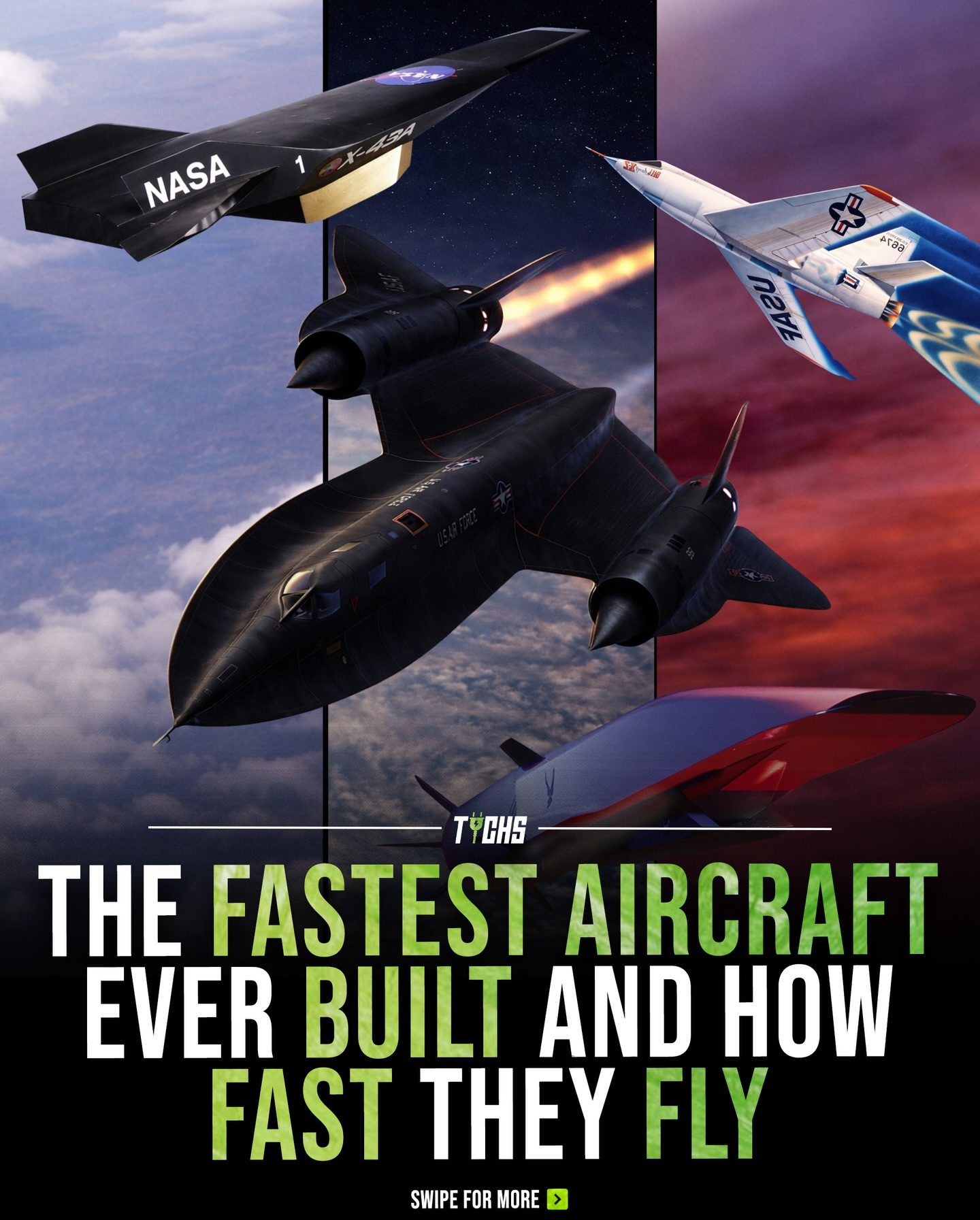
The Fastest Aircraft Ever Built
Aircraft have always been a testament to human ingenuity, but some have pushed the boundaries of speed to unprecedented heights. These record-breaking machines are not just about speed; they represent breakthroughs in materials, propulsion, and aerodynamics that have shaped modern aerospace research, future hypersonic travel, and military innovation. From the Bell X-2 to the SR-71, these aircraft have redefined what is possible in aviation.
Context / Why this matters
Understanding the fastest aircraft ever built offers a glimpse into the cutting-edge technologies and engineering feats that drive aerospace advancements. These aircraft are more than just machines; they are symbols of human ambition and technological prowess. They have paved the way for future hypersonic travel and military innovation, pushing the limits of what is possible in aviation.
The exploration of these aircraft highlights the rapid evolution of aviation technology. These machines have not only set speed records but also paved the way for future innovations in aerodynamics, materials science, and propulsion systems. The advancements achieved in these areas have influenced modern aircraft design and the development of future hypersonic capabilities.
Main discussion
Experimental Jets
One of the earliest experimental jets to break the Mach 3 barrier was the Bell X-2. The Bell X-2, developed in the 1950s, was a rocket-powered aircraft designed to explore the limits of high-speed flight. It achieved a top speed of approximately 3,370 km/h (Mach 3.2), showcasing the potential of experimental jets in pushing the boundaries of aviation.
The Bell X-15, built in the mid-20th century, is another experimental jet that achieved remarkable speeds. This aircraft, a collaboration between NASA, the U.S. Air Force, and the U.S. Navy, reached speeds of around 7,274 km/h (Mach 6.72). The X-15's hypersonic capabilities were a significant milestone in aviation, demonstrating the feasibility of high-speed flight and paving the way for future hypersonic aircraft.
Reconnaissance Legends
The SR-71, often referred to as the "Blackbird," was a high-speed reconnaissance aircraft that played a crucial role in military intelligence. The SR-71, which was derived from the A-12, was capable of reaching speeds of over 3,540 km/h (Mach 3.3) and was renowned for its ability to outfly and outmaneuver interceptors. The SR-71's advanced design and capabilities made it one of the most iconic aircraft in aviation history.
The MiG-25 was a Soviet interceptor designed for high-speed intercept missions. The MiG-25 had the potential to achieve speeds of approximately Mach 2.8, making it one of the fastest combat aircraft of its time. Despite its relatively short operational life in combat, the MiG-25's design and capabilities continue to influence modern jet fighters.
Hypersonic Breakthroughs
The X-43A, a hypersonic experimental aircraft developed by NASA, achieved speeds of nearly 11,000 km/h (Mach 9.6). This aircraft was designed to test the viability of scramjet technology, which uses the forward motion of the aircraft to compress air for combustion, allowing for sustained hypersonic flight. The X-43A's success paves the way for future hypersonic aircraft and space travel technologies.
The X-51A WaveRider, an unmanned hypersonic aircraft, reached speeds of around 6,400 km/h (Mach 5.1) during a test flight. The X-51A utilized a scramjet engine to achieve sustained hypersonic flight, demonstrating the potential for future high-speed, long-range military applications. The X-51A's successful flight tests have given rise to further research and development in hypersonic technology.
In 2004, the XB-70 Valkyrie reached speeds of approximately 3,220 km/h (Mach 3.07). Then, the North American X-15 achieved speeds of around 7,274 km/h (Mach 6.72) in 1967. These aircraft, along with others, symbolize the relentless pursuit of speed and the continuous advancement of aviation technology.
Practical tips
The evolution of high-speed aircraft has yielded valuable insights into aerodynamics, materials science, and propulsion systems. For engineers and aviation enthusiasts, understanding the technologies behind these aircraft can provide practical tips for future innovations:
-
Aerodynamics: Study the design of these aircraft to understand how to reduce drag and improve stability at high speeds.
-
Materials Science: Research the materials used in these aircraft, such as advanced composites and heat-resistant alloys, to create lighter and more durable materials for future aircraft.
-
Propulsion Systems: Explore the different propulsion systems used in these aircraft, such as rocket engines and scramjet technology, to develop more efficient and powerful engines for future aircraft.
Important takeaways
The fastest aircraft ever built have achieved remarkable speeds, but they also represent significant advancements in materials, propulsion, and aerodynamics. These aircraft have paved the way for future hypersonic travel and military innovation, demonstrating the potential of human engineering when limits are constantly challenged. They have laid the foundation for future aircraft development, pushing the boundaries of what is possible in aviation.
Conclusion
The fastest aircraft ever built are more than just machines; they are symbols of human ambition and technological prowess. From the Bell X-2 to the SR-71, these aircraft have set speed records and paved the way for future innovations in aerodynamics, materials science, and propulsion systems. The advancements achieved in these areas have influenced modern aircraft design and the development of future hypersonic capabilities.
Watch the Reel
Questions readers ask
What is the SR-71 Blackbird known for?
The SR-71 Blackbird is renowned for being one of the fastest aircraft ever built, capable of reaching speeds over Mach 3. It was a strategic reconnaissance aircraft known for its exceptional speed and high-altitude capabilities, making it a significant part of military and aerospace history.
What role did the Bell X-2 play in aerospace history?
The Bell X-2 was a rocket-powered aircraft designed to explore the capabilities of supersonic flight. It played a pivotal role in understanding the challenges of hypersonic flight, including the effects of high speeds on aircraft structures and the development of materials. The Bell X-2 reached a speed of over Mach 3, setting a new world speed record at the time.
How have experimental aircraft like the Bell X-2 and SR-71 influenced modern aerospace engineering?
These experimental aircraft have significantly influenced modern aerospace engineering by pushing the boundaries of what is possible in terms of speed, aerodynamics, and materials. They have provided valuable data and insights that have been incorporated into the development of advanced military and civilian aircraft and hypersonic travel.
What are some key technologies that have emerged from the development of the fastest aircraft?
The development of the fastest aircraft has led to advancements in aerodynamics, propulsion systems, and materials science. These technologies include improved aerodynamics for reduced drag, advanced propulsion systems for high-speed flight, and new materials that can withstand extreme temperatures and pressures.
What is the significance of hypersonic travel in the context of these fastest aircraft?
Hypersonic travel, which involves speeds greater than Mach 5, is a natural progression from the advancements made by these fastest aircraft. The lessons learned from aircraft like the SR-71 and Bell X-2 are being applied to develop new hypersonic vehicles for both military and commercial purposes, aiming to reduce travel times significantly.
What are some key military applications of the fastest aircraft?
The fastest aircraft, such as the SR-71, have been instrumental in military reconnaissance and intelligence gathering. Their high speeds and altitudes allowed them to evade enemy detection and intercept valuable information, making them crucial for national security. Additionally, the technologies developed for these aircraft have influenced the design of modern military aircraft, enhancing their speed and capabilities.
What challenges do engineers face when designing hypersonic aircraft?
Engineers designing hypersonic aircraft face several challenges, including extreme heat generated by friction, aerodynamic instability, and the need for advanced control systems. Materials that can withstand high temperatures and advanced propulsion systems, such as scramjets, are also critical areas of research in this field. The lessons from past high-speed aircraft help address these challenges.
Related deep dives
Similar reads based on topic and creator.




Recent articles
Fresh deep dives from the latest Reels we unpacked.




Comments
Be the first to comment.