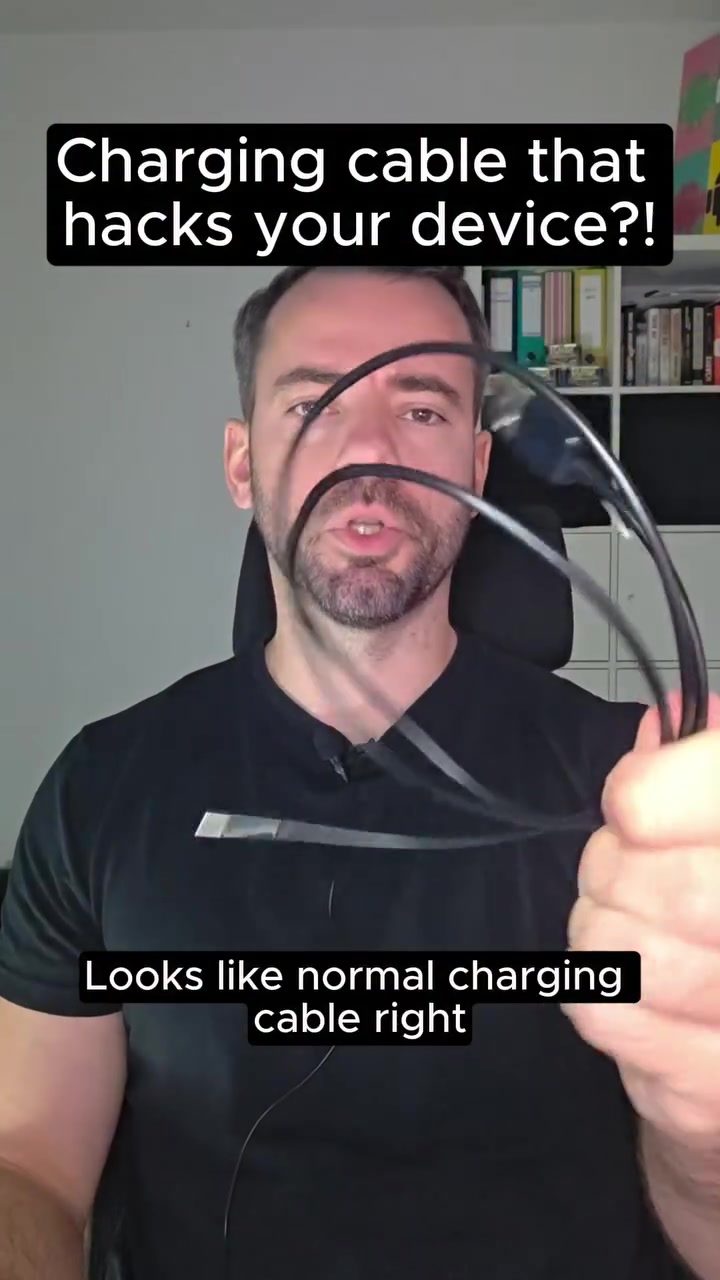
Charging Cables: Hidden Dangers and Ethical Hacking Tools
Charging cables are ubiquitous in today's digital world, and yet, they can be a dangerous tool of the trade, a gateway for cyber attacks. One such cable, the Evil Crow Cable, demonstrates just how vulnerable devices can be to malicious intent.
Why This Matters
Technology and devices are critical to daily life, and how we power them is equally important. Understanding the potential dangers that can be hidden in something as simple as a charging cable is crucial for anyone who owns a device. After all, we plug devices in everywhere: offices, airports, and even at home. The ubiquitous charging cable can turn from a convenience into a liability.
Capabilities of the Evil Crow Cable
Malicious Capabilities
The Evil Crow Cable is a USB device disguised as a normal charging cable. It can perform several malicious actions once plugged into a vulnerable computer or phone:
- Detect Operating System: This capability allows the cable to tailor its attack based on the OS it is connected to.
- Inject Keystrokes: Acting as a keyboard, it can inject commands and execute scripts on the connected device, potentially downloading malware or stealing passwords.
- Remote Control: The cable can be controlled over Wi-Fi, so the attacker doesn't need to be physically present to carry out the attack.
- Automatic Attacks: Even when blocked, the cable can automatically start predefined attacks, making it a persistent threat.
Real-World Scenarios
Attackers could exploit the device in various real-world scenarios, including:
- Public Plugs: Leaving these cables in public places like airports, coffee shops, or libraries where people frequently charge their devices.
- Social Engineering: Swapping out legitimate cables with Evil Crow Cables, or gifting them as part of a broader social engineering attack.
- Unsuspecting Victims: The cable can compromise devices, steal credentials, or install spyware without the user noticing.
The Good Side: Ethical Hacking and Penetration Testing
The Evil Crow Cable can be a useful tool for ethical hackers and penetration testers. Cybersecurity professionals can use it to test the vulnerabilities of their systems and networks, ultimately improving their defenses. The open-source nature of the cable, inspired by the NSA's Cottonmouth-I, makes it an accessible and cost-effective tool for ethical hackers.
Practical Tips
Protecting Yourself
While the dangers of malicious charging cables are clear, there are steps to protect yourself:
- Avoid Unknown Cables: As you wouldn’t plug any unknown USB device into your PC, the same caution should be applied to charging cables. Stick to trusted, known cables.
- Use Data USB Blockers: When charging in public, use data USB blockers. These prevent data transfer while still allowing your device to charge, adding a layer of security.
- Stay Vigilant: Be mindful of where and how you charge your devices. Always use trusted power sources and cables.
Testing Your Device
If you are a cybersecurity professional or tech enthusiast, consider using tools like the Evil Crow Cable for ethical hacking and penetration testing. However, it is essential to have explicit permission to test the security of a system, and to understand the legal and ethical implications of your actions.
Important Takeaways
- Normal Cables Can be Dangerous: Even something as simple as a cable can betray you. Always be cautious and vigilant.
- Ethical Hacking Tools: The Evil Crow Cable is a valuable tool for penetration testing and ethical hacking, helping to identify and mitigate vulnerabilities.
- Protect Your Devices: Avoid unknown cables at any cost, and use data USB blockers when charging in public.
Conclusion
Understanding the potential of charging cables as both a security threat and a tool for ethical hacking is crucial in an increasingly interconnected world. Always remain cautious and knowledgeable about the devices and accessories you use, and consider the implications of using such tools in a responsible and ethical manner. Stay safe.
Watch the Reel
Questions readers ask
What is the Evil Crow Cable and why is it a concern?
The Evil Crow Cable is a specialized USB cable designed for cyberattacks, it can be used to hack into devices through public charging. It's a concern because it exploits the trust users place in everyday charging cables, potentially compromising personal and sensitive information.
How can a normal USB cable be hacked?
Normal USB cables can be modified to include components that enable data injection, malware installation, or even unauthorized data extraction. This can be done through the addition of small circuits or microprocessors that are not visible to the naked eye.
What are the potential risks of using public charging stations?
Public charging stations can pose significant risks, including the potential for data theft, malware installation, and unauthorized access to your device. This is especially true if the charging cable or station has been tampered with or is a device like the Evil Crow Cable.
How can I protect my device from charging cable hacking?
To protect your device, always use trusted and original USB cables, either purchased from reliable manufacturers or supplied by the device manufacturer themselves. Be cautious of public charging stations and consider using power-only USB adapters.
What should I do if I suspect a charging cable is hacked?
If you suspect a charging cable is compromised, stop using it immediately. If you've already used it, run a comprehensive security scan on your device to check for any malware or unauthorized access. Consider seeking professional help to ensure your device is safe and secure.
How can I detect if a charging cable has been tampered with?
Detecting a tampered charging cable can be challenging, as modifications can be small and subtle. However, look for any signs of disassembly, such as scratches, unusual markings, or loose wires. If in doubt, it's best to discard the cable and use a new, trusted one.
Related deep dives
Similar reads based on topic and creator.




Recent articles
Fresh deep dives from the latest Reels we unpacked.




Comments
Be the first to comment.