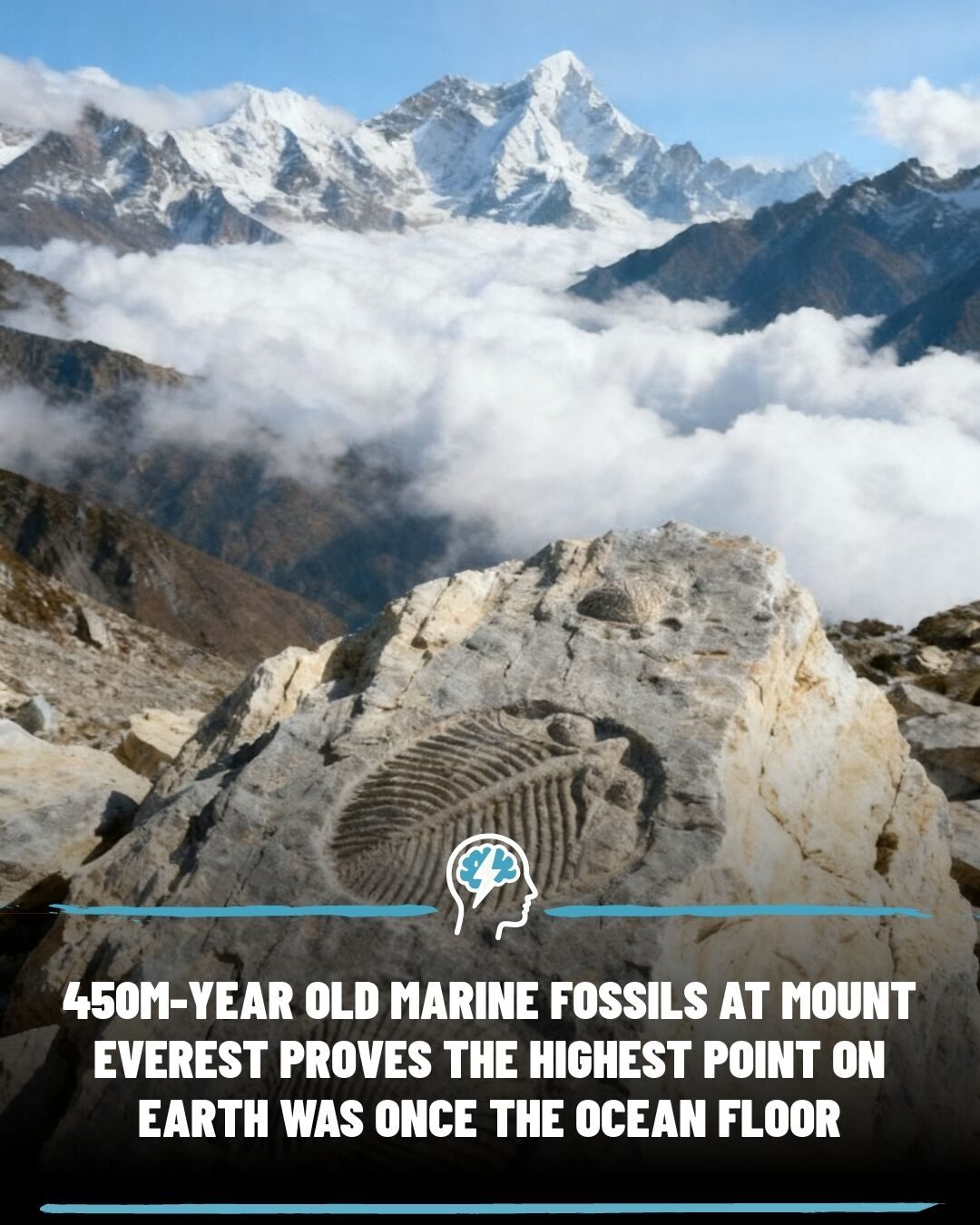
Mount Everest Fossils
Mount Everest, the highest peak on Earth, stands as a monument to the power of geological forces. Its summit, nearly 9 kilometers above sea level, is home to an unexpected revelation: fossils of marine creatures. These fossils, including brachiopods, trilobites, and crinoids, tell a story of the mountain's ancient past, long before it towered over the world.
Context: Why this matters
Understanding the geological history of Mount Everest offers insights into the broader processes that shape our planet. The presence of marine fossils at the highest point on Earth challenges our perception of permanence and highlights the dynamic nature of the Earth's crust.
The Geological Journey
The Ancient Ocean Floor
The marine fossils found on Mount Everest are approximately 50 million years old. These fossils, dating back to a time when the highest point on Earth was once an ancient ocean floor, are remnants of a past world. The specimens, including brachiopods, trilobites, and crinoids, are evidence of a time when the Himalayas were part of an ancient seafloor.
The Paleo-Tethys Ocean
The fossils found on Mount Everest are not merely old; they are evidence of a much older geological history. Scientists have dated these marine specimens to approximately 450 to 520 million years old. They originated from an ancient body of water called the Paleo-Tethys Ocean. This ocean existed long before the more commonly referenced Tethys Sea, providing a window into the Earth's early geological history.
The Power of Tectonic Plates
The story of how the ocean floor ended up on top of the world involves the slow but powerful movement of tectonic plates. Around 50 million years ago, the Indian subcontinent, which had been drifting northward for millions of years, collided with the Eurasian plate. The collision did not stop when the landmasses met. The pressure continued, forcing ancient seafloor sediments upward and eventually creating the Himalayan mountain range.
A Dynamic Landscape
The discovery of marine fossils on Mount Everest reminds us that geological time operates on scales almost impossible to comprehend. Continents drift, oceans open and close, and what was once a quiet seafloor can become the roof of the world. The Himalayas, including Mount Everest, are still rising by approximately 5 millimeters each year as the Indian plate continues its slow push northward.
The Paleo-Tethys Ocean
An Ancient Body of Water
The Paleo-Tethys Ocean was a vast body of water that existed long before the more commonly referenced Tethys Sea. This ancient ocean played a crucial role in the geological history of the Earth. The fossils found on Mount Everest provide a glimpse into the life that once thrived in this underwater world.
The Fate of the Paleo-Tethys
The Paleo-Tethys Ocean eventually closed as a result of the movement of tectonic plates. The collision of the Indian and Eurasian plates led to the formation of the Himalayan mountain range, including Mount Everest. The fossils found on the mountain are a testament to the dynamic nature of our planet and the ever-changing landscape.
Practical Tips
Understanding Geological Time
Geological time operates on scales that are almost impossible to comprehend. The discovery of 500 million-year-old fossils on the highest point on Earth highlights the vastness of geological time and the dynamic nature of our planet. Understanding this time scale can help us appreciate the processes that shape our world.
Exploring the Himalayas
The Himalayas are a treasure trove of geological history. Exploring the region can provide insights into the Earth's past and the forces that shape its present. Whether through hiking, mountaineering, or geological studies, the Himalayas offer a unique opportunity to explore the Earth's dynamic landscape.
Appreciating the Role of Tectonic Plates
The movement of tectonic plates is a fundamental process that shapes our planet. The collision of the Indian and Eurasian plates led to the formation of the Himalayan mountain range, including Mount Everest. Understanding the role of tectonic plates can help us appreciate the dynamic nature of our planet and the processes that shape its landscape.
Important Takeaways
The discovery of 500 million-year-old marine fossils on Mount Everest provides a unique window into the Earth's geological history. The fossils, along with the movement of tectonic plates, tell a story of a dynamic planet where continents drift, oceans open and close, and landscapes are constantly changing. The Himalayas, including Mount Everest, are a testament to the power of geological forces and the ever-changing nature of our world.
Conclusion
Mount Everest, the highest peak on Earth, stands as a monument to the power of geological forces. The presence of marine fossils at its summit tells a story of an ancient ocean floor that was pushed upward by the collision of tectonic plates. This discovery highlights the dynamic nature of our planet and the ever-changing landscape that surrounds us. The next time you see a mountain, remember that it is simply a snapshot in an ongoing transformation spanning hundreds of millions of years.
Watch the Reel
Questions readers ask
What types of fossils are found on the summit of Mount Everest?
The summit of Mount Everest is home to fossils of various marine creatures, including brachiopods, trilobites, and crinoids. These fossils offer a glimpse into the oceanic past of the region, providing clues about the environment and life forms that existed millions of years ago.
How did marine fossils end up at the top of the world's highest peak?
The marine fossils found on Mount Everest were once part of an ancient ocean floor. Over millions of years, the powerful forces of plate tectonics pushed these oceanic remnants upward, eventually forming the towering peak we see today.
What can the fossils on Mount Everest tell us about the Earth's geological history?
The fossils on Mount Everest reveal the dynamic nature of the Earth's crust. They show that the highest peak on Earth was once part of an ancient ocean floor, highlighting the tremendous geological changes that have occurred over millions of years.
Why is the discovery of marine fossils on Mount Everest significant?
The presence of marine fossils at the summit of Mount Everest challenges our perception of permanence in the Earth's geography. It underscores the continuous and powerful geological forces that have shaped and continue to shape our planet.
How old are the marine fossils found on Mount Everest?
The marine fossils found on Mount Everest date back hundreds of millions of years. These remnants of ancient sea life provide a tangible link to the Earth's distant past and offer valuable insights into the geological processes that have occurred over vast periods of time.
What geological processes are responsible for bringing the ancient ocean floor to the top of Mount Everest?
The primary geological processes responsible for this phenomenon are plate tectonics and continental collision. Specifically, the Indian tectonic plate collided with the Eurasian plate, gradually pushing the ancient ocean floor upwards, forming the Himalayan mountain range, including Mount Everest.
What other marine creatures' fossils might be found on Mount Everest?
While brachiopods, trilobites, and crinoids are among the fossils discovered, other marine creatures' fossils might also be present. These could include various types of mollusks, corals, and other invertebrates that inhabited the ancient ocean floor.
Related deep dives
Similar reads based on topic and creator.




Recent articles
Fresh deep dives from the latest Reels we unpacked.




Comments
Be the first to comment.