Young People in Central and Southeastern Europe Lead in Happiness
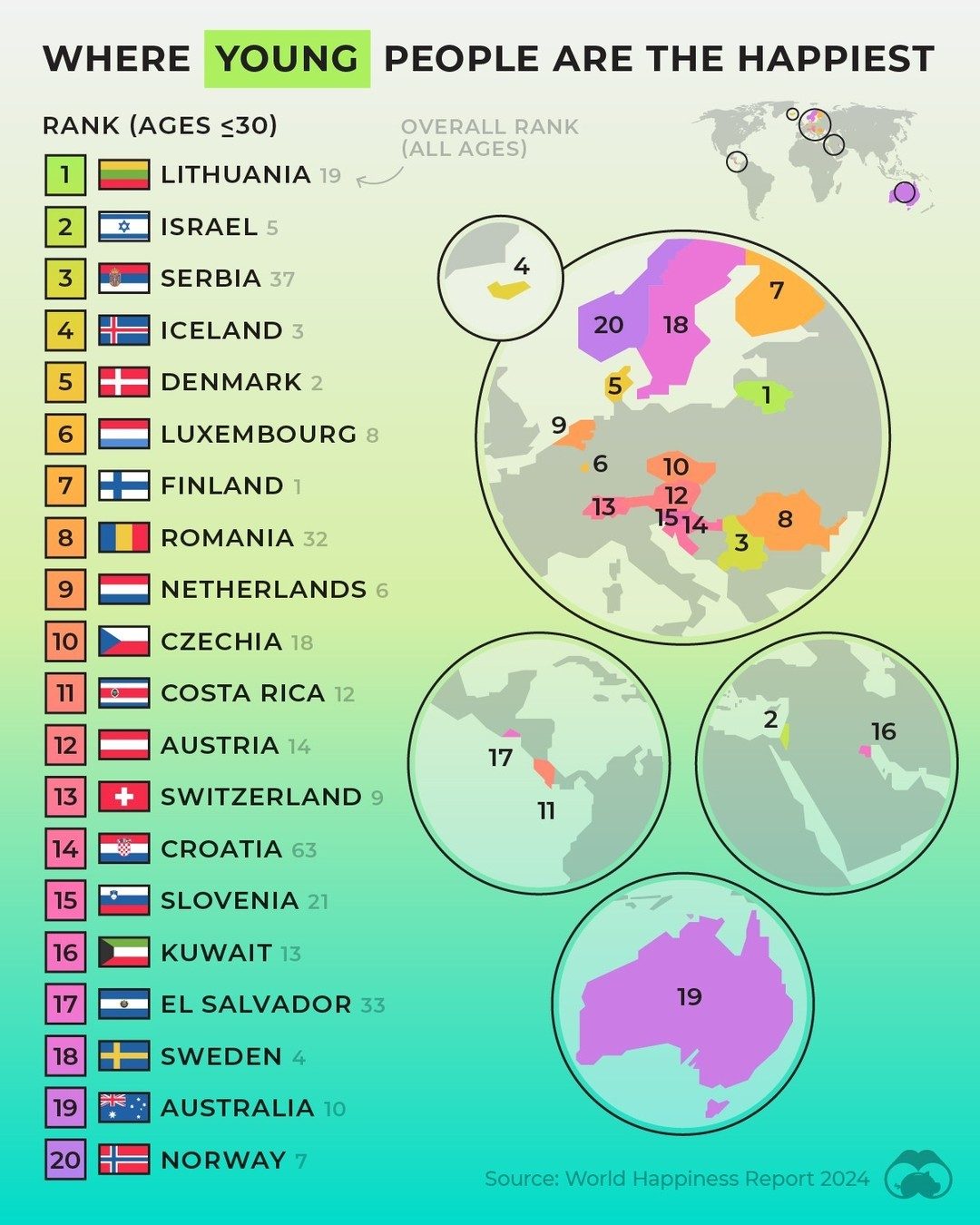
Young people in Central and Southeastern Europe are notably happy, with Lithuania taking the top spot. The World Happiness Report 2024 provides a comprehensive look at how different age groups perceive life satisfaction, revealing significant differences across various regions. Among those under 30, there is a distinct pattern of high life satisfaction, especially in certain European countries. However, this perception varies widely among older age groups, underscoring the complex interplay between age, geography, and well-being.
Why This Matters
Understanding the factors that contribute to happiness and life satisfaction among young people is crucial. This insight can guide policymakers, educators, and communities in fostering environments that promote well-being. The World Happiness Report 2024, produced by Gallup, the Oxford Wellbeing Research Centre, the UN Sustainable Development Solutions Network, and the WHR’s Editorial Board, provides valuable data to understand these dynamics.
Top Countries for Young People's Happiness
Lithuania
Lithuania tops the list for young people's happiness, ranking 19th overall. This indicates that while the country performs exceptionally well for younger demographics, there is room for improvement in overall life satisfaction.
Israel
Israel ranks 5th in happiness for young people, demonstrating a high level of life satisfaction among its under-30 population. This ranking places Israel significantly higher than its overall global happiness rank, highlighting the positive outlook of its youth.
Serbia
Serbia stands out with a notable disparity in happiness rankings. It ranks 3rd for the under-30 group, showcasing a high level of life satisfaction among its young population. However, it dips to 54th among seniors aged 60 and above, indicating a significant age-related gap in life satisfaction. This discrepancy suggests that the challenges faced by Serbia's older population may differ from those of younger generations, or that their experience of life satisfaction varies considerably due to age-related factors.
Iceland
Iceland ranks 3rd in overall happiness and 3rd for young people's happiness, indicating a consistent high level of life satisfaction across all age groups. This consistency in rankings suggests that Iceland's policies and societal structures effectively support well-being across generations.
Denmark and Finland
Denmark and Finland also feature prominently in happiness rankings. Denmark ranks 2nd overall and 2nd for young people's happiness, while Finland ranks 1st overall and 1st for young people's happiness. These rankings underscore the strong social welfare systems and high quality of life in these Nordic countries, which contribute to the well-being of both young and older people.
Other Notable Countries
- Netherlands: Ranks 6th for young people's happiness and 6th overall.
- Romania: Ranks 32nd for young people's happiness and 32nd overall.
- Czechia: Ranks 18th for young people's happiness and 18th overall.
- Croatia: Ranks 63rd for young people's happiness and 63rd overall, indicating a lower level of life satisfaction compared to other countries.
- Sweden: Ranks 4th for young people's happiness and 4th overall, maintaining a high level of well-being across age groups.
- Australia: Ranks 10th for young people's happiness and 10th overall, reflecting a consistent level of satisfaction.
Countries with Significant Disparities
Some countries show notable differences between their overall happiness rankings and those for young people. For example, Luxembourg ranks 8th for young people's happiness but 8th overall, indicating a similar level of satisfaction across age groups. Costa Rica ranks 12th for young people's happiness and 12th overall, while Austria ranks 14th for young people's happiness and 14th overall. These countries demonstrate a balanced approach to well-being, with consistent rankings across different age demographics.
Key Factors Influencing Happiness
The World Happiness Report 2024 highlights several key factors that contribute to happiness and life satisfaction:
Economic Stability
Economic stability plays a crucial role in overall happiness. Countries with strong economies and low unemployment rates tend to have higher life satisfaction scores. This is evident in countries like Denmark, Finland, and Sweden, which rank high in both economic stability and happiness.
Social Support
Social support, including strong community ties and social safety nets, significantly impacts happiness. Countries with robust social welfare systems, such as the Nordic countries, often rank high in life satisfaction across all age groups.
Health and Well-being
Access to healthcare and a focus on overall well-being are essential for happiness. Countries with high-quality healthcare systems and a strong emphasis on public health tend to rank higher in happiness indices. For example, Israel and Australia have well-regarded healthcare systems, which contribute to their high rankings in both overall and young people's happiness.
Work-Life Balance
Work-life balance is another critical factor. Countries that promote flexible work arrangements and prioritize family time often see higher levels of life satisfaction. This is reflected in the high rankings of countries like the Netherlands and Luxembourg, which are known for their progressive work policies.
Practical Tips for Enhancing Happiness
While macroeconomic and social factors play a significant role, individuals can also take steps to enhance their happiness and life satisfaction:
Cultivate Strong Social Connections
Building and maintaining strong social connections can significantly improve well-being. This includes spending quality time with family and friends, engaging in community activities, and fostering a sense of belonging.
Pursue Personal Interests
Engaging in activities that bring joy and fulfillment can boost happiness levels. Whether it's a hobby, creative pursuit, or physical activity, finding time for personal interests contributes to overall well-being.
Practice Mindfulness and Gratitude
Mindfulness and gratitude practices can help individuals focus on the positive aspects of life, reducing stress and enhancing happiness. Techniques such as meditation, journaling, and mindfulness exercises can be incorporated into daily routines.
Maintain a Healthy Lifestyle
A healthy lifestyle, including regular exercise, a balanced diet, and adequate sleep, is essential for both physical and mental well-being. Small changes, such as taking a daily walk or making healthier food choices, can have a significant impact on overall happiness.
Important Takeaways
The World Happiness Report 2024 provides valuable insights into the factors that contribute to happiness and life satisfaction, particularly among young people in Central and Southeastern Europe. The report underscores the importance of economic stability, social support, health and well-being, and work-life balance in fostering a happy and fulfilling life. By understanding these factors and implementing practical tips, individuals and communities can work towards enhancing overall well-being.
Conclusion
The data from the World Happiness Report 2024 highlights the complex interplay between age, geography, and well-being. Young people in Central and Southeastern Europe, particularly those in Lithuania, Serbia, and Iceland, report high levels of life satisfaction. By addressing key factors such as economic stability, social support, health and well-being, and work-life balance, we can create environments that promote happiness and life satisfaction for people of all ages.
Watch the Reel
Questions readers ask
Which country tops the list for youth happiness in 2024?
Lithuania is at the top of the list. According to the World Happiness Report 2024, Lithuania has the highest levels of life satisfaction among the young population in Europe, particularly for those under 30.
What are the main factors contributing to youth happiness in Central and Southeastern Europe?
While the article does not specify the factors involved, it highlights regional patterns which can be influenced by socio-economic conditions, cultural norms, and healthcare systems. These aspects together contribute to high levels of youth well-being in these areas.
How does the happiness of young people in Europe compare to other age groups?
The article reveals significant differences in life satisfaction across various age groups. Young people under 30 in Europe, particularly in Central and Southeastern Europe, report higher levels of happiness compared to older age groups. This suggests that age plays a crucial role in life satisfaction.
What insights can be gained from the World Happiness Report 2024 for youth happiness?
The report provides a comprehensive look at how different age groups perceive life satisfaction. For policymakers, educators, and communities, it offers valuable data on the factors that contribute to youth well-being, such as the socio-economic environment, cultural influences, and healthcare accessibility.
Which other countries, besides Lithuania, are notable for youth happiness in Europe?
In addition to Lithuania, Israel and Serbia are also highlighted for the high levels of life satisfaction among their young populations. These countries, along with others in Central and Southeastern Europe, offer insights into the factors that contribute to youth well-being in the region.
Related deep dives
Similar reads based on topic and creator.




Recent articles
Fresh deep dives from the latest Reels we unpacked.




Comments
Be the first to comment.