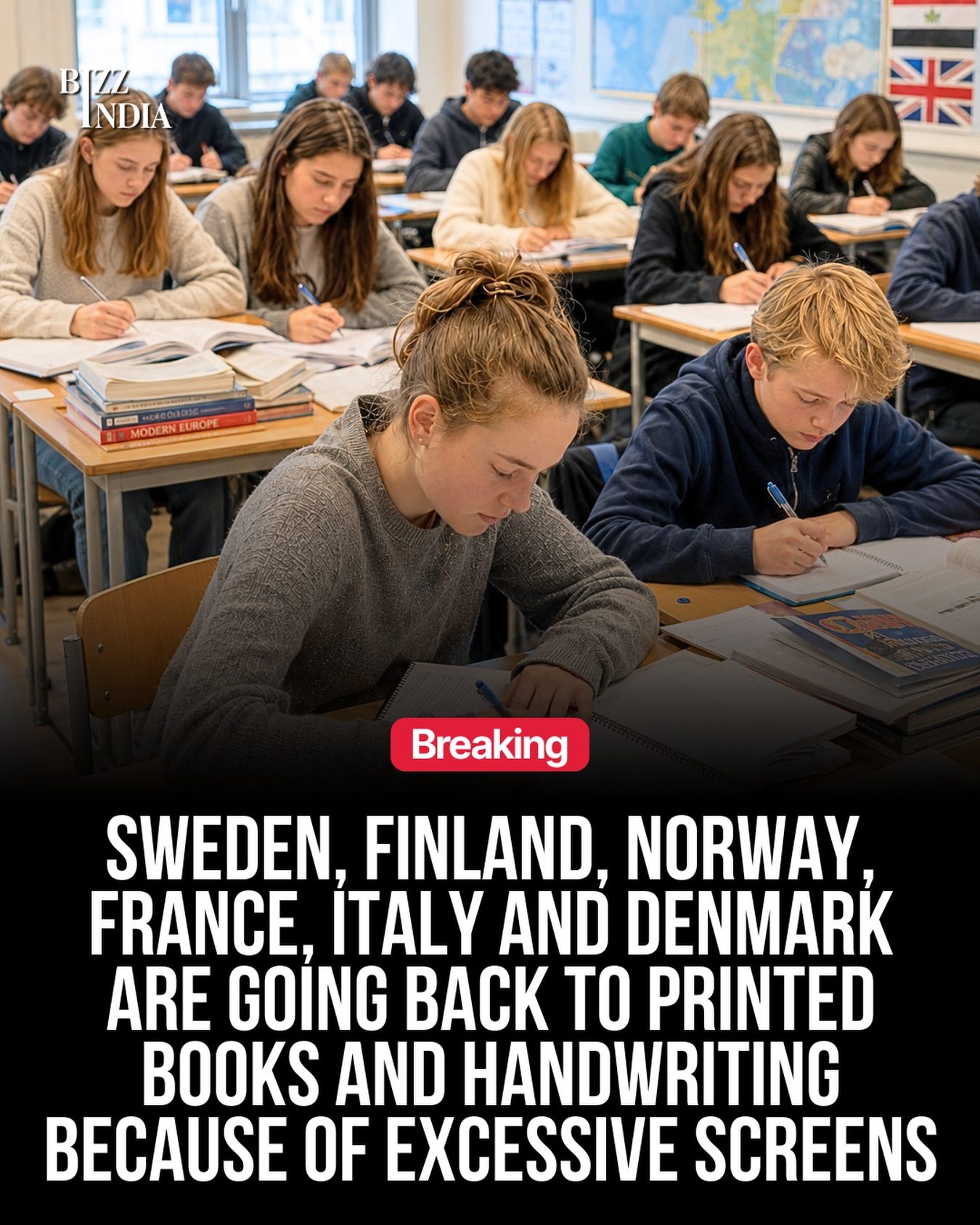
A Shift to Printed Books and Handwriting in European Classrooms
Several European countries are making a notable shift in their educational strategies by returning to printed books and handwritten notes. Sweden, Finland, Norway, France, Italy, and Denmark are leading this trend, driven by concerns about the impact of excessive screen time on students' learning, focus, and engagement.
Context: Why This Matters
The digital revolution has transformed classrooms worldwide, bringing with it a host of new learning tools and platforms. However, the rapid adoption of digital learning has also raised concerns about its unintended consequences. Educators and policymakers are increasingly questioning the effects of excessive screen time on students' cognitive development, attention spans, and overall well-being. This has led to a growing interest in incorporating traditional learning methods back into the curriculum.
The Move Back to Basics
Addressing Screen Time Concerns
One of the primary reasons behind this shift is the growing body of research highlighting the adverse effects of prolonged screen time on young minds. Studies have shown that excessive screen exposure can lead to shorter attention spans, poorer sleep quality, and even potentially impact brain development. By returning to printed books and handwritten notes, educators hope to mitigate these issues and create a more balanced learning environment.
The Importance of Handwriting
Handwriting is not just a means of communication; it's a foundational skill that supports various cognitive processes. Research has shown that handwriting can improve memory retention, enhance fine motor skills, and stimulate brain activity in a way that typing cannot. When students write by hand, they are more likely to engage deeply with the material, process information more thoughtfully, and remember it better.
Promoting Focus and Engagement
The classroom environment is changing to prioritize focus and engagement. Traditional textbooks and notebooks can help minimize distractions that come with digital devices, allowing students to concentrate more effectively on their studies. Handwritten notes can also foster a stronger connection between the student and the material, as the physical act of writing can reinforce learning and understanding.
Practical Tips for Implementing a Balanced Learning Approach
Integrate Printed and Digital Materials
While the shift back to printed books is a significant step, it doesn't mean abandoning digital resources entirely. A balanced approach that combines the best of both worlds can be very effective. Teachers can use printed textbooks for core subjects and digital resources for supplementary learning, interactive activities, and real-time collaboration.
Encourage Handwriting in Class
Promote handwriting exercises and activities that encourage students to write by hand. This can include note-taking, writing essays, and solving math problems. Even short daily handwriting drills can make a significant difference in cognitive development and learning retention.
Limit Screen Time
Set specific periods during the day when students are not allowed to use digital devices. Encourage activities that do not involve screens, such as reading printed books, writing in notebooks, and engaging in physical activities. This can help reduce the negative impacts of excessive screen time and foster a healthier learning environment.
Important Takeaways
The return to printed books and handwriting in European classrooms is a significant educational trend that addresses concerns about excessive screen time and its impact on students. By integrating traditional learning methods, educators can create a more balanced learning environment that promotes focus, engagement, and cognitive development. This shift doesn't mean abandoning digital resources but rather finding a harmonious blend that leverages the strengths of both traditional and modern educational tools.
Conclusion
The trend of returning to printed books and handwriting in classrooms across Europe offers a practical solution to the challenges posed by digital learning. It provides a balanced approach that prioritizes cognitive development, focus, and engagement. As educators and policymakers continue to explore the best ways to implement this shift, it's clear that a mindful blend of traditional and digital resources will be key to creating an effective and enriching educational experience for students.
Watch the Reel
Questions readers ask
Why are European countries like Sweden and Finland promoting printed books in schools?
These countries are prioritizing printed books to help students combat the effects of excessive screen time. This shift is aimed at enhancing attention spans, cognitive development, and overall well-being. Research has shown that reading from physical books can improve comprehension and retention compared to digital formats.
How does handwriting in education benefit students?
Handwriting can significantly enhance students' learning. Writing by hand activates different parts of the brain, improving memory retention and critical thinking. This is why countries like Norway and France are emphasizing handwriting in their classrooms.
What are the specific reforms being implemented in Italy and Denmark to reduce screen time?
Italy and Denmark are taking steps to limit the use of digital devices in classrooms in favor of more traditional methods. This includes mandating specific times for students to use handwritten notes and encouraging the use of printed books as the primary learning resource.
How does a focus on printed books and handwriting align with classroom learning goals?
Printed books and handwriting help create a more focused learning environment by minimizing distractions. They encourage active engagement with the material, which can lead to deeper understanding and better information recall, making them an effective complement to classroom learning.
What motivates Sweden to emphasize handwriting in its schools?
Sweden is focusing on handwriting to help students develop fine motor skills, improve memory, and enhance overall cognitive development. By integrating handwriting into daily classroom activities, Sweden aims to balance the use of digital tools with traditional learning methods.
Why is France returning to printed books in its curriculum?
France is seeking to mitigate the negative impacts of excessive screen time on students. By reintroducing printed books, France aims to foster a more balanced approach to learning, enhancing students' ability to focus and comprehend information better than with digital screens.
How do classroom handwriting practices support students' overall well-being?
Classroom handwriting practices support students' well-being by providing a tactile and engaging learning experience. This can reduce stress and anxiety associated with excessive screen time, promoting a healthier learning environment. Additionally, handwriting can improve fine motor skills and coordination, contributing to overall physical development.
Related deep dives
Similar reads based on topic and creator.


Recent articles
Fresh deep dives from the latest Reels we unpacked.




Comments
Be the first to comment.