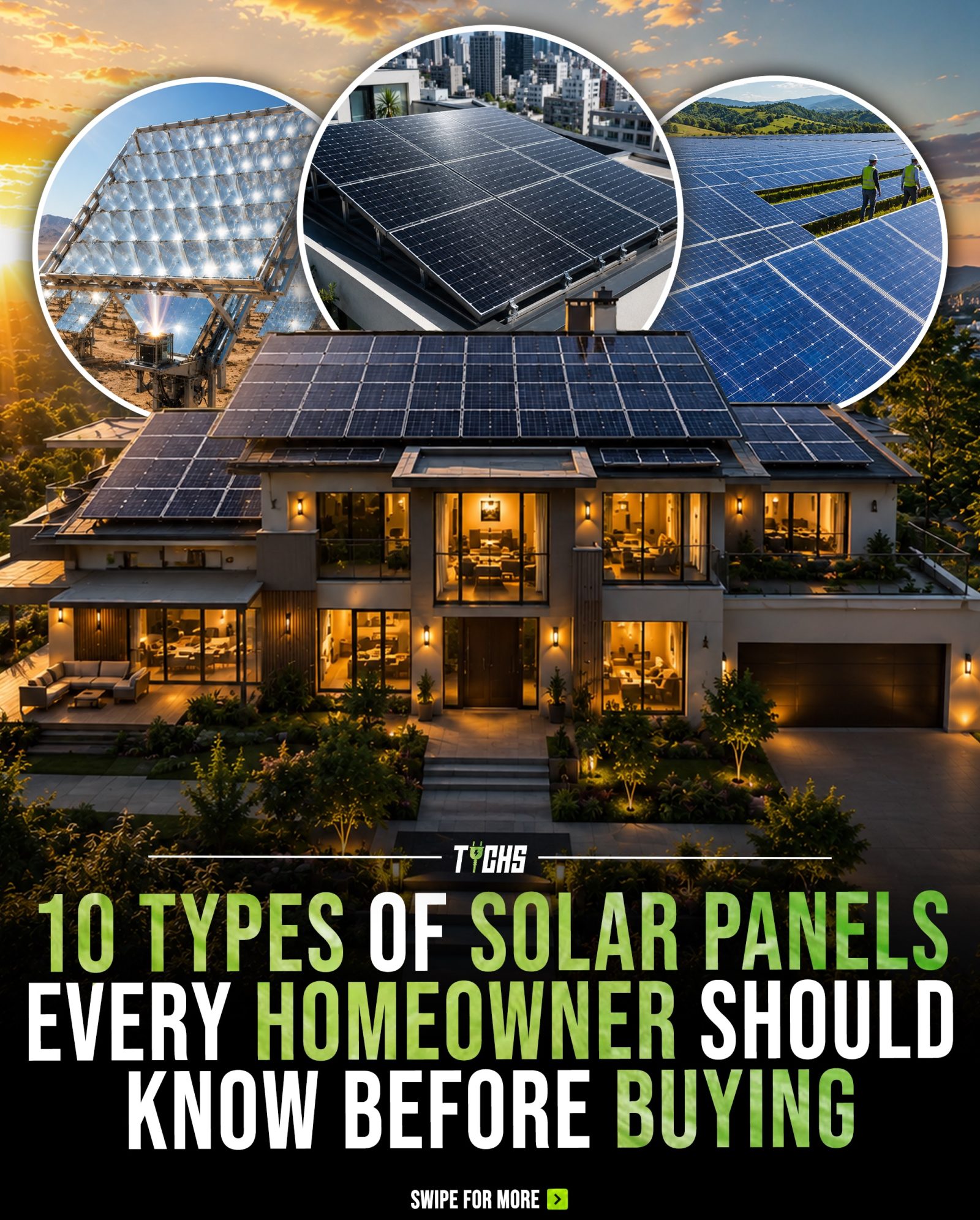
Solar panels are a critical component in the transition to renewable energy, harnessing the sun's power to generate electricity. Understanding the different types of solar panels and their specific use cases is essential for homeowners and businesses looking to make informed decisions about their energy investments. Each type of solar panel offers unique efficiencies, lifespans, and performance characteristics, tailored to different environmental and spatial conditions.
Why this matters
Selecting the right solar panel involves considering several factors, including budget, available space, climate, and long-term energy goals. With a variety of panel types available, from traditional monocrystalline and polycrystalline to advanced technologies like PERC, bifacial, perovskite, and CPV, understanding their strengths and limitations can significantly impact the effectiveness of your solar energy system.
Main discussion
Monocrystalline and Polycrystalline Panels
Monocrystalline Solar Panels are known for their high efficiency and sleek, uniform appearance. These panels are made from a single continuous crystal structure, which allows for better electron flow and higher energy conversion rates. They are ideal for residential rooftops, where space is often limited. On the downside, they can be more expensive than other types due to the complex manufacturing process.
Polycrystalline Solar Panels are made from multiple silicon fragments melted together, resulting in a less uniform appearance but a more cost-effective solution. These panels are slightly less efficient than monocrystalline panels but are a popular choice for those looking to balance cost and performance. They are well-suited for larger installations where space is not a constraint.
Advanced Technologies
PERC (Passivated Emitter and Rear Cell) Solar Panels build on the traditional monocrystalline design by adding a passivation layer to the rear of the cell. This layer reflects unabsorbed sunlight back into the cell, increasing efficiency. PERC panels are a good option for both residential and commercial applications, offering a balance of cost and performance.
Bifacial Solar Panels can capture sunlight from both the front and rear surfaces, making them highly efficient in reflective environments. These panels are often used in large-scale solar farms or commercial buildings with light-colored roofs. Although they are more expensive, their increased energy production can justify the higher cost over time.
Perovskite Solar Panels are an emerging technology that offers high efficiency and flexibility. These panels are made from a material called perovskite, which can be produced at a lower cost than traditional silicon-based panels. While still in the development phase, perovskite panels show promise for future solar energy applications, particularly in small-scale or flexible installations.
DSCC (Dye-Sensitized Solar Cells) are known for their ability to perform well in low-light conditions, making them suitable for urban environments with irregular or low sunlight. These panels are not the most efficient with around 11% efficiency and a 6-year lifespan. However, they are well-suited for specialized applications where traditional panels may not perform well.
CPV (Concentrated Photovoltaic) and HCPV (High-Concentration Photovoltaic) Solar Panels use lenses and mirrors to concentrate sunlight onto small, highly efficient solar cells. These panels can achieve efficiencies of up to 41% and have a lifespan of over 20 years, making them ideal for utility-scale solar farms in sunny desert regions. The high concentration of sunlight allows for more efficient energy conversion, but these systems are typically more expensive and complex to install.
Practical tips
Assessing Your Needs
- Budget: Determine your budget for the solar panel installation. Traditional monocrystalline and polycrystalline panels may be more cost-effective, while advanced technologies like PERC and bifacial panels offer higher performance at a premium.
- Space: Consider the available space for your solar panels. If space is limited, high-efficiency panels like monocrystalline or PERC may be the best choice. For larger installations, polycrystalline or bifacial panels can be more economical.
- Climate: Evaluate your local climate and sunlight conditions. If you live in an area with abundant sunlight, panels like bifacial or CPV/HCPV can maximize energy production. In urban environments with irregular sunlight, DSSC panels could be more effective.
- Long-Term Goals: Think about your long-term energy goals. If you aim to maximize energy production over a long period, investing in high-efficiency panels with longer lifespans, such as CPV/HCPV, might be worthwhile.
Installation and Maintenance
- Professional Installation: Ensure that your solar panels are installed by a certified professional. Proper installation is crucial for maximizing efficiency and lifespan.
- Regular Maintenance: Perform regular maintenance to keep your panels clean and free of debris. Regular cleaning can significantly improve energy production, especially in areas with a lot of dust or pollen.
- Monitoring: Use monitoring systems to track the performance of your solar panels. Many modern systems come with built-in monitoring that allows you to track energy production and identify any issues promptly.
Important takeaways
- Different types of solar panels offer varying levels of efficiency, lifespan, and performance, tailored to specific environments and applications.
- Traditional monocrystalline and polycrystalline panels are versatile and cost-effective for residential and commercial use.
- Advanced technologies like PERC, bifacial, and perovskite panels offer higher efficiency and specialized applications but come at a premium.
- Specialized panels like DSSC and CPV/HCPV are ideal for specific conditions, such as urban low-light environments or large-scale solar farms in deserts.
- Assessing your budget, space, climate, and long-term energy goals is crucial for selecting the right solar panel type.
- Professional installation and regular maintenance are essential for maximizing the efficiency and lifespan of your solar energy system.
Conclusion
Making an informed decision about solar panel types is crucial for maximizing energy production and investment returns. Whether you are a homeowner, business owner, or involved in a large-scale solar project, understanding the strengths and limitations of different solar panel technologies can help you choose the best solution for your specific needs. By considering factors like budget, available space, climate, and long-term energy goals, you can make a smarter investment that will benefit you for years to come.
Watch the Reel
Questions readers ask
What are the main differences between monocrystalline and polycrystalline solar panels?
Monocrystalline solar panels are made from single-crystal silicon and are known for their high efficiency and sleek black appearance. They perform well in low-light conditions and have a longer lifespan, but they are typically more expensive. Polycrystalline solar panels, on the other hand, are made from multiple silicon fragments and are more affordable. They are slightly less efficient and have a shorter lifespan but are a good option for those on a tighter budget.
How does PERC solar technology improve panel performance?
PERC (Passivated Emitter and Rear Cell) technology enhances solar panel performance by adding a passivation layer to the rear of the cell, which helps to reflect unabsorbed light back into the cell. This increases the amount of energy produced and improves efficiency, making PERC solar panels a smart choice for maximizing energy output in limited spaces.
What are bifacial solar panels and when are they most effective?
Bifacial solar panels can capture sunlight from both the front and rear sides, increasing energy production. They are most effective when installed in open spaces with reflective surfaces, like white roofs or light-colored gravel, which can bounce sunlight onto the back of the panel. This makes them ideal for large-scale installations with ample space and optimal lighting conditions.
Which solar panel type is best for homeowners with limited roof space?
Homeowners with limited roof space should consider monocrystalline or PERC solar panels. These panels offer high efficiency, meaning they can generate more power per square foot. This makes them ideal for maximizing energy production in constrained spaces, ensuring that homeowners can still meet their energy needs despite space limitations.
How do different climates affect the choice of solar panels?
Climate plays a significant role in selecting the right solar panel. For colder climates, monocrystalline panels are advantageous due to their high efficiency in low-light conditions. In hotter climates, polycrystalline panels might be more suitable as they tend to perform better under high temperatures. Additionally, bifacial panels can be beneficial in regions with lots of sunlight and reflective surfaces.
What are the benefits of choosing solar panels for sustainable energy?
Choosing solar panels contributes to a sustainable energy future by reducing reliance on fossil fuels and lowering carbon emissions. Solar energy is a renewable resource, meaning it won't run out. By investing in solar panels, homeowners and businesses can save on long-term energy costs and may even generate additional income through net metering or feed-in tariffs, depending on local regulations.
What factors should be considered when comparing different solar panel technologies?
When comparing solar panel technologies, consider factors such as efficiency, cost, durability, and specific use cases. High-efficiency panels like monocrystalline and PERC are ideal for limited spaces, while polycrystalline and bifacial panels offer cost savings and increased energy production in certain conditions. It is also important to consider the lifespan of the panels and their performance under different weather conditions.
Related deep dives
Similar reads based on topic and creator.




Recent articles
Fresh deep dives from the latest Reels we unpacked.




Comments
Be the first to comment.