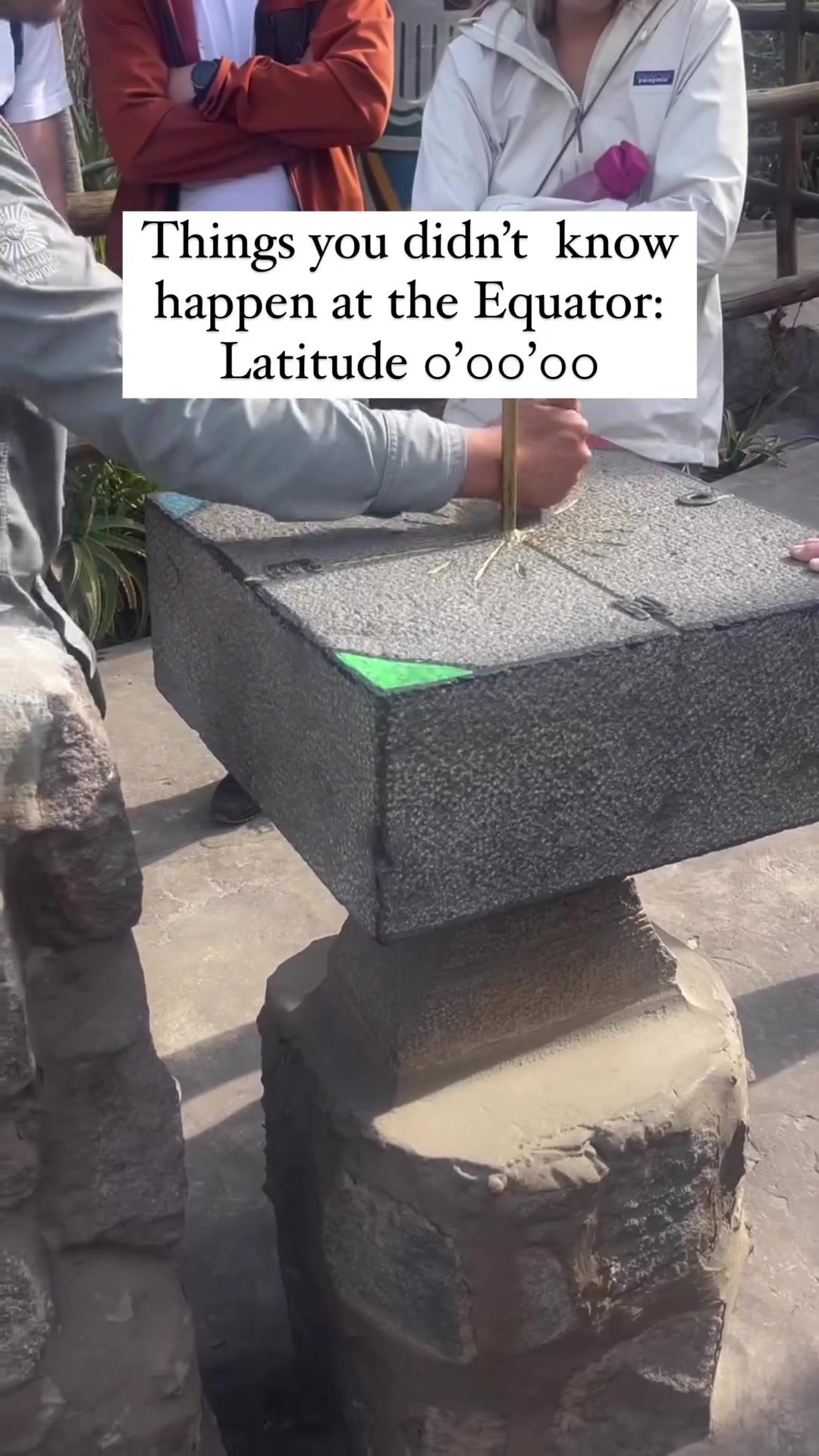
Equator Experiments in Quito, Ecuador
Quito, Ecuador, at the equator offers unique experiences and phenomena that can be both fascinating and perplexing. These experiments explore the peculiarities experienced at the equator, providing a closer look at natural phenomenon.
Quito, Ecuador’s capital, is located near the Equator. The equator divides the Earth into the Northern and Southern Hemispheres, and the proximity to this imaginary line creates unique environmental and physical conditions.
Quito's equatorial location provides a fascinating setting for various experiments and observations. The Equator, at 0° latitude, is not merely a line on a map but a place where several interesting natural phenomena can be observed. These phenomena, while often exaggerated in myths and popular culture, offer intriguing insights into the unique characteristics of the equator.
Walking and the Coriolis Effect
One of the most well-known experiments conducted at the Equator is attempting to walk in a straight line. The Coriolis Effect, which influences the direction of rotating objects due to the Earth's rotation, is believed to make walking in a straight line impossible. However, this effect is so subtle that it is not perceptible to humans. People might believe they cannot walk in a straight line, but this phenomenon is not noticeable in human movements.
Attempting to walk in a straight line at the Equator is a popular experiment. Participants often find that their perceived straight path curves, even though the Coriolis Effect is minimal. This experiment is more about perception and the mind's tendency to misinterpret subtle cues.
Water Drainage and the Coriolis Effect
Another intriguing experiment involves water drainage. People often observe that water drains in opposite directions on either side of the Equator, with water draining counterclockwise in the Northern Hemisphere and clockwise in the Southern Hemisphere. This phenomenon is attributed to the Coriolis Effect. However, the effect is more pronounced in large-scale systems, such as ocean currents and weather patterns, rather than in small-scale experiments like a sink or bucket.
Observing water drainage at the Equator can be a fascinating experiment. The sink or bucket is placed at the equator, and it is observed how the water drains. The results are often inconclusive, as the Coriolis Effect is minimal in small-scale systems. However, this experiment offers a unique opportunity to explore the subtle forces at play in the Earth's rotation.
Latitude 0°0'0''
Latitude 0°0'0'' marks the exact point of the Equator. This location provides a unique opportunity to explore the effects of being at the Earth's midpoint. The Equator is not just a geographic line but a place where unique natural phenomena can be observed. Quito's proximity to the Equator makes it an ideal location for these experiments.
Practical Tips for Exploring Equatorial Phenomena
When exploring the Equator, it's essential to approach the experiments with an open mind and a sense of curiosity. Here are some practical tips for conducting your own equatorial experiments:
The Straight-Line Walk
- Choose a clear, flat surface: Avoid uneven terrain to minimize external factors.
- Use visual markers: Place markers at regular intervals to help track your progress.
- Walk slowly: Maintaining a steady pace can help minimize discrepancies.
Water Drainage Experiment
- Use a small, shallow container: This allows for better observation of the water's movement.
- Ensure the container is level: Any tilt can affect the water's drainage.
- Repeat the experiment: Conduct multiple trials to observe any patterns or inconsistencies.
Important Takeaways
The experiments conducted at the Equator provide a unique opportunity to explore the subtle forces at play in the Earth's rotation. However, it's essential to approach these experiments with a critical eye and an understanding of the limitations of small-scale observations. The Equator's phenomena are more about perception and the mind's tendency to interpret subtle cues rather than actual physical forces.
Embrace the Experience
Embrace the experience of being at the Equator. Approach the experiments with curiosity and a willingness to question your observations. The Equator offers a unique setting for exploring natural phenomena, and these experiments can be both fascinating and enlightening.
Use the Right Tools
Use the right tools to conduct your experiments. A flat surface, visual markers, and a small, shallow container can help ensure accurate observations. Repeat the experiments to gather data and identify patterns.
Appreciate the Unique Location
Appreciate the unique location of Quito, Ecuador, and the opportunity to explore the Equator. The Equator is not just a geographic line but a place where unique natural phenomena can be observed and experienced.
Conclusion
Experiments at the Equator, such as attempting to walk in a straight line and observing water drainage, offer a fascinating glimpse into the unique characteristics of this geographic location. While the Coriolis Effect plays a role in these phenomena, its impact is minimal in small-scale experiments. However, these experiments provide a unique opportunity to explore the subtle forces at play in the Earth's rotation and appreciate the unique location of Quito, Ecuador.
Watch the Reel
Questions readers ask
Why is Quito, Ecuador, an ideal location for exploring equatorial phenomena?
Quito is the closest capital city to the equator, making it an ideal location for exploring equatorial phenomena. Its proximity to the 0° latitude line allows visitors to experience and observe unique natural forces that are less apparent elsewhere.
What is the Coriolis Effect and how can it be observed in Quito?
The Coriolis Effect is a natural force that causes moving objects to curve due to the Earth's rotation. In Quito, this effect is minimized due to its location at the equator, making it an ideal place to observe and experiment with. Try walking in a straight line or observe water drainage to see the subtle differences.
Is it true that water drains in opposite directions on either side of the equator?
While it is a popular myth, water does not drain in opposite directions on either side of the equator. The Coriolis Effect is too weak to influence small-scale water movement, such as draining from a sink or bathtub. The direction of water drainage is primarily determined by the shape of the container and local conditions.
Are there noticeable differences in seasons at the equator, such as summer and winter?
The equator experiences little seasonal temperature variation, as it receives consistent levels of sunlight throughout the year. However, there are rainy and dry seasons. For instance, Quito experiences a rainy season from December to May and a dry season from June to November.
What does it mean to walk in a straight line on the equator, and what should I expect?
Walking in a straight line on the equator might feel unusual due to the lack of the Coriolis Effect, which can cause a slight disorientation. The experience is more about the novelty of being at 0° latitude and the psychological effect of the unique location, rather than any physical sensation.
How can I participate in equatorial experiments while in Quito?
Quito offers various sites where you can participate in equatorial experiments, such as the Middle of the World Monument (Mitad del Mundo). Here, you can try walking in a straight line, observe water drainage, and learn more about the unique phenomena experienced at the equator, providing a fascinating look into the Earth's subtle forces.
Related deep dives
Similar reads based on topic and creator.




Recent articles
Fresh deep dives from the latest Reels we unpacked.



Comments
Be the first to comment.