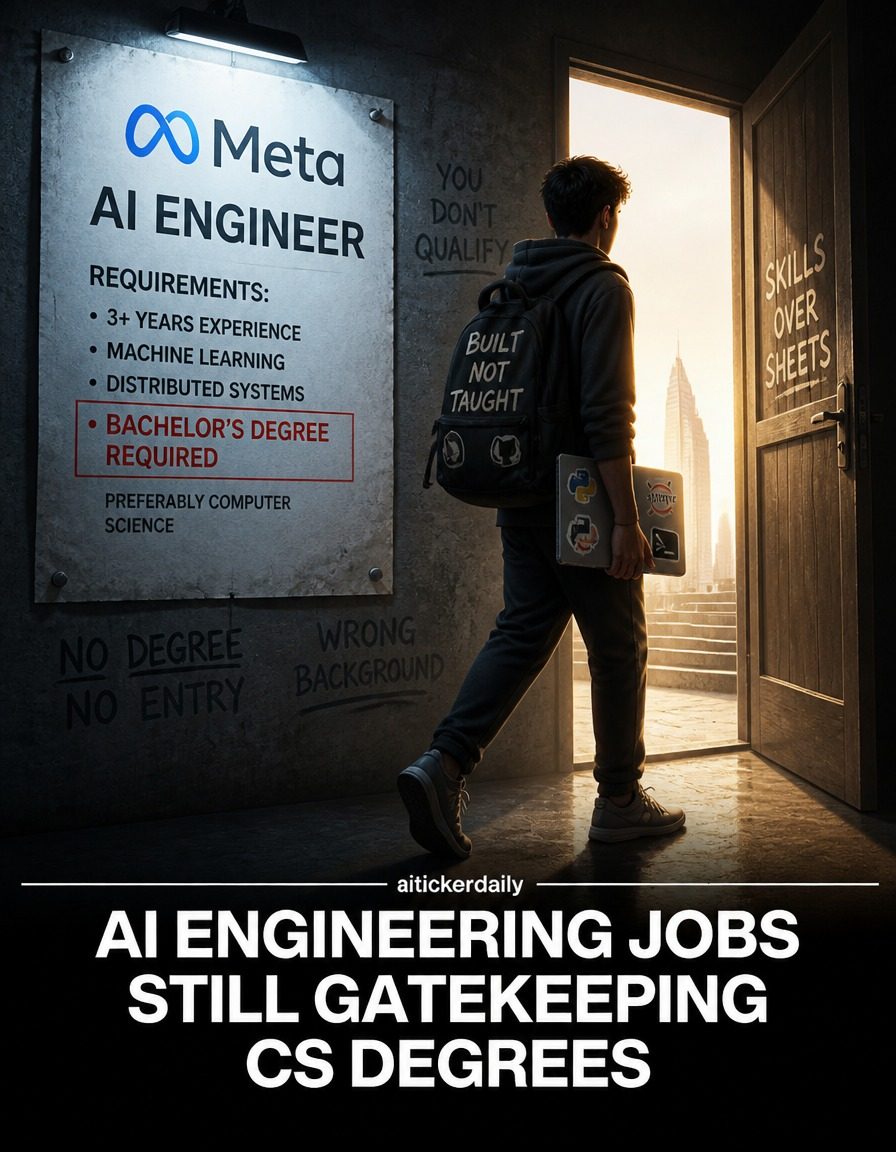
AI Engineering Job Requirements
AI engineering is the newest high-flying tech career, but many companies still prioritize traditional computer science degrees. However, the industry is shifting. Let's break down what companies now want in their AI engineers.
Context and Why This Matters
AI engineering is a hot career path. Roles in AI are among the highest-paid and most in-demand in tech. But getting started can be challenging. Many job postings still specify a computer science (CS) degree as a requirement, but that isn't the whole story. Practical experience and skills are increasingly important, and the industry is beginning to recognize that. The job market for AI engineers is shifting to prioritize hands-on experience and real-world problem-solving. The shift is important for anyone considering a career in AI engineering.
What Employers Want in AI Engineering Candidates
Practical Skills over Academic Coursework
AI engineering isn't purely an academic pursuit. While a solid foundation in computer science is helpful, employers are more interested in practical skills. AI engineering is about knowing how to build systems around models, evaluate outputs, and iterate under uncertainty. This means that candidates who can demonstrate these abilities through real-world experience will have an advantage.
Building Systems and Iterating
AI engineering is more about the engineering than the theory. It involves building systems around machine learning models. It involves designing, implementing, and testing these systems in real-world applications. It requires an understanding of how to evaluate the output of these models and iterate on them to improve performance.
Experience with Distributed Systems
Experience with distributed systems is also highly valued. This skill is crucial for scaling AI applications and ensuring they can handle large amounts of data and high traffic. Distributed systems experience showcases your ability to manage and optimize complex, large-scale systems.
The Value of a Portfolio
A portfolio is more valuable than a degree. A portfolio showcases your practical skills. It demonstrates your ability to apply theoretical knowledge to real-world problems and can include various projects from model training to machine learning systems. Building a portfolio is one of the best ways to demonstrate your abilities as an AI engineer.
Building a portfolio doesn't require a degree. It involves creating projects that showcase your skills. It involves working on real-world projects, whether through personal projects, internships, or open-source contributions. These projects can demonstrate your ability to build AI systems, evaluate outputs, and iterate on models.
Importance of Experience
Experience is key. This is why many job postings require at least 3+ years of experience. In many AI engineering roles, having a degree isn't enough. Employers want to see that you have practical experience in the field. This experience can come from various sources, including previous jobs, internships, or personal projects. These roles involve a lot of hands-on work, and employers want to see that you can handle it.
Shifting Barriers to Entry
AI engineering jobs are still gatekeeping CS degrees. Many job postings still require a computer science degree. This can be a barrier for many, but the industry is beginning to shift. More and more, employers are recognizing the value of practical experience and skills over academic qualifications. Experience with machine learning, distributed systems, and building AI systems is becoming more important.
Practical Tips for Aspiring AI Engineers
Develop Practical Skills
To become an AI engineer, focus on developing practical skills. Take courses or workshops on machine learning and AI. Work on real-world projects and build a portfolio. These projects can help you gain the hands-on experience you need to succeed in the field.
Build a Portfolio
Building a portfolio is one of the best ways to demonstrate your abilities as an AI engineer. It's more valuable than a degree. It showcases your practical skills and your ability to apply theoretical knowledge to real-world problems. Include a variety of projects, from model training to machine learning systems.
Develop Expertise in Distributed Systems
Distributed systems are a crucial part of scaleable AI. Gain experience with distributed systems. Learn how to design, implement, and test these systems in real-world applications. This skill will set you apart from other candidates and demonstrate your ability to handle large, complex systems.
Get Experience
Experience is crucial. Employers want to see that you can handle the hands-on work involved in AI engineering. Gain experience through internships, personal projects, or open-source contributions. Document your experience in a portfolio.
Important Takeaways
- Experience Matters: Practical skills and experience are becoming more important.
- Building Systems: AI engineering is more about building systems and iterating on models.
- Portfolio Over Paper: A portfolio is more valuable than a degree. Demonstrate your abilities through real-world projects.
- Distributed Systems: Experience with distributed systems is crucial for scaling AI applications.
- Shift is Happening: The industry is recognizing the value of skills over academic qualifications.
Conclusion
AI engineering is a high-demand, high-paying field. However, breaking in can be challenging. Many job postings still require a computer science degree, but the industry is shifting. Practical skills and real-world experience are increasingly important. By focusing on developing these skills and building a strong portfolio, you can set yourself apart from other candidates and succeed in this exciting field.
Don't let the gatekeeping deter you. Break through the traditional barriers and focus on building the skills and experience that employers really want. AI engineering is within reach, and with the right approach, you can build a strong, rewarding career.
Watch the Reel
Questions readers ask
What are the most important AI engineering skills that employers are looking for?
Employers seek AI engineers who can build and iterate on AI systems, evaluate model outputs, and work with distributed systems. These skills demonstrate a candidate's ability to apply AI concepts in practical, real-world scenarios. Additionally, proficiency in programming languages like Python, and experience with machine learning frameworks such as TensorFlow or PyTorch, are highly valued.
Can I become an AI engineer without a traditional computer science degree?
Yes, it's possible to enter the field of AI engineering without a traditional computer science degree. Many employers are now prioritizing practical skills and hands-on experience. Building a strong portfolio of AI projects, gaining experience through internships or personal projects, and continually updating your skills can make you a strong candidate for AI engineering roles.
How can I gain hands-on AI experience to enhance my resume?
Gain hands-on AI experience by working on personal projects, participating in AI hackathons, or contributing to open-source AI projects. Additionally, consider taking online courses or certifications that include practical exercises and real-world scenarios. Building a portfolio of these projects and showcasing them on platforms like GitHub can make your resume stand out to employers.
Why is experience with distributed systems important in AI engineering?
Experience with distributed systems is crucial for AI engineers because AI models often require processing large datasets that are distributed across multiple servers or cloud platforms. Understanding how to work with distributed systems ensures that you can design, implement, and scale AI solutions effectively, making you a more valuable candidate to employers.
What should I include in my AI engineering portfolio?
Your AI engineering portfolio should include a variety of projects that demonstrate your skills in building, evaluating, and iterating on AI models. Include detailed descriptions of each project, the technologies used, and the challenges you overcame. Showcase your ability to work with distributed systems, and highlight any real-world applications of your AI models. A well-rounded portfolio will give employers a clear picture of your capabilities and experience.
How can I stay current with the latest AI engineering trends and requirements?
Stay current by following industry blogs, attending AI conferences, and participating in online forums. Networking with professionals in the field can also provide insights into the latest trends and requirements. Additionally, continuous learning through online courses and certifications ensures that your skills remain up-to-date and relevant to the ever-evolving AI landscape.
What are some good resources for beginners looking to start a career in AI engineering?
For beginners, resources like online courses on platforms such as Coursera, Udacity, or Khan Academy offer structured learning paths. Also, platforms like Kaggle provide practical datasets and competitions to gain hands-on experience. Books like 'Hands-On Machine Learning with Scikit-Learn, Keras, and TensorFlow' and online tutorials can also provide a solid foundation in AI engineering concepts and practical applications.
Related deep dives
Similar reads based on topic and creator.




Recent articles
Fresh deep dives from the latest Reels we unpacked.




Comments
Be the first to comment.