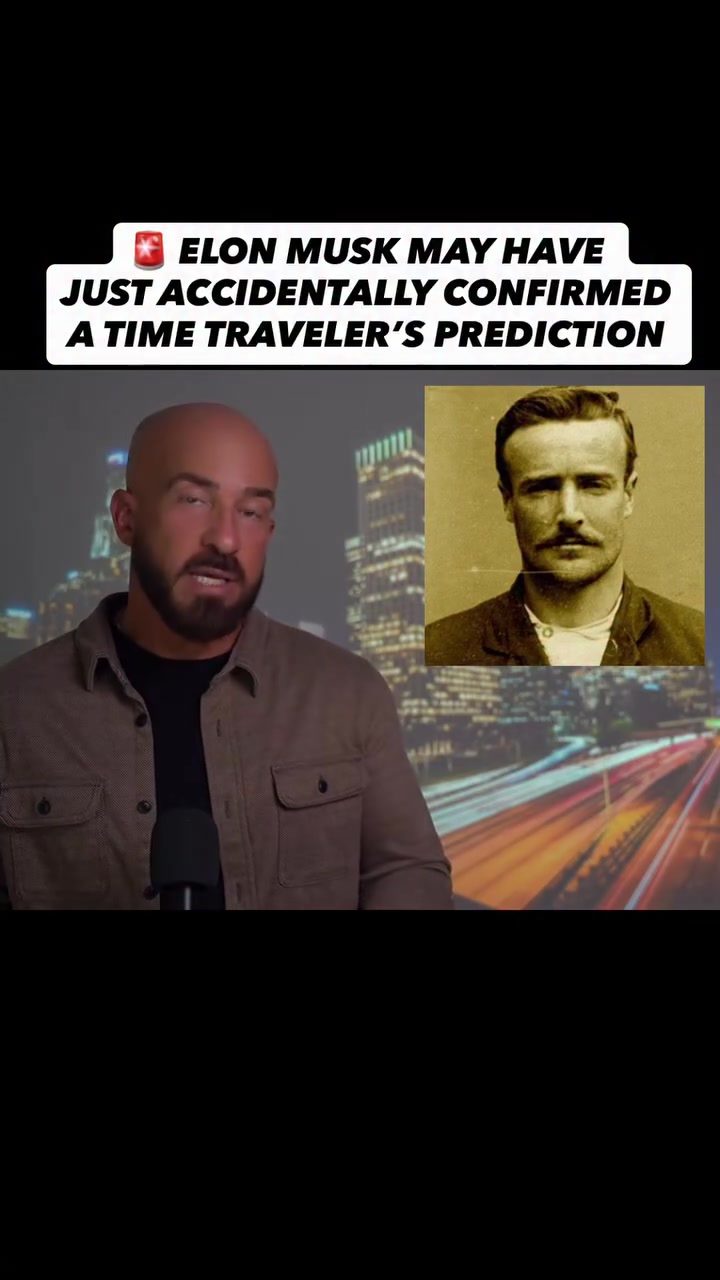
Elon Musk and the Centuries-Old Prediction That Resonates in the Future
The intersection of futuristic ideas and historical accounts often leads to fascinating speculation. One such account involves Paul Amadeus Dienach, a name that might be unfamiliar to many but carries a remarkable story. Dienach reportedly fell into a coma in 1921 due to a serious illness. Doctors believed he wouldn't survive, but he miraculously woke up. Upon awakening, he claimed that his consciousness had awakened nearly 2,000 years in the future, in the year 3906.
Why the Future Matters
Dienach's account, documented in a diary and later translated and published, describes a future where humanity has survived centuries of wars, environmental disasters, and political collapse. His vision paints a picture where machines perform most labor, and people work only if they want to, not because they have to. Money, according to his account, becomes irrelevant, and humanity expands beyond Earth, colonizing Mars.
This future, described over a century ago, holds striking similarities to predictions made by contemporary figures like Elon Musk. Musk has suggested that AI could eventually make work optional and that machines may one day perform most labor. He has even hinted that money could become increasingly irrelevant in the distant future. This overlap between a historical account and modern predictions raises intriguing questions about the potential trajectory of human society.
The Vision of Paul Amadeus Dienach
A Century of Wars and Upheaval
Dienach's account describes a tumultuous journey for humanity. According to him, humanity endured centuries of wars, environmental disasters, and political collapse. These challenges tested the resilience of society, pushing it to the brink. However, Dienach's account suggests that eventually, humanity got its act together, rebuilding civilization in a more harmonious and advanced state.
The Role of Machines
One of the most striking aspects of Dienach's vision is the role of machines. In his account, machines perform most of the labor, freeing humans from the necessity of work. This aligns with contemporary discussions about automation and AI, where the potential for machines to take over many jobs is a recurring theme. Dienach's description of a future where people work only to kill boredom suggests a society where work is optional, a concept that resonates with Musk's predictions.
Colonization and Beyond
Dienach's vision extends beyond Earth, envisioning a future where humanity colonizes Mars. This idea is not new; it has been a topic of speculation and planning for decades. Musk himself has expressed interest in colonizing Mars, seeing it as a necessary step for the survival and advancement of the human race. Dienach's account adds a historical perspective to this futuristic goal, suggesting that it is a natural progression for humanity.
Elon Musk's Vision for the Future
AI and the Future of Work
Elon Musk's predictions about AI and the future of work are well documented. He envisions a future where AI performs most labor, making work optional for humans. This aligns with Dienach's account, which also describes a future where people work only if they want to, not out of necessity. Musk's vision of a post-work society is not just about leisure but also about the potential for humans to pursue more meaningful activities.
The Irrelevance of Money
Another intriguing aspect of Musk's predictions is the potential irrelevance of money. In a future where machines perform most labor and resources are abundant, the traditional concept of money could become obsolete. This idea is also present in Dienach's account, where money is described as irrelevant in the future. This overlap suggests that both historical and contemporary thinkers are considering a future where economic systems are fundamentally different from what we know today.
The Role of AI and Robotics
Musk's emphasis on AI and robotics as key drivers of this future is also reflected in Dienach's account. The advancement of AI and robotics could lead to a future where machines perform most labor, freeing humans from the necessity of work. This aligns with Dienach's description of a future where people work only to kill boredom, suggesting a society where work is optional.
Practical Tips for Navigating the Future
Embracing Change
The future envisioned by both Dienach and Musk is one of significant change. Embracing this change and being open to new possibilities is crucial. This could mean pursuing education and skills that will be relevant in an AI-driven world, such as critical thinking, creativity, and emotional intelligence.
Preparing for a Post-Work Society
If work becomes optional, as suggested by both Dienach and Musk, it's important to start thinking about what that might look like. This could involve exploring hobbies and passions that bring fulfillment, as well as considering how to structure society in a post-work world. Community engagement, personal growth, and creative pursuits could become more important than ever.
Investing in AI and Robotics
Given the central role of AI and robotics in both Dienach's and Musk's visions, investing in these technologies could be a smart move. This could mean supporting research and development in these fields, as well as considering careers in AI and robotics. The future could belong to those who are at the forefront of these technological advancements.
Important Takeaways
The overlap between Dienach's historical account and Musk's contemporary predictions suggests a fascinating trajectory for human society. Both visions describe a future where machines perform most labor, making work optional, and where money becomes irrelevant. This alignment raises intriguing questions about the potential future of humanity and the role of technology in shaping that future.
Conclusion
The story of Paul Amadeus Dienach and the predictions of Elon Musk offer a compelling glimpse into a possible future. While it's impossible to predict with certainty what the future holds, the similarities between these visions suggest that we are on a trajectory towards a society where work is optional and technology plays a central role. Embracing this future and preparing for the changes it brings could be key to thriving in the years to come. Whether through AI, robotics, or other technological advancements, the future holds exciting possibilities for humanity.
Watch the Reel
Questions readers ask
What are the key similarities between Dienach's future vision and Elon Musk's ideas?
Both Dienach and Musk envision a future where machines handle most jobs, making human labor less central. They also share a vision of humanity colonizing Mars, and a world where traditional currency is no longer the primary means of exchange. Additionally, Dienach saw a future where humanity had overcome various global challenges, similar to Musk's focus on solving major issues like climate change and AI.
How did Dienach's time travel experience occur?
Dienach reportedly fell into a coma in 1921 due to a serious illness and was not expected to survive. After awakening, he claimed that his consciousness had traveled nearly 2,000 years into the future, to the year 3906. His account was later documented in a diary and published.
What challenges did Dienach see humanity overcoming in his future vision?
In his vision, humanity had endured centuries of wars, environmental disasters, and political collapse. Despite these challenges, Dienach saw a future where humanity had persevered and thrived, colonizing Mars and advancing technologically.
What is the significance of Dienach's account in relation to Elon Musk's future predictions?
Dienach's account is significant because it aligns with many of Elon Musk's futuristic ideas, making it an interesting historical precedent to Musk's predictions. This alignment allows for a fascinating comparison between a centuries-old account and contemporary predictions of humanity's future.
What is the role of money in Dienach's future vision and how does it compare to Musk's ideas?
In Dienach's vision, money is irrelevant, similar to some of Musk's ideas about the future of money. This could suggest a shift towards a society where resources are abundant and freely available, or where a new system of exchange has been established.
What does Dienach's account say about the future of work?
Dienach's account describes a future where machines handle most work, reducing the need for human labor. This aligns with Musk's predictions about automation and the future of work, where artificial intelligence and automation technologies will dominate the job market.
Related deep dives
Similar reads based on topic and creator.




Recent articles
Fresh deep dives from the latest Reels we unpacked.




Comments
Be the first to comment.