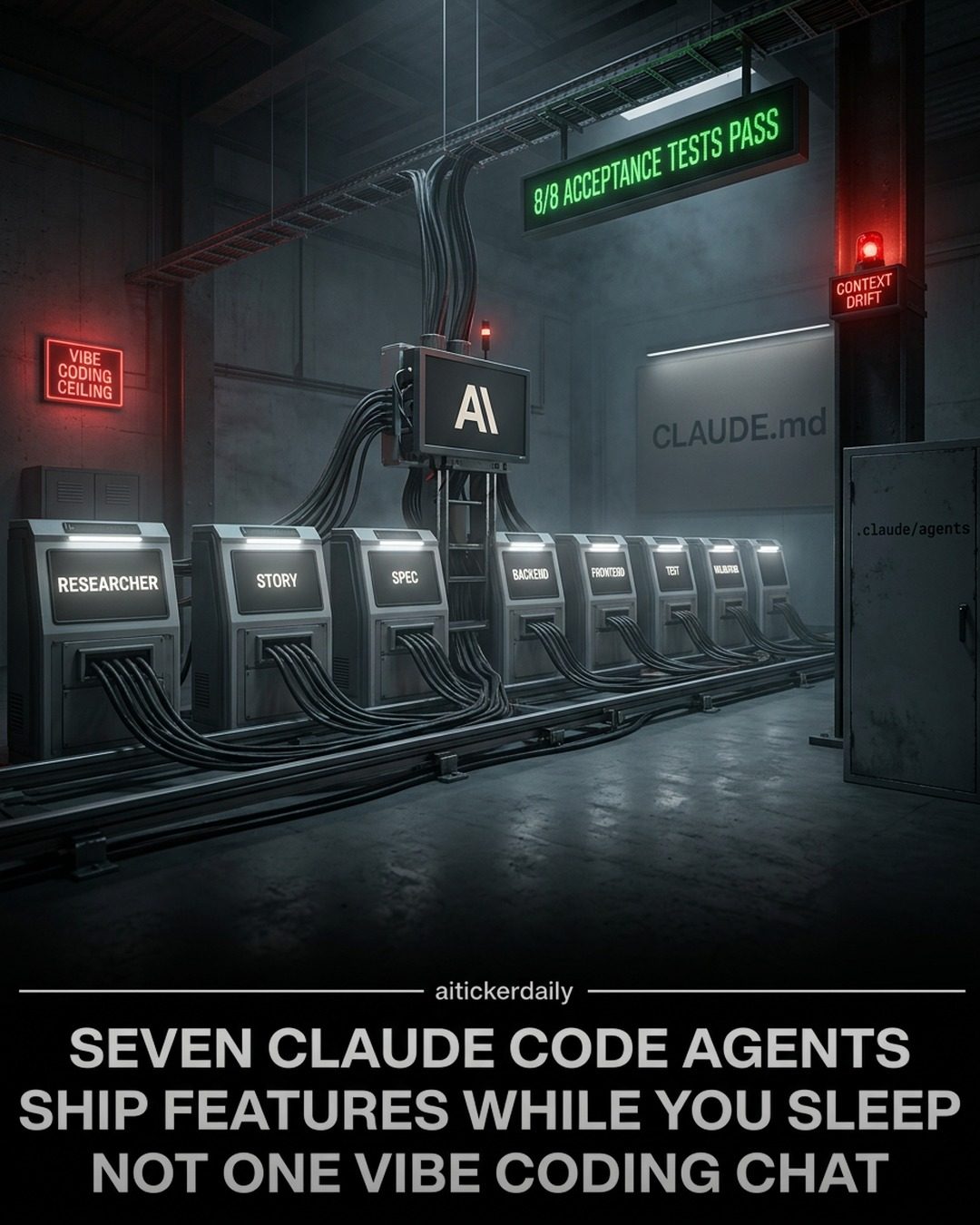
AI Agent Workflow in Software Development: Building an Efficient Coding Factory
In the fast-paced world of software development, efficiency and organization are key to delivering high-quality features. A structured approach using AI agents can streamline the development process, ensuring that features are shipped seamlessly and consistently. One such approach is the concept of a Claude Code software factory, which integrates seven focused AI agents, three approval checkpoints, and a workflow that ships features while you sleep.
Why This Matters
The traditional approach to software development often involves long, unstructured coding sessions known as "vibe coding." This method can lead to messy code, delays, and inconsistencies. By contrast, a structured workflow with defined roles and checkpoints can significantly enhance productivity and code quality. This is where the Claude Code software factory concept comes into play, offering a more efficient and organized approach to software development.
Main Discussion
The AI Agent Workflow
The core of the Claude Code software factory is a system of seven AI agents, each with a specific role in the development process. These agents work collaboratively to ensure that every feature is thoroughly vetted and approved before it is shipped. The workflow can be broken down into several key stages:
-
Researcher: This agent is responsible for gathering data, researching relevant topics, and identifying potential areas for improvement. It ensures that the development process is grounded in solid research, improving the overall quality of the features.
-
Story Writer: This role focuses on creating detailed documentation and user stories. The Story Writer translates the research findings into actionable tasks, ensuring that the development team has clear objectives and a roadmap to follow.
-
Spec Writer: The Spec Writer creates detailed specifications for the features, outlining the requirements, functionalities, and expected outcomes. This ensures that the development process is well-defined and that everyone on the team is on the same page.
-
Context: This agent provides the necessary context and background information, ensuring that all team members have the necessary understanding to work effectively.
-
Frontend and Backend: Two separate agents handle the frontend and backend development, ensuring that the user interface and backend systems are developed in tandem, maintaining a cohesive user experience.
-
Test: This agent is responsible for testing the features, identifying any bugs or issues, and ensuring that the code is robust and reliable. This ensures that the features are thoroughly vetted and meet the required standards.
These roles are interconnected, allowing for a seamless flow of information and collaboration. Text overlays like "CONTEXT", "FRONTEND", "BACKEND", and "TEST" highlight the importance of each stage in the workflow, ensuring that every aspect of the feature is thoroughly addressed.
The Chain Flow
The workflow is structured around a chain that ensures features are shipped efficiently. This chain involves three approval checkpoints, where each feature must pass through before it is considered ready for deployment. These checkpoints include:
-
Initial Review: This first checkpoint ensures that the feature meets the initial requirements and is ready for further development. Any issues identified at this stage are addressed before the feature proceeds to the next step.
-
Mid-Development Review: The second checkpoint occurs midway through the development process, ensuring that the feature is on track and meeting the specified standards. This review helps identify any potential issues early on, allowing for timely adjustments.
-
Final Approval: The final checkpoint involves a comprehensive review of the feature, ensuring that it is fully developed, thoroughly tested, and ready for deployment. Only after passing this stage is the feature shipped, ensuring high-quality output.
The Importance of Structured Workflow
The structured workflow of the Claude Code software factory emphasizes efficiency and collaboration. By breaking down the development process into distinct roles and checkpoints, the system ensures that every feature is thoroughly vetted and meets the required standards. This approach not only enhances productivity but also ensures that the final product is reliable and of high quality.
The use of AI agents streamlines the workflow, allowing for continuous development and deployment. This means that while you're sleeping, the AI agents are working tirelessly to ship features, ensuring that the development process never stops.
Tools and Documentation
The workflow is supported by tools and documentation that facilitate the development process. One such tool is CLAUDE.md, a markdown file that outlines the structure and flow of the development process. This document provides a clear roadmap, ensuring that everyone on the team is on the same page and understands their roles and responsibilities.
The ten-slide deck mentioned in the caption serves as a comprehensive guide, covering various aspects of the development process. This includes supervision traps, the factory shift, the roles of agents 1 to 7, the chain flow, results, and the weekend setup. This documentation ensures that every stage of the development process is well-defined and that there is a clear roadmap to follow.
Practical Tips
Implementing a similar workflow in your software development process can bring numerous benefits. Here are some practical tips to help you get started:
-
Define Roles and Responsibilities: Clearly define the roles and responsibilities of each team member. This ensures that everyone knows what is expected of them and can focus on their specific tasks.
-
Use AI Agents: Incorporate AI agents to handle repetitive tasks and streamline the development process. This allows your team to focus on more critical aspects of the project.
-
Implement Checkpoints: Establish checkpoints at various stages of the development process to ensure that features are thoroughly vetted and meet the required standards. This helps identify and address issues early on.
-
Document Everything: Maintain detailed documentation, including user stories, specifications, and workflow documentation. This ensures that everyone on the team has the necessary information and can work effectively.
-
Stay Updated: Follow resources like the Weekday AI Briefing to stay updated with the latest developments in AI models and related topics. This ensures that you are always informed about the latest trends and technologies.
Important Takeaways
The structured workflow of the Claude Code software factory offers a more efficient and organized approach to software development. By defining roles, establishing checkpoints, and using AI agents, you can streamline the development process and ensure high-quality output. This approach not only enhances productivity but also ensures that the final product is reliable and meets the required standards.
Conclusion
In the ever-evolving world of software development, efficiency and organization are key to delivering high-quality features. The Claude Code software factory concept offers a structured approach, ensuring that every feature is thoroughly vetted and meets the required standards. By implementing a similar workflow, you can enhance productivity, streamline the development process, and ensure that your final product is of the highest quality.
Watch the Reel
Questions readers ask
What are the seven AI agents in the Claude Code software factory and what roles do they play?
The seven AI agents in the Claude Code software factory each have specific roles to streamline the software development process. While the article does not list them explicitly, these agents likely cover a range of tasks from initial coding and debugging to testing and deployment, ensuring a seamless workflow from start to finish.
What are the three approval checkpoints in the AI-driven software development process?
The three approval checkpoints in the AI-driven workflow likely serve as quality control measures. These checkpoints ensure that the code meets certain standards before moving on to the next phase, maintaining high-quality feature delivery even when developers are not actively working.
How does the AI software factory ensure consistent feature delivery?
The AI software factory ensures consistent feature delivery through a structured approach. By assigning specific roles to AI agents and incorporating approval checkpoints, the system maintains a consistent workflow that delivers features reliably, even during periods of inactivity from human developers.
Can AI agents in software development work while developers are resting?
Yes, one of the key benefits of using AI agents in software development is their ability to work continuously. The AI agents in the Claude Code software factory are designed to ship features even while developers are resting, ensuring that the development process never stops.
How do AI agents improve software development productivity?
AI agents improve software development productivity by automating various tasks and streamlining the workflow. By handling specific roles and ensuring consistent feature delivery, AI agents allow developers to focus on more complex tasks, leading to increased efficiency and output.
What is the significance of the AI software feature chain in this process?
The AI software feature chain refers to the sequential process of feature development and delivery. This chain, driven by AI agents, ensures that each feature goes through a well-defined series of steps, from initial coding to final deployment, maintaining a high level of quality and consistency throughout the process.
Related deep dives
Similar reads based on topic and creator.




Recent articles
Fresh deep dives from the latest Reels we unpacked.




Comments
Be the first to comment.