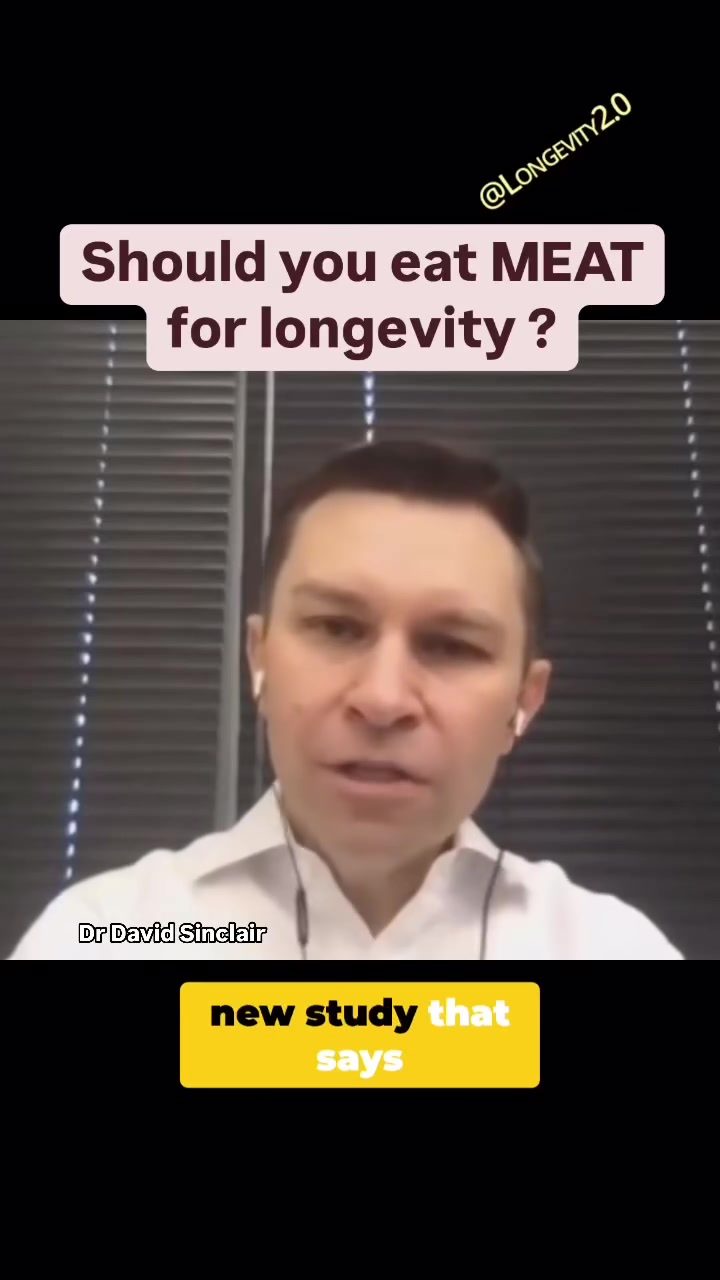
Should You Eat Meat for Longevity?
When it comes to nutrition and longevity, the question of whether to include meat in your diet is a hotly debated topic. Dr. David Sinclair, a renowned expert in the field of aging and longevity, provides some valuable insights into this discussion.
Why This Matters
Understanding the impact of meat consumption on longevity is crucial for making informed dietary choices. While some studies suggest that meat is fine to eat, others advocate for more plant-based diets. The key to longevity, according to Dr. Sinclair, lies not just in what you eat, but also in when and how much you eat.
The Truth About Meat and Longevity
The Media's Role in Diet Confusion
The media often presents contradictory information about diet and health. One study might suggest that meat is beneficial, while another warns against it. This back-and-forth can be confusing, making it difficult to determine the best approach to eating.
The Science of Balance
Dr. Sinclair's approach to diet and longevity is rooted in balance. He emphasizes that it's more about the timing and variety of your meals rather than the specific foods you choose. For example, he advises against eating too much of any one type of food, whether it's fat, steak, or carbohydrates. Instead, he recommends mixing different ratios of protein, carbohydrate, and fat throughout the day.
Timing and Moderation
Timing is crucial. Eating too frequently can be detrimental to your health, even if you are consuming a balanced diet. Dr. Sinclair points to mouse studies that show mixing different ratios of nutrients can result in a similar lifespan, provided that meals are spaced out appropriately.
The Role of Plant-Based Foods
Even though meat can be part of a healthy diet, focusing on plant-based foods is essential. Dr. Sinclair incorporates plant-based foods into his diet, especially on days when he is not exercising heavily. This approach aligns with the benefits of plant-based diets, which are rich in vitamins, minerals, and fiber.
Why Plant-Based?
Plant-based foods provide a wealth of health benefits. They are typically lower in saturated fats and higher in fiber, which can aid in digestion and overall health. Focusing on plant-based foods also ensures that you are getting a variety of nutrients that are essential for longevity and overall well-being.
Metformin and Plant-Based Foods
Dr. Sinclair also mentions the use of metformin, a medication often prescribed for managing blood sugar levels. When combined with a plant-based diet, metformin can help regulate metabolic processes, potentially contributing to a longer lifespan.
Practical Tips for a Balanced Diet
Incorporating these principles into your daily routine can be achieved with a few straightforward tips:
Eat a Variety of Foods
Aim to include a variety of foods in your diet to ensure you're getting a broad spectrum of nutrients. This means mixing proteins, carbohydrates, and fats, and not sticking to just one type of food.
Watch Your Portion Sizes
Overconsumption, even of healthy foods, can be detrimental. Pay attention to portion sizes and avoid overeating.
Timing Matters
Eat less frequently and try to space out your meals. This can help your body process nutrients more effectively and potentially contribute to a longer lifespan.
Focus on Plant-Based Foods
While meat can be part of your diet, especially after physical activity, focus on incorporating more plant-based foods for the majority of your meals. This will help ensure you're getting the right balance of nutrients.
Important Takeaways
Dr. David Sinclair’s insights offer a balanced approach to diet and longevity. Key takeaways include:
- Variety is Key: Mix different types of foods to avoid overconsumption of any single nutrient.
- Timing is Crucial: Eat less frequently and space out your meals.
- Plant-Based Focus: Incorporate more plant-based foods into your diet.
- Moderation with Meat: Include meat in moderation, especially after physical activity.
Conclusion
The relationship between diet and longevity is complex, but Dr. David Sinclair's insights provide a clear path. By focusing on balance, variety, and timing, and incorporating more plant-based foods, you can make significant strides towards a healthier, longer life.
Watch the Reel
Questions readers ask
How does Dr. David Sinclair suggest balancing meat and plant-based foods for longevity?
Dr. Sinclair recommends a balanced approach to meat consumption. He suggests combining meat with plant-based foods to ensure a mix of nutrients. This approach can help maximize the benefits of both meat and plant foods, contributing to overall health and longevity.
What is the ideal frequency of meat consumption according to Dr. Sinclair?
Dr. Sinclair's advice focuses on moderation rather than complete abstinence. He suggests that eating meat every day may not be optimal for longevity. Instead, incorporating meat into your diet a few times a week, paired with a variety of plant-based meals, can be beneficial.
How does the timing of meat consumption affect longevity?
The timing of meals, including those that contain meat, plays a significant role in overall health. Dr. Sinclair advises paying attention to when you eat meat. For example, consuming meat earlier in the day and allowing the body to rest and repair later in the day by consuming lighter, more plant-based meals can be beneficial.
What role does exercise play in conjunction with meat consumption for longevity?
Exercise is a crucial component of a healthy lifestyle, and it can help mitigate some of the potential negative effects of meat consumption. Dr. Sinclair suggests that regular physical activity can enhance the body's ability to process and utilize nutrients from meat, thereby supporting longevity.
How does Dr. Sinclair advise on the amount of fat in meat for optimal longevity?
Dr. Sinclair emphasizes the importance of choosing leaner cuts of meat and being mindful of overall fat intake. He suggests opting for meats with lower fat content and balancing them with plenty of vegetables and whole grains. This approach can help manage fat intake and support a healthier diet overall.
Does Dr. Sinclair believe in completely eliminating meat from the diet for longevity?
Dr. Sinclair does not advocate for complete elimination of meat. Instead, he promotes a balanced and moderate approach to meat consumption. He believes that including meat in your diet in the right amounts and at the right times can be part of a healthy and longevity-promoting lifestyle.
How can intermittent fasting be integrated with meat consumption for longevity benefits?
Dr. Sinclair is known for his research on intermittent fasting and its potential benefits. To integrate fasting with meat consumption, consider having meat during your eating window and fasting for a set period each day. This can help regulate metabolism, reduce inflammation, and promote better health outcomes.
Recent articles
Fresh deep dives from the latest Reels we unpacked.




Comments
Be the first to comment.