Solar Material and Earth
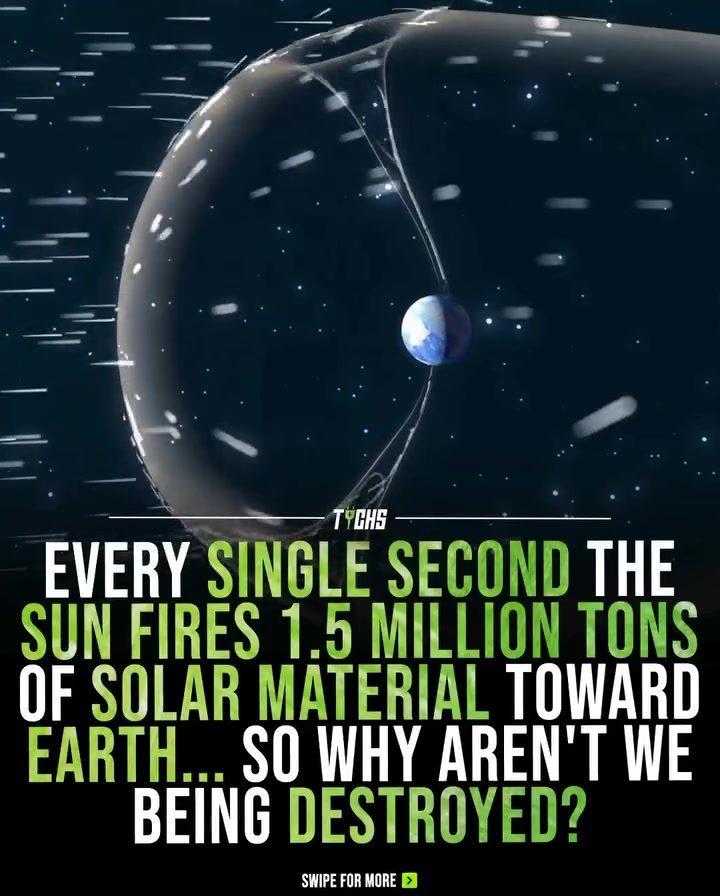
The sun continually ejects a staggering 1.5 million tons of charged particles into space every second. Yet, despite this relentless bombardment, Earth remains largely untouched and habitable. This phenomenon is primarily due to Earth's magnetosphere, an invisible shield created by the movement of molten iron deep within our planet.
Why This Matters
Understanding the interaction between solar material and Earth's magnetic field is crucial for several reasons. It helps us grasp why our planet has remained habitable for billions of years, despite the constant stream of charged particles from the sun. Moreover, it sheds light on the importance of Earth's magnetic field in shielding us from harmful radiation and preserving our atmosphere.
The Sun and Solar Wind
Solar Flares and Ejections
The sun is a dynamic and ever-changing star. Solar flares and coronal mass ejections (CMEs) are common occurrences on the sun's surface. These events release vast amounts of energy and charged particles into space, creating the solar wind that travels through the solar system.
Composition of Solar Wind
The solar wind is composed primarily of electrons, protons, and alpha particles. These charged particles travel at speeds ranging from 250 to 750 kilometers per second. When they reach Earth, the interaction with our planet's magnetic field and atmosphere produces fascinating phenomena.
Earth's Magnetic Shield
The Magnetosphere
Earth's magnetosphere is an invisible magnetic field that extends far into space. This field is generated by the movement of molten iron in Earth's outer core. The magnetosphere acts as a shield, deflecting most of the charged particles from the solar wind around the planet, preventing them from hitting the surface directly.
The Role of the Magnetosphere
The magnetosphere ensures that only a small fraction of the solar wind particles enters Earth's atmosphere. These particles primarily enter near the North and South Poles, where they interact with the atmosphere to create the mesmerizing auroras—Northern and Southern Lights. Without this invisible shield, the solar wind would gradually strip away Earth's atmosphere, exposing the surface to harmful radiation and rendering it uninhabitable.
The Impact on Earth
Atmospheric Protection
The magnetosphere plays a critical role in maintaining Earth's atmosphere. By deflecting the solar wind, it prevents the gradual erosion of our atmosphere. This protection is vital for sustaining life, as the atmosphere provides the oxygen we breathe and protects us from harmful solar and cosmic radiation.
The Auroras
The small number of charged particles that do enter Earth's atmosphere near the poles create a spectacular light show known as the auroras. These natural phenomena are a visual reminder of the interaction between the solar wind and Earth's magnetic field. The auroras are not only beautiful but also provide valuable insights into the dynamics of space weather and the behavior of the solar wind.
The Long-Term Survival of Life
Earth's magnetic field has been crucial for the long-term survival of life. Over billions of years, it has protected our planet from the constant barrage of solar particles, allowing life to evolve and thrive. Without this protection, Earth would be a much different and less hospitable place.
Practical Tips for Understanding Solar Activity
Monitoring Solar Activity
Keeping track of solar activity is important for various reasons, including space weather forecasting and protecting satellites and astronauts. Organizations like NASA and the NOAA Space Weather Prediction Center (SWPC) provide regular updates and alerts on solar flares, CMEs, and other solar events.
Protecting from Solar Radiation
While Earth's magnetosphere provides natural protection, it's essential to understand the risks associated with solar radiation, especially for individuals and equipment in space. Proper shielding and monitoring are crucial for the safety of astronauts and the longevity of space missions.
Important Takeaways
- The Sun's Continuous Emission: The sun fires approximately 1.5 million tons of solar material towards Earth every second, but Earth's magnetosphere protects us from this bombardment.
- The Role of the Magnetosphere: Earth's magnetosphere acts as an invisible shield, deflecting most charged particles around the planet and allowing only a small fraction to enter near the poles, creating auroras.
- Protection of the Atmosphere: The magnetosphere is vital for maintaining Earth's atmosphere, which is essential for sustaining life and protecting us from harmful radiation.
- Long-Term Survival: The magnetic field has enabled life to survive on Earth for billions of years by shielding the planet from the constant solar wind.
Conclusion
The dynamic interaction between the sun and Earth, facilitated by the solar material and Earth's magnetosphere, is a marvel of nature. Understanding this process not only enhances our appreciation of the natural world but also underscores the importance of Earth's magnetic field in sustaining life. Whether through the awe-inspiring auroras or the subtle protection afforded by the magnetosphere, the relationship between the sun and Earth is a testament to the complexity and beauty of our solar system.
Watch the Reel
Questions readers ask
What is the primary role of Earth's magnetosphere?
Earth's magnetosphere serves as an invisible shield that protects the planet from the constant stream of charged particles, or solar wind, ejected by the sun. It deflects these particles, preventing them from stripping away the Earth's atmosphere and making it impossible for life to survive.
What creates Earth's magnetic field?
The Earth's magnetic field is generated by the movement of molten iron within the planet's core. This molten iron creates electric currents, which in turn produce a magnetic field that extends far into space, creating the magnetosphere.
What would happen if Earth did not have a magnetosphere?
Without a magnetosphere, Earth would be directly exposed to the solar wind. This would likely result in the gradual erosion of our atmosphere, similar to what is believed to have happened on Mars. This would make the planet inhospitable to life.
What is the solar wind and why is it harmful?
The solar wind is a stream of charged particles, primarily electrons and protons, that are ejected from the sun's surface. It is harmful because it can strip away a planet's atmosphere and expose the surface to harmful radiation, making it uninhabitable.
How does the magnetosphere protect Earth's atmosphere?
The magnetosphere protects the Earth's atmosphere by deflecting the solar wind particles around the planet, preventing them from reaching and potentially eroding the atmosphere. This deflection creates a protective barrier that helps maintain the conditions necessary for life.
What would happen if the sun stopped ejecting solar material?
If the sun stopped ejecting solar material, it would significantly alter the space environment. While Earth would be protected from the solar wind, it would also mean that the solar wind would not be present, which has implications for space weather and the Earth's magnetosphere. However, life on Earth would not be directly harmed by the lack of solar particles, as the magnetosphere would continue to protect the planet from other forms of radiation and cosmic rays.
Related deep dives
Similar reads based on topic and creator.


Recent articles
Fresh deep dives from the latest Reels we unpacked.




Comments
Be the first to comment.