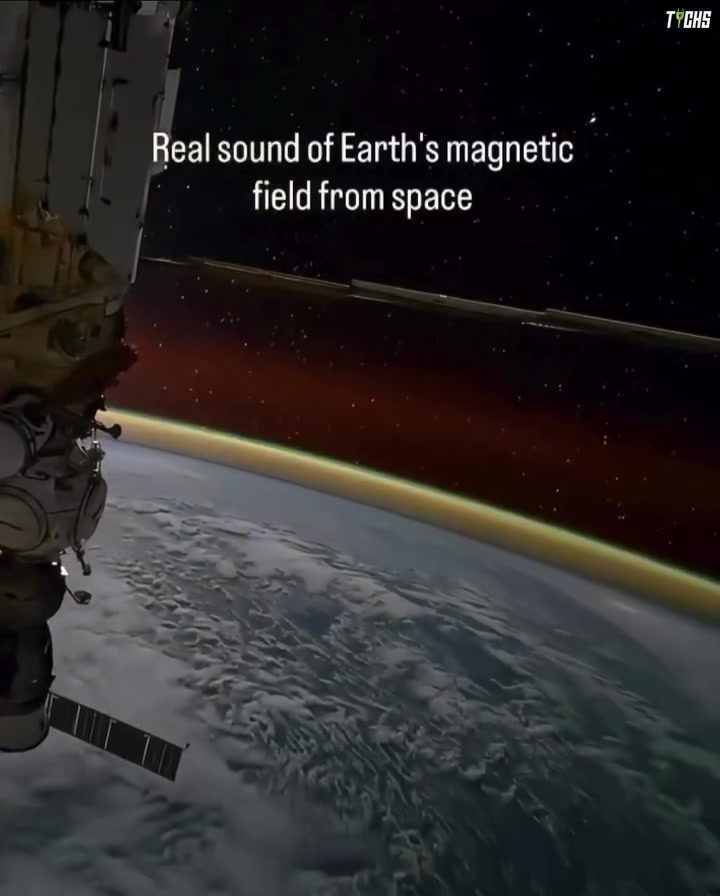
Sound of Earth's Magnetic Field
The TYCHS reel gives a unique perspective on the Earth’s magnetic field, visualizing it with swirling colors and claiming to present the "Real sound of Earth's magnetic field from space." This visualization offers a glimpse into the dynamic and invisible forces that protect our planet and influence life on Earth.
Why This Matters
The Earth's magnetic field is more than just a scientific curiosity; it plays a crucial role in protecting our planet from the sun's solar winds and cosmic radiation. Understanding and visualizing this field can help us better appreciate its significance and the advanced technologies used to study it.
The Science Behind the Visualization
The Earth's Magnetic Field
The Earth's magnetic field is generated by the movement of molten iron in the planet's outer core. This dynamo effect creates a magnetic field that extends into space, forming a magnetosphere. This magnetic bubble deflects solar winds, protecting the planet from harmful radiation. The field is not static; it changes over time and varies in strength and direction.
Visualizing the Field
The visualization in the TYCHS reel uses swirling colors to represent the magnetic field's activity. This simulation helps to make the invisible field visible and understandable. The colors likely represent different strengths and directions of the magnetic field lines.
The Sound of the Magnetic Field
The claim that the reel shows the "Real sound of Earth's magnetic field from space" is intriguing. While magnetic fields themselves do not produce sound, scientists can convert magnetic field data into audible frequencies. This process, known as data sonification, allows us to "hear" the magnetic field's fluctuations. The sounds heard in the reel are likely a result of this sonification process, providing an auditory representation of the magnetic field's dynamic nature.
The sounds may mimic the natural oscillations of the magnetic field, or they may be an artistic interpretation inspired by the data. These sounds can be incredibly soothing, providing a unique connection to the natural world.
Main Elements of the Magnetic Field
Magnetic Poles
The Earth's magnetic field has two poles, much like a bar magnet. These poles are not fixed and can wander over time. The magnetic north pole, for instance, has been moving steadily toward Siberia. This movement, known as polar wandering, is a natural phenomenon but can have implications for navigation and technology.
Magnetic Reversals
One of the most fascinating aspects of the Earth's magnetic field is its tendency to reverse polarity. Over the course of Earth's history, the magnetic north and south poles have switched places numerous times. These reversals occur at irregular intervals, ranging from tens of thousands to millions of years. The last reversal, known as the Brunhes-Matuyama reversal, happened around 780,000 years ago. Understanding these reversals is crucial for decoding the Earth's magnetic history and its future behavior.
The Magnetosphere
The magnetosphere is the region of space where the Earth's magnetic field dominates. It acts as a protective shield, deflecting solar winds and cosmic rays. The magnetosphere is dynamic and responds to changes in solar activity, such as solar flares and coronal mass ejections. These interactions can create beautiful phenomena like the Northern and Southern Lights, or auroras, which are visible from the Earth's surface.
Practical Tips for Exploring the Magnetic Field
Observing Auroras
One of the most accessible ways to experience the Earth's magnetic field is by observing auroras. These natural light displays occur when charged particles from the sun interact with the Earth's magnetic field and atmosphere. The best places to see auroras are in high-latitude regions, such as Alaska, Canada, Norway, and Antarctica. During periods of high solar activity, auroras can sometimes be seen from lower latitudes as well.
Using Compasses and GPS
Compasses and GPS devices rely on the Earth's magnetic field for navigation. Understanding how these tools work can provide a practical connection to the magnetic field. Compasses point towards the magnetic north pole, while GPS devices use a network of satellites to determine your location on the Earth's surface.
Listening to Space Sounds
While the magnetic field itself does not produce sound, scientists have developed ways to convert magnetic field data into audible frequencies. Listening to these sonifications can provide a unique and immersive experience of the Earth's magnetic field. Various online platforms and apps offer recordings of space sounds, allowing you to explore the magnetic field from the comfort of your home.
Important Takeaways
The visualization provided by TYCHS offers a captivating way to understand the Earth's magnetic field. It highlights the dynamic and ever-changing nature of this invisible force, which is crucial for protecting our planet and life on it. By listening to the sonified magnetic field data, we can gain a deeper appreciation for the complex and beautiful interactions that occur in space.
Conclusion
The Earth's magnetic field is a fundamental and awe-inspiring aspect of our planet. Visualizations and sonifications offer unique ways to experience and understand this powerful force. Whether through observing auroras, using navigation tools, or listening to space sounds, there are many ways to connect with the magnetic field and appreciate its significance.
Watch the Reel
Questions readers ask
How does the TYCHS reel transform Earth's magnetic field data into visuals and sounds?
The TYCHS reel uses advanced algorithms to convert complex data from Earth's magnetic field into a captivating display of colors and sounds. This transformation allows viewers to experience the dynamic nature of the magnetic field in an engaging and accessible way, making the invisible visible through swirling colors and audible through unique sounds.
What is the significance of Earth's magnetic field?
Earth's magnetic field serves as a protective shield, safeguarding our planet from harmful solar winds and cosmic radiation. It is generated by the motion of molten iron in the Earth's core and extends far into space, creating a crucial barrier that influences life on Earth.
Can I experience the Earth's magnetic field from the International Space Station?
While you can't physically experience the magnetic field from the ISS, the TYCHS reel offers a unique simulation based on data collected from space. This visualization provides a window into what the magnetic field might look and sound like, offering a space visual experience that transforms raw magnetic field data into a sensory journey.
What kind of data is used to create the TYCHS reel?
The TYCHS reel utilizes data collected from various spacecraft and satellites, including those on the International Space Station, to create an accurate and immersive magnetic field visualization. This data includes measurements of the magnetic field's strength and fluctuations, which are then translated into the colors and sounds presented in the reel.
How does the TYCHS reel help in understanding Earth's magnetic field?
By converting complex magnetic field data into an audio-visual experience, the TYCHS reel makes it easier to grasp the dynamic and ever-changing nature of Earth's magnetic field. This approach not only highlights the beauty of this natural phenomenon but also underscores the importance of the space sounds and visuals in comprehending the planet's protective shield.
What technologies are used to study Earth's magnetic field from space?
A variety of technologies are employed to study Earth's magnetic field, including magnetometers on satellites and the International Space Station. These instruments measure the magnetic field's strength and fluctuations, providing the data necessary for simulations like the TYCHS reel. By analyzing this data, scientists can gain insights into the dynamic forces that shape our planet's magnetic environment.
Are the sounds in the TYCHS reel based on actual space sounds?
The sounds in the TYCHS reel are not literal recordings of space, as space is a vacuum and therefore silent. Instead, the sounds are a creative interpretation of the magnetic field data, translated into an auditory experience. This approach aims to provide a unique and immersive way to experience the dynamic forces of the Earth's magnetic field from space.
Related deep dives
Similar reads based on topic and creator.




Recent articles
Fresh deep dives from the latest Reels we unpacked.




Comments
Be the first to comment.