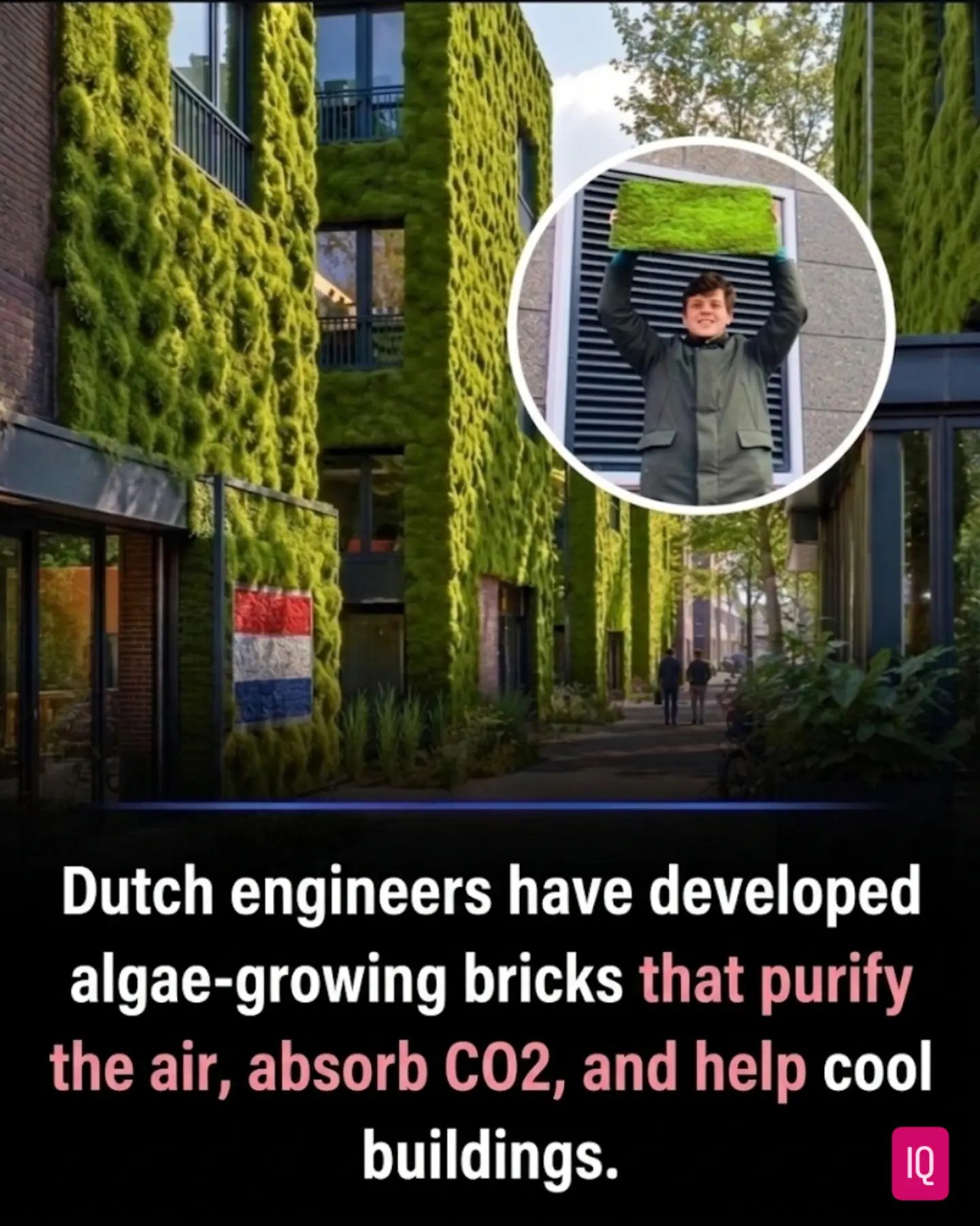
Algae-Growing Building Bricks
Sustainable architecture is a rapidly evolving field, and Dutch engineers have made a significant leap forward with the development of algae-growing building bricks. These innovative bricks are designed to support the growth of algae or moss directly on their exterior surfaces, integrating biological organisms into urban facades. This technology offers a range of benefits, from air purification to passive cooling, making it a game-changer in sustainable civil infrastructure and bio-integrated architecture.
Context / Why this matters
Urban areas are often plagued by air pollution and the urban heat island effect, where cities are significantly warmer than their surrounding rural areas due to human activities and the built environment. Traditional building materials do little to mitigate these issues, but algae-growing bricks offer a promising solution.
Main discussion
Air Purification
One of the most notable benefits of these algae-growing bricks is their ability to purify the air. The algae and moss growing on the bricks act as natural filters, absorbing carbon dioxide (CO2) and other pollutants from the ambient air. This process not only helps to reduce air pollution but also contributes to the overall health of urban environments.
By acting as localized carbon sinks, these bricks play a crucial role in mitigating the impact of urbanization on the environment. The biological organisms embedded in the bricks actively absorb CO2, helping to lower the carbon footprint of urban areas. This is particularly important in densely populated cities where air pollution levels are high.
Passive Cooling
In addition to air purification, algae-growing bricks contribute to passive cooling of buildings. The natural respiration and shading provided by the vegetation on the bricks help to cool the structures. This passive cooling effect significantly reduces the urban heat island effect, making urban areas more comfortable and livable.
The shade provided by the growing algae and moss helps to reflect sunlight, reducing the amount of heat absorbed by the building. This, in turn, lowers the energy demands required for internal temperature regulation, as less energy is needed for cooling. This not only saves energy but also reduces the carbon emissions associated with cooling systems.
Energy Efficiency
The energy-saving benefits of algae-growing bricks extend beyond passive cooling. By reducing the need for artificial cooling, these bricks help to lower the overall energy consumption of buildings. This is particularly important in urban areas where energy demands are high and resources are often stretched thin. The reduction in energy consumption not only saves money but also helps to conserve natural resources.
Practical Tips
If you're considering incorporating algae-growing bricks into your next construction project, there are a few practical tips to keep in mind:
1. Plan for Maintenance
Algae and moss require regular maintenance to thrive. Ensure that your building design includes easy access to the exterior surfaces for cleaning and upkeep. Regular maintenance will help to keep the biological organisms healthy and effective in purifying the air and cooling the building.
2. Choose the Right Location
Algae-growing bricks are most effective in areas with ample sunlight and moisture. Consider the orientation and exposure of your building when planning the installation of these bricks. Places with frequent rainfall or misting systems can also enhance the growth of algae and moss.
3. Select Compatible Materials
Ensure that the algae-growing bricks are compatible with the other materials used in your construction project. Some materials may inhibit the growth of algae and moss, so it's important to choose materials that support the biological organisms.
4. Consider Local Regulations
Before incorporating algae-growing bricks into your construction project, check local regulations and building codes. Some areas may have specific requirements or restrictions on the use of sustainable materials.
Important Takeaways
Algae-growing bricks are a revolutionary development in sustainable architecture. Their ability to purify the air, absorb CO2, and cool buildings makes them an invaluable addition to urban infrastructure. By embedding biological organisms into urban facades, these bricks act as localized carbon sinks, significantly reducing the urban heat island effect and lowering energy demands.
The integration of algae-growing bricks into building design represents a significant advancement in sustainable civil infrastructure and bio-integrated architecture. These bricks offer a range of benefits that make them a valuable addition to any construction project aiming for sustainability and energy efficiency.
Conclusion
Algae-growing building bricks are a groundbreaking innovation in sustainable architecture. Their ability to purify the air, absorb CO2, and cool buildings makes them a valuable addition to urban infrastructure. As cities continue to grow and face increasing environmental challenges, technologies like these will play a crucial role in creating more sustainable and livable urban environments. By embracing algae-growing bricks, builders and architects can contribute to a greener future while also enhancing the quality of life in urban areas.
Watch the Reel
Questions readers ask
How do algae bricks contribute to cleaner air in urban environments?
Algae bricks help purify the air by providing a surface for algae and moss to grow, which absorb pollutants such as nitrogen oxides and carbon dioxide. This process helps to reduce air pollution in urban areas, creating a healthier living environment for residents.
What is the urban heat island effect and how do algae bricks help mitigate it?
The urban heat island effect is when cities are significantly warmer than their surrounding rural areas due to human activities and the built environment. Algae bricks help mitigate this effect by providing a biological cooling mechanism. The algae and moss growing on the bricks absorb heat and release it through evaporation, contributing to a more temperate urban climate.
Who are the innovators behind the development of algae bricks in the Netherlands?
Dutch engineers are at the forefront of this innovation. They have developed these algae-growing building bricks as a way to integrate biological organisms into urban facades, offering a range of benefits from air purification to passive cooling. This makes them a key player in the development of sustainable architecture.
Can algae bricks be integrated into existing buildings or are they only suitable for new constructions?
Algae bricks can be integrated into both new and existing buildings. Their design allows for flexibility in installation, making them a versatile option for retrofitting older structures to enhance their environmental benefits and sustainability features.
What kinds of pollutants do algae bricks absorb?
Algae bricks are particularly effective at absorbing carbon dioxide (CO2) and nitrogen oxides (NOx). These pollutants are common in urban areas due to vehicle emissions and industrial activities. By absorbing these substances, algae bricks contribute to a cleaner and healthier urban environment.
How do algae bricks help in creating a more sustainable built environment?
Algae bricks help create a more sustainable built environment by integrating biological processes into building materials. They absorb pollutants, provide passive cooling, and contribute to a more temperate urban climate. This makes them a valuable component in eco-friendly construction and green building technology.
What are the benefits of using algae bricks in urban areas?
Using algae bricks in urban areas offers numerous benefits, including improved air quality, reduced urban heat island effect, and a more aesthetically pleasing urban landscape. They also contribute to the development of sustainable civil infrastructure and bio-integrated architecture, making them a key innovation in green building technology.
Related deep dives
Similar reads based on topic and creator.



Recent articles
Fresh deep dives from the latest Reels we unpacked.




Comments
Be the first to comment.