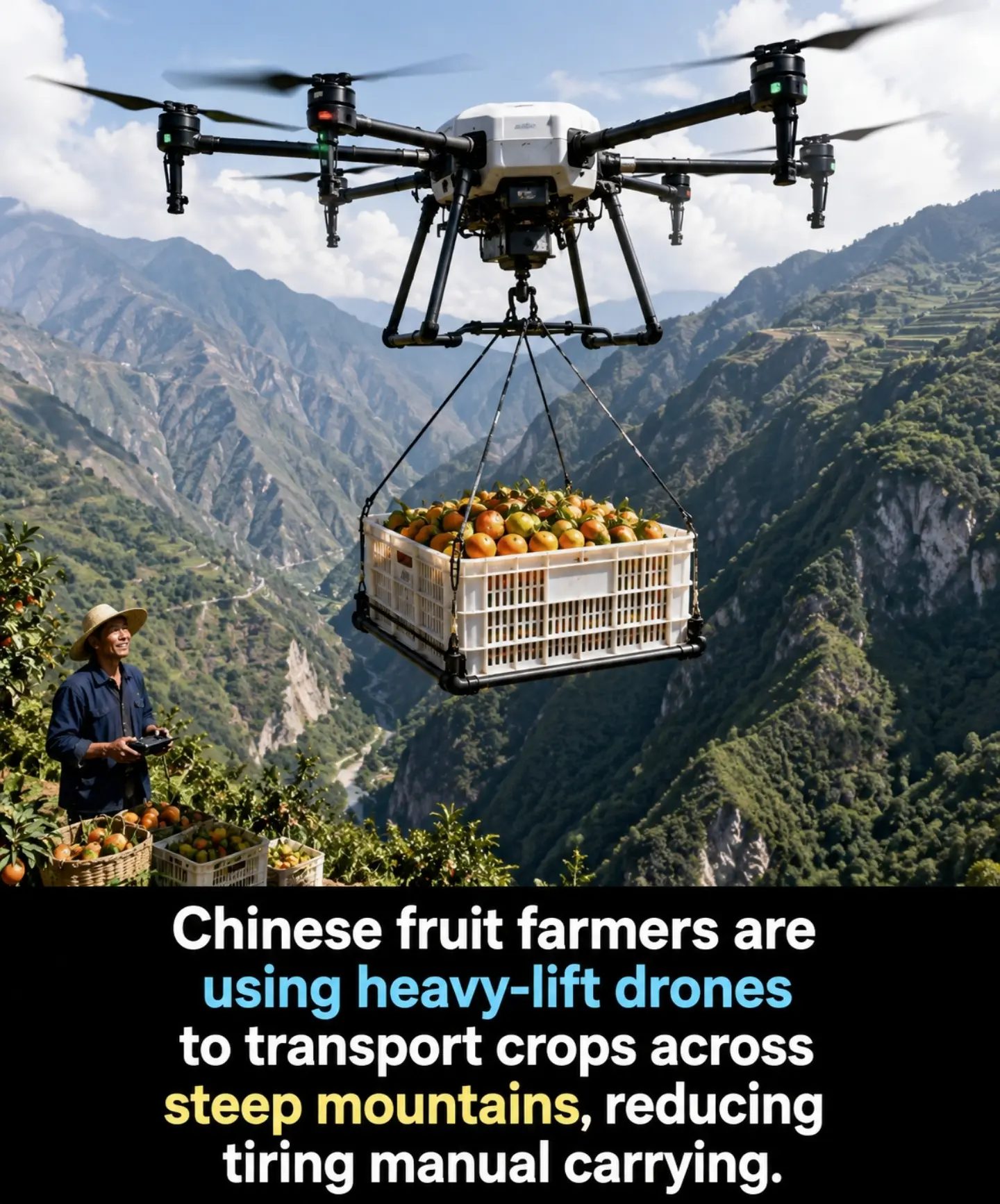
Agricultural Drone Transport
Heavy-lift drones are revolutionizing agricultural practices, especially in challenging terrains. Farmers in mountainous regions are increasingly adopting this technology to transport crops efficiently, reducing the need for labor-intensive manual carrying.
Why this matters
In agricultural regions with steep mountains, transporting crops can be a significant challenge. Traditional methods often involve manual carrying, which is not only physically demanding but also time-consuming. Drones offer a more efficient and less strenuous alternative, allowing farmers to focus on other critical tasks.
Agricultural Drone Transport
The Rise of Heavy-Lift Drones
Heavy-lift drones are designed to carry substantial loads over long distances. In agricultural settings, these drones can transport crops, fertilizers, and other essential materials with ease. The ability to navigate rugged terrain makes them particularly useful in mountainous regions where accessibility is a major concern.
Efficiency in Transport
One of the primary benefits of using heavy-lift drones in agriculture is the efficiency they bring to the transport process. These drones can cover significant distances quickly, reducing the time and effort required to move crops from the fields to storage or market. This efficiency translates to cost savings and improved productivity for farmers.
Reducing Manual Labor
Manual labor is integral to farming, but it can be physically demanding and time-consuming, especially in hilly or mountainous regions. By using drones to transport crops, farmers can significantly reduce the need for manual carrying. This not only alleviates the physical strain on workers but also allows them to focus on other essential tasks, such as planting, harvesting, and maintenance.
Environmental Impact
Drones also offer environmental benefits. Traditional methods of transporting crops, such as using trucks or other vehicles, can contribute to carbon emissions. Drones, on the other hand, are generally more fuel-efficient and have a smaller environmental footprint. This makes them a more sustainable option for agricultural transport.
Adoption in China
China is at the forefront of adopting drone technology in agriculture. Chinese fruit farmers, in particular, have been using heavy-lift drones to transport crops across steep mountains. This practice not only improves efficiency but also allows farmers to access markets that were previously inaccessible due to terrain difficulties.
Practical Tips
Choosing the Right Drone
When considering the use of heavy-lift drones in agriculture, it's essential to choose the right model. Factors to consider include the drone's carrying capacity, range, and durability. For mountainous terrains, drones with robust designs and reliable navigation systems are crucial.
Training and Operation
Operating a heavy-lift drone requires specific skills and training. Farmers should undergo proper training to ensure safe and efficient drone operation. This includes understanding the drone's controls, navigation systems, and safety protocols.
Maintenance and Upkeep
Regular maintenance is essential to keep the drone in optimal condition. This includes checking the drone's batteries, propellers, and navigation systems. Farmers should also ensure that the drone is stored properly when not in use to prevent damage.
Regulatory Considerations
Before using drones for agricultural purposes, it's important to be aware of the regulatory requirements in your region. Regulations can vary, and compliance is essential to avoid legal issues. This may include obtaining permits, adhering to flight restrictions, and following safety guidelines.
Integration with Other Farming Practices
Drones can be integrated with other farming practices to enhance efficiency. For example, drones can be used in conjunction with GPS systems for precise crop mapping and monitoring. This integration can provide farmers with valuable data to optimize their operations.
Important Takeaways
Agricultural drone transport, particularly using heavy-lift drones, offers significant benefits in terms of efficiency, reduced manual labor, and environmental impact. The adoption of this technology in mountainous regions can greatly enhance agricultural practices, making farming more sustainable and productive.
Conclusion
The use of heavy-lift drones in agricultural transport is a game-changer, especially in challenging terrains. By reducing the need for manual carrying and increasing efficiency, drones offer a sustainable and productive solution for farmers. As technology advances, the integration of drones in agriculture is expected to grow, paving the way for more innovative and efficient farming practices.
Watch the Reel
Questions readers ask
How do drones help in transporting crops in mountainous regions?
Drones assist in transporting crops by providing a means to carry heavy loads over rugged, steep terrain. This reduces the need for manual labor, which can be physically demanding and time-consuming. By using drones, farmers can transport crops more efficiently, focusing on other important tasks.
What are heavy-lift drones and how do they benefit farming?
Heavy-lift drones are designed to carry substantial loads over long distances. In farming, these drones benefit agricultural practices by transporting crops quickly and efficiently, even in challenging terrains. This is particularly useful in mountainous regions, where traditional transportation methods can be difficult or highly labor-intensive.
Can drones be used to transport specific types of crops, like oranges?
Yes, drones can be specifically designed to handle crops with special needs, such as oranges. These drones can carry delicate fruits without causing damage, ensuring that crops reach their destination in good condition. This capability makes heavy-lift drones a versatile tool for various types of agricultural produce.
Are drones only used for transportation in farming, or do they have other applications?
While drones are highly effective in transporting crops, they also have other applications in farming. Drones can capture video footage of fields, helping farmers monitor crop health and identify any issues. This can be extremely useful for planning and managing agricultural activities, especially in large or rugged terrains.
What are the key advantages of using drones for crop transport in mountainous regions?
Using drones for crop transport in mountainous regions offers several advantages. It reduces the physical strain on farmers, increases efficiency, and saves time. By navigating rugged terrain with ease, drones help farmers improve agricultural productivity and focus on other critical aspects of their operations.
What challenges do drones overcome in mountainous farming?
Drones tackle several challenges in mountainous farming, such as the difficulty of transporting crops over steep and rugged terrain. By providing a less labor-intensive method, drones help farmers overcome physical demands and save time. This allows for more efficient agricultural practices and better resource allocation on farms.
How do heavy-lift drones navigate rugged terrain effectively?
Heavy-lift drones are equipped with advanced navigation systems that enable them to maneuver through rugged, mountainous terrains. These systems use GPS and sensors to map out the best routes, ensuring the drones can carry crops safely and efficiently. This capability is crucial for navigating the challenges posed by steep slopes and uneven landscapes in mountainous regions.
Related deep dives
Similar reads based on topic and creator.

Recent articles
Fresh deep dives from the latest Reels we unpacked.




Comments
Be the first to comment.