The Future of Drones: Mimicking Nature's Fliers
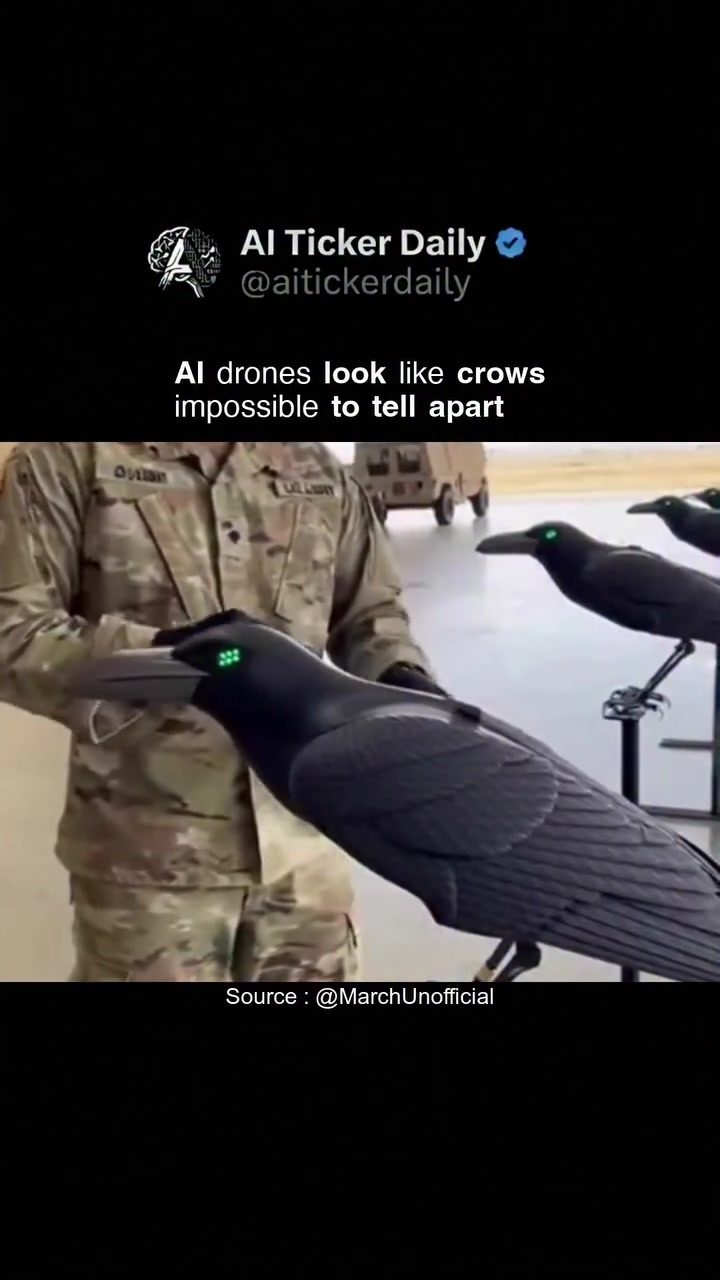
Drones designed to mimic the appearance and flight patterns of crows are a remarkable example of how technology is advancing to integrate seamlessly with the natural world. These artificial birds are crafted with such precision that they are nearly indistinguishable from real crows.
Context
The recent demonstration of these drones represents a significant leap in technology. The drones not only resemble crows visually but also mimic their natural flight patterns, making them exceptionally difficult to differentiate from real birds.
The potential applications of such drones are vast and varied. From surveillance and wildlife monitoring to entertainment and even conservation efforts, these drones could revolutionize how we interact with and observe the natural world.
Main Discussion
Technological Breakthroughs
The development of drones that mimic crows highlights the incredible advancements in artificial intelligence and drone technology. The drones' design and flight patterns are so realistic that it is difficult to distinguish them from real birds. This level of sophistication is achieved through advanced AI algorithms and precision engineering.
The AI technology powering these drones is designed to mimic the natural behaviors of crows. This includes their flight patterns, movements, and even their appearance. The drones are equipped with sensors and cameras that allow them to navigate and respond to their environment in a way that closely resembles real birds.
Practical Applications
The potential applications of these drone technologies are extensive. In the realm of surveillance, these drones could be used for covert operations, providing a level of stealth that traditional drones cannot match. Their ability to blend in with natural surroundings makes them ideal for monitoring wildlife or even conducting environmental research.
In the entertainment industry, these drones could be used to create immersive experiences, such as in film productions or theme parks. Their realistic movements and appearance could add a new dimension to special effects and interactive exhibits.
Challenges and Ethical Considerations
While the technology is impressive, there are also challenges and ethical considerations to address. The use of drones that mimic natural creatures raises questions about privacy and the potential for misuse. It is crucial to develop guidelines and regulations to ensure that these drones are used responsibly and ethically.
Moreover, there are technical challenges to overcome, such as improving battery life and enhancing the drones' ability to navigate complex environments. Ongoing research and development will be essential to address these issues and fully realize the potential of this technology.
Practical Tips
If you are considering the use of drones that mimic natural creatures, here are some practical tips to keep in mind:
- Understand the Regulations: Before deploying these drones, familiarize yourself with local and national regulations regarding drone use and privacy.
- Pilot Training: Ensure that anyone operating these drones is properly trained and understands the ethical considerations involved.
- Battery Management: Plan for frequent battery changes or recharging, as these drones can be power-intensive.
- Environmental Awareness: Be mindful of the environment in which the drones will be operating. Ensure that their use does not disrupt local wildlife or ecosystems.
Important Takeaways
- Advanced Technology: The drones demonstrate the advanced capabilities of AI and drone technology, making them nearly indistinguishable from real crows.
- Versatile Applications: These drones have a wide range of applications, from surveillance and wildlife monitoring to entertainment and conservation.
- Ethical Considerations: The use of these drones raises important ethical and regulatory questions that need to be addressed.
- Practical Challenges: While impressive, these drones also present technical challenges that require ongoing research and development.
Conclusion
Drones designed to mimic crows represent a remarkable advancement in technology. Their realistic appearance and flight patterns open up a world of possibilities. From surveillance and wildlife monitoring to entertainment and conservation, these drones have the potential to revolutionize various industries. However, it is essential to address the ethical and technical challenges they present to ensure their responsible and effective use. As technology continues to advance, we can expect to see even more innovative applications of these remarkable drones.
Watch the Reel
Questions readers ask
How do these AI-powered drones mimic the flight patterns of crows?
These drones use advanced AI algorithms to study and replicate the nuanced flight patterns of crows. This includes mimicking their speed, agility, and erratic movements, making the drones nearly indistinguishable from real crows in flight.
What are the primary applications of drones that mimic crow flight?
These drones have a wide range of applications, including surveillance, wildlife monitoring, and entertainment. They can be used for covert observations, tracking wildlife without disturbing natural behaviors, and creating unique and immersive experiences for audiences.
How do these drones blend into the natural environment?
The drones are designed with meticulous attention to detail, replicating not only the flight patterns but also the physical appearance of crows. This includes their size, shape, and color, allowing them to blend seamlessly into natural surroundings, making them almost unnoticeable to both humans and animals.
What kind of technology is used to create these bird-like drones?
The technology behind these drones involves advanced AI and robotics. The drones are equipped with sophisticated sensors and processors that enable them to navigate and interact with their environment in a manner similar to real birds. Additionally, they use lightweight materials and efficient propulsion systems to mimic the flight capabilities of crows.
Can these drones be used for conservation efforts?
Yes, these drones have potential applications in conservation. By mimicking crow flight, they can monitor wildlife, track animal movements, and gather data without causing disturbance, which can be crucial for understanding and protecting endangered species and their habitats.
How do these drones benefit from mimicking crow flight specifically?
Crows are known for their intelligent and adaptable behavior, making them an excellent model for drone design. By mimicking crow flight, these drones can navigate complex environments, avoid obstacles, and adapt to changing conditions, enhancing their effectiveness in various applications, from surveillance to environmental monitoring.
What are the advantages of using AI-powered drones for surveillance?
AI-powered drones that mimic crow flight offer several advantages for surveillance. They can conduct observations covertly, reducing the risk of detection, and can be deployed in areas where human presence might be intrusive. Their ability to mimic natural flight patterns also makes them less likely to startle or disturb wildlife, making them ideal for monitoring both urban and natural environments.
Related deep dives
Similar reads based on topic and creator.



Recent articles
Fresh deep dives from the latest Reels we unpacked.




Comments
Be the first to comment.