The Durupinar Formation
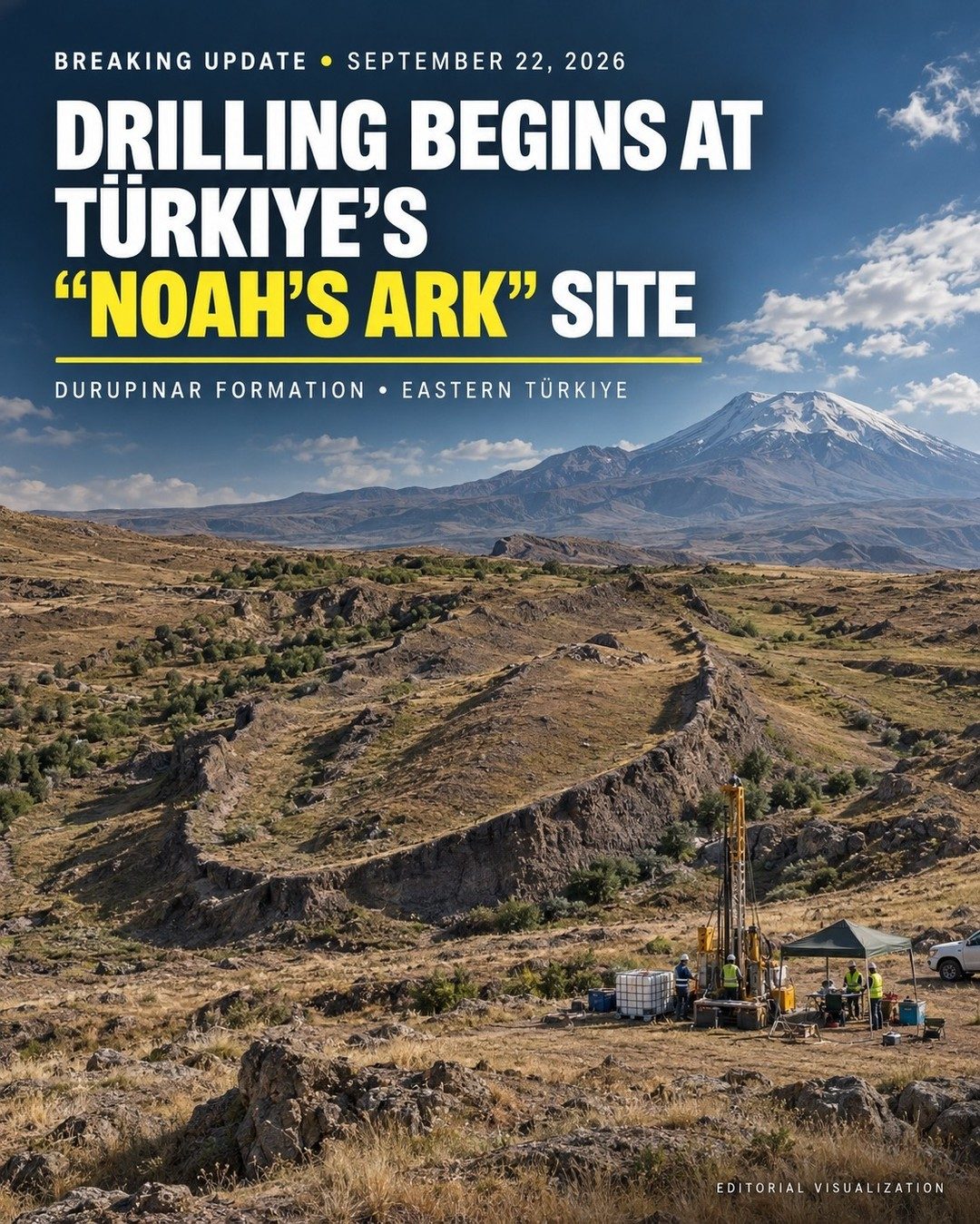
The Durupinar Formation in Eastern Türkiye has been the subject of intense speculation for decades, with many believing it to be the biblical resting place of Noah’s Ark. The geological formation has unique features that have captivated researchers and enthusiasts alike. The site’s distinctive boat-like shape, measuring approximately 518 feet (158 metres) long and 43 feet (13.3 meters) wide has been central to the ongoing debate. The site is remarkable by its own measure. It has “sedimentary layers that might indicate a catastrophic flood”. The site is a high-level exposure of the Late Cretaceous formation, which dates to over 65 million years. Despite its geological significance, the Durupinar Formation remains etched in public consciousness with the Noah’s Ark myth. However, the archaeological drilling has been a matter of contention. Drilling operations at the site have historically been met with criticism, with opponents citing the potential disruption to the site’s natural and cultural significance. However, it is now known that the drilling is being conducted as carefully as possible. The equipment is state-of-the-art and designed to minimize disturbance to the site. The drilling operation is being orchestrated by a team of geologists and engineers who have experience with high-risk, delicate, sites. Team members must meticulously examine each sample extracted. Many hold the view that high-precision geological sampling may offer permanent insight into the geological history of the region and the site.
The Durupinar Site
The Durupinar Site is claimed to be a remnant of the catastrophic flooding event described in the biblical story of Noah. There are a number of unique features that argue for its identification as Noah’s Ark. The site has a long and narrow shape, much like a boat, and the top of the site has irregular “holes” which some researchers claim could be ventilation shaft openings. Some researchers even claim that there are remnants of ancient wood on the site, adding to the theory that the site could be man-made. However researchers are divided on these claims. Some maintain that the site could be a naturally occurring geological formation while others insist that the site is indeed an ancient boat. Despite the debate, the site remains a popular tourist destination. For years, the Eastern Türkiye site was off-limits, inaccessible to the public and scientific scrutiny alike. But recent changes in policy have allowed for a closer look. The drilling operations, which began on September 22, 2026, mark a pivotal moment in the site’s history. While some have lauded the initiation of drilling, others have raised concerns about the potential damage to the site. The site has now assumed the additional mantle of scientific significance. The site’s unique geological features and the ongoing archaeological drilling operations have drawn the interest of researchers and enthusiasts alike. However, only time will tell what, if any, archaeological or geological artifacts will be discovered. There is an interest in the topic that spans centuries and is not likely to wane. Whether or not the site proves to be the resting place of Noah’s Ark remains to be seen.
Watch the Reel
Related deep dives
Similar reads based on topic and creator.

Recent articles
Fresh deep dives from the latest Reels we unpacked.


Comments
Be the first to comment.