Turn Bad Choices
Turn Bad Choices
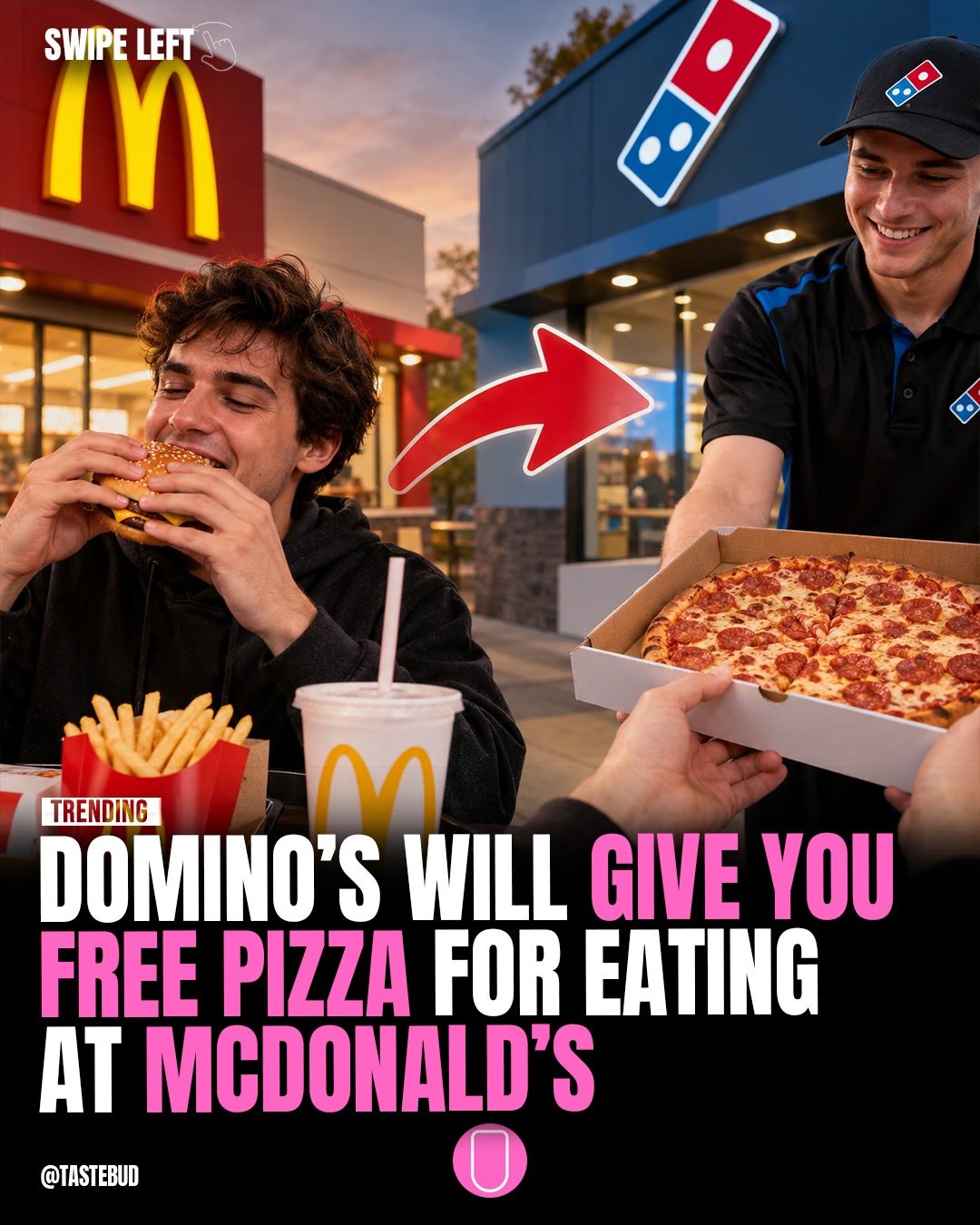
 Domino’s is offering a surprising promotion—a free pizza. You might think the overall message is simply to win back customers. However, businesses rarely operate on such simple logic. This promotion asks customers to buy food from a rival chain, upload a receipt, and then receive a code for a free Domino’s pizza. Unlike typical sales tactics, this strategy encourages customers to engage with competitors.
 This promotion targets consumers of rival companies, potentially the most malleable customers. The combination of a free pizza and a receipt from a rival chain cleverly distills an anti-brand experience into a tasty prize.  The success of this promotion could be seen as Domino's attempt to capitalize on bad choices, transforming an experience at the competition into a reason to choose them. This isn't about indulgence or choice—it's about a transactional trade.
Customers Buy More With Receipts
Customers Buy More With Receipts
  Domino's and McDonald's are natural rivals. The businesses thrive on rapid service and an experience that customers repeat. However, Domino’s has upped the ante. They want to capitalize on McDonald’s customers’ decision. The company offers them a chance to retroactively insert a Domino’s pizza into their day. These free pizzas aren’t tokens of affection but of trade—the receipt is the exchangeable currency, the customer holds the value.
  McDonald’s customers may be laying claim to their loyalty with a receipt, but there’s no such guarantee that Domino’s customers will do the same. Thus, Technically, the promotion benefits customers who aren't loyal to either brand, “luring them into a bit of a two-for-one with their rivals.”
  Once Domino's decision was to increase appetite, the next step was to attempt to induce loyalty. In the fast food market, food is the product but acquisition is the brand. These methods are direct, participatory, and asymmetrical. The receipt from a rival isn’t just proof of purchase, it's a coupon for a variation of a meal can be eaten.
Packaging the Message
Packaging the Message
  Domino's promotional campaign asks customers to think about their own eating habits, asking customers to claim a receipt as a valuable receipt for pizza, but a secondary purpose is to have customers reflect on their brand loyalty.
    One of the messages Domino's is sharing is: “Hey, you ate at McDonald’s, maybe you should have come here instead.” It's a subtle nudge of regret and guilt. Promotions requiring a receipt from a rival chain aren’t unheard of, but it’s the taste of something better promised in this scheme that sets Domino’s strategy apart. The platform itself isn’t just a convenience, but also a promotional tool—consumers can share their receipts in exchange for a code for free pizza.
  The idea of exchanging a rival receipt for a Domino’s pizza works to involve customers in reliving the moment while attaching value to the transaction. An owner of a receipt from McDonald’s is a customer that Domino's now has access to. Domino’s is less about choosing between the two fast food brands, but more about the taste of pizza. Thus, every Domino’s promotion is a chance to capture a customer from a competing brand, or even from an entirely different industry.
Source
Watch the Reel
Related deep dives
Similar reads based on topic and creator.


Recent articles
Fresh deep dives from the latest Reels we unpacked.
Comments
Be the first to comment.