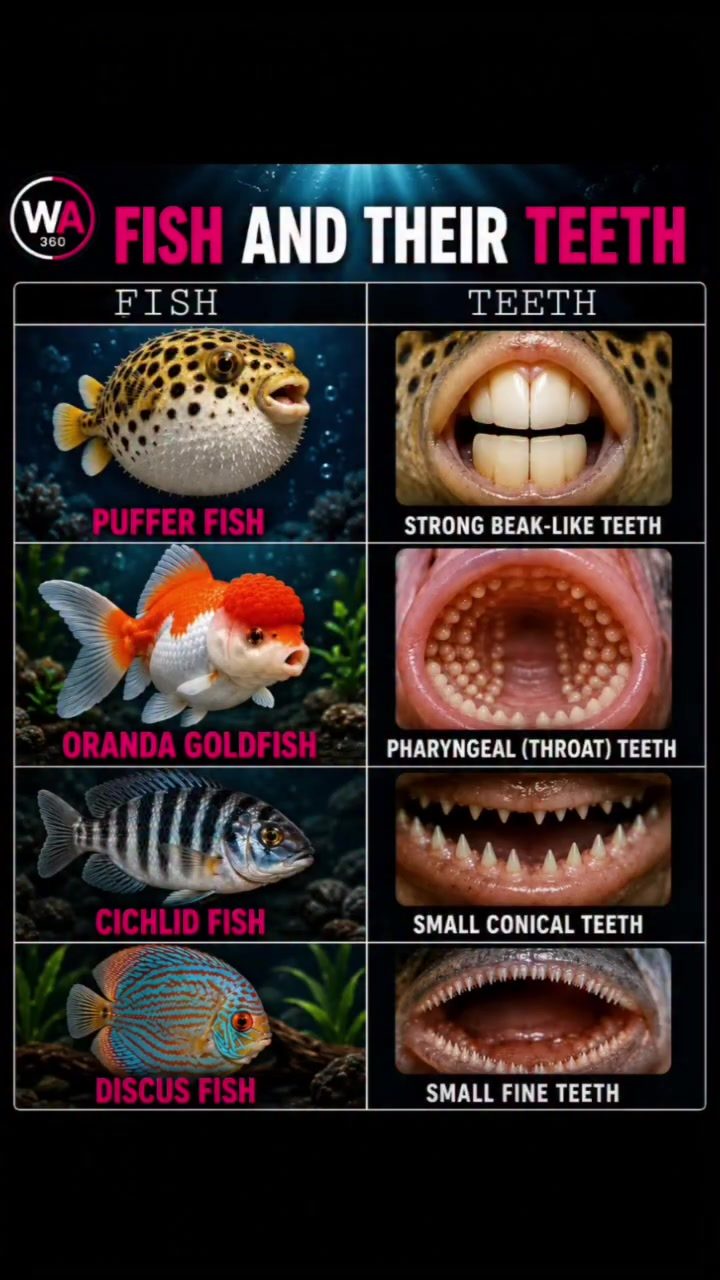
Fish teeth are often overlooked, but they are a fascinating aspect of aquatic life. With each species evolving unique teeth structures to thrive in their environments, the diversity of fish teeth offers a glimpse into the wonders of adaptation and survival in the natural world.
Why This Matters
Understanding the unique teeth structures of different fish species can provide insights into their feeding habits, survival strategies, and evolutionary adaptations. Fish teeth are not just tools for consumption; they are critical for the overall health and survival of the species. By examining these adaptations, we gain a deeper appreciation for the intricate balances within aquatic ecosystems.
Main Discussion
Puffer Fish and Their Beak-Like Teeth
Puffer fish are known for their distinctive appearance, but their teeth are just as remarkable. Unlike many other fish, puffer fish possess strong, beak-like teeth. These teeth are not only powerful but also incredibly efficient for their diet, which primarily consists of hard-shelled prey like mollusks and crustaceans. The beak-like structure allows puffer fish to crush and consume these tough prey items, making them well-adapted to their niche in the ecosystem.
Oranda Goldfish and Pharyngeal Teeth
The Oranda Goldfish, a popular ornamental fish, has a unique set of teeth called pharyngeal teeth. These teeth are located in the throat rather than the mouth, making them less visible but no less vital. Pharyngeal teeth help the Oranda Goldfish to grind and process food. The Oranda Goldfish uses these teeth to break down plant matter and other soft foods, ensuring efficient digestion and nutrient absorption.
Cichlid Fish and Their Conical Teeth
Cichlid fish are renowned for their diverse and colorful appearances, but their teeth are equally notable. Cichlids have sharp, conical teeth that are perfect for hunting and holding onto prey. These teeth are essential for their predatory lifestyle, allowing them to secure and consume a variety of aquatic creatures. The conical shape provides a strong grip, which is crucial for capturing slippery prey.
Discus Fish and Their Fine Teeth
Discus fish, often admired for their elegant and vibrant colors, have a different dental structure. Their teeth are small and fine, suited to their diet of algae and small invertebrates. These fine teeth enable discus fish to scrape and filter food from surfaces, making them well-adapted to their natural diet and feeding habits.
Practical Tips
Identifying Fish by Their Teeth
While observing fish in their natural habitats or aquariums, paying attention to their teeth can offer clues about their species and habits. For example, the beak-like teeth of a puffer fish can quickly identify them. Similarly, the small, fine teeth of a discus fish can help distinguish them from other species.
Understanding Feeding Habits
The teeth structure of a fish can provide insights into its feeding habits. For instance, the strong, beak-like teeth of a puffer fish indicate a diet of hard-shelled prey, while the pharyngeal teeth of an Oranda Goldfish suggest a diet of softer, plant-based food.
Conservation and Ecosystem Health
Recognizing the unique adaptations of fish teeth can also contribute to conservation efforts. Understanding how different fish species feed and survive can help in creating more effective conservation strategies. This knowledge can aid in preserving biodiversity and maintaining the balance of aquatic ecosystems.
Important Takeaways
Adaptation and Survival
Fishermen, aquarists, and marine enthusiasts alike, can appreciate how the unique teeth structures of different fish species have evolved to meet their specific dietary needs. This adaptation is a testament to the power of evolution and the intricate ways in which nature ensures the survival of diverse aquatic life.
Diversity in Aquatic Life
The variety of teeth structures in fish highlights the incredible diversity of aquatic life. From the powerful beak-like teeth of the puffer fish to the fine, scraping teeth of the discus fish, each species has developed unique dental features to thrive in their respective environments.
Importance of Evolution
The evolution of fish teeth is a clear demonstration of how species adapt over time. This process is driven by the need to survive and reproduce in often challenging aquatic environments. By studying these adaptations, we gain a deeper understanding of the natural world and the forces that shape it.
Conclusion
Fish teeth, though often overlooked, are a fascinating aspect of aquatic life. The diversity in teeth structures among different fish species showcases the wonders of adaptation and survival in the natural world. From the powerful beak-like teeth of puffer fish to the fine, scraping teeth of discus fish, each species has evolved unique dental features to thrive in their respective environments. This intricate balance of adaptation and function is a testament to the marvels of nature and the ongoing process of evolution.
Watch the Reel
Questions readers ask
What makes the teeth of pufferfish unique compared to other fish species?
Pufferfish have a distinctive beak-like structure formed by fused teeth, which is known as a rostrum. These teeth are exceptionally strong and allow pufferfish to crush hard-shelled prey, such as mollusks and crustaceans, with ease. Their specialized teeth structure helps them maintain a diverse diet and thrive in their natural habitats.
How do cichlid teeth differ from other fish teeth structures?
Cichlid teeth are specialized for hunting and feeding on various prey, including other fish and invertebrates. They typically have conical teeth in both jaws, which are well-suited for grasping and manipulating prey. Additionally, cichlids often have pharyngeal teeth in the throat, which help them crush and process food more effectively. These adaptations make cichlids some of the most versatile predators in aquatic ecosystems.
What are the primary functions of discus fish teeth?
Discus fish possess fine, conical teeth that are well-suited for their diet, which primarily consists of small insects, larvae, and worms. These teeth help them grasp and hold onto their prey effectively. Additionally, discus fish have a unique tongue structure that aids in manipulating food, making their teeth an essential part of their feeding strategy.
Do goldfish have teeth, and if so, what are their teeth like?
Yes, goldfish do have teeth, but they are not visible from the outside. Goldfish teeth are small and located in their throats, known as pharyngeal teeth. These teeth are crucial for grinding and processing food, such as plant matter, aquatic insects, and small invertebrates, helping goldfish to extract nutrients efficiently.
What are some surprising adaptations of fish teeth in aquatic ecosystems?
Many fish species have surprising and unique teeth adaptations. For example, some fish have teeth that are specially adapted to filter feed from the water, like the whale shark. Others, like the moray eel, have teeth that help them grab and hold onto slippery prey. These diverse adaptations showcase the incredible ways fish have evolved to thrive in their environments.
How do fish teeth contribute to the overall health and survival of the species?
Fish teeth are essential for capturing and processing food, which is critical for the health and survival of the species. They also play a significant role in reproductive success, as strong, healthy teeth can help fish compete for mates and resources. By understanding these adaptations, we gain a better appreciation for the intricate balances within aquatic ecosystems.
Related deep dives
Similar reads based on topic and creator.




Recent articles
Fresh deep dives from the latest Reels we unpacked.




Comments
Be the first to comment.