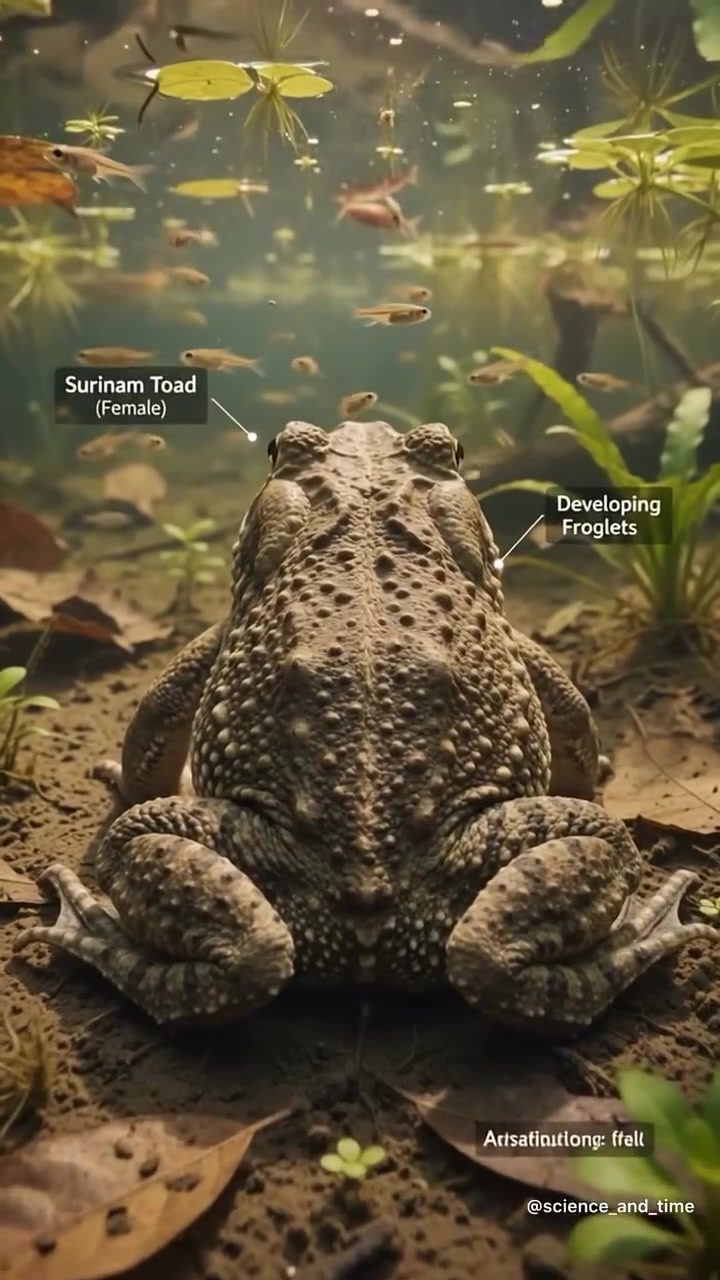
Surinam Toad Reproduction
Surinam toads exhibit one of the most extraordinary reproductive strategies in the animal kingdom. Unlike most amphibians, Surinam toads do not lay their eggs in water. Instead, the female toad carries her fertilized eggs embedded within her own skin, where they develop into fully formed young.
Context
Surinam toads, native to South America, are known for their unique reproductive behavior, which is often referred to as tacubation. This process involves the female toad becoming a living incubator for her young, providing them with protection and the necessary nutrients for their development. The unusual reproductive strategy of the Surinam toad has captivated scientists and nature enthusiasts alike, offering insights into the diverse and innovative methods animals use to ensure the survival of their offspring.
Main Discussion
The Reproductive Process
The reproductive journey of the Surinam toad begins with mating. After fertilization, the male toad carefully presses each fertilized egg onto the female's back. Initially, the eggs remain on the skin's surface. Over the next two days, the female's skin begins to grow around each egg, forming a protective chamber. This process continues over several weeks until the eggs are completely surrounded by the mother's skin.
Development Inside the Mother
Inside these chambers, the embryos undergo a remarkable transformation. Initially, they develop tadpole features, such as gills and a tail. Over time, the embryos absorb their tails, develop legs, and eventually become fully formed froglets. During this period, the embryos receive oxygen and nutrients directly from the mother, ensuring their survival and growth.
Emergence of the Young
The transformation takes approximately 12 to 20 weeks, depending on water temperature and species. Once the young are fully formed, the chambers on the mother's back naturally open, allowing the froglets to climb out. These tiny toadlets are ready to begin their independent lives, equipped with the essential survival skills they need to thrive in their environment.
Protection from Predators
One of the most significant advantages of this reproductive strategy is the protection it offers to the developing young. By carrying her eggs and embryos inside her body, the female toad shields them from predators and other environmental hazards. This ensures a higher survival rate for the young, giving them a better chance of reaching maturity and reproducing themselves.
Practical Tips
For those interested in observing or studying the Surinam toad, it's essential to understand the conditions required for their survival and reproduction. Here are some practical tips:
Habitat and Care
Surinam toads thrive in tropical environments. Maintaining a humid, warm environment is crucial for their well-being. In captivity, ensure the enclosure mimics their natural habitat, with plenty of hiding spots and a water source.
Important Takeaways
The Surinam toad's reproductive strategy is a fascinating example of nature's adaptability and ingenuity. By turning her body into a living incubator, the female toad provides her young with unparalleled protection and nurturing. This unique process highlights the diverse and innovative methods animals use to ensure the survival of their offspring, offering valuable insights into the complex world of amphibian reproduction.
Conclusion
The Surinam toad's reproductive process is a testament to the wonders of nature. The incredible transformation of a toad's skin into a safe haven for young is a mesmerizing example of evolutionary adaptation. Understanding this process deepens our appreciation for the diverse and extraordinary strategies that animals employ to ensure the survival of their species.
Watch the Reel
Questions readers ask
How does the Surinam toad's reproduction strategy differ from other amphibians?
Unlike most amphibians, the Surinam toad does not lay its eggs in water. Instead, the female toad carries her fertilized eggs within her own skin, where they develop into fully formed young, a process known as tacubation.
What is the significance of the term 'tacubation' in the context of Surinam toads?
'Tacubation' is a unique term that describes the process where the female Surinam toad incubates her fertilized eggs within her own skin. This process sets it apart from other amphibians and showcases its extraordinary reproductive strategy.
How long do the Surinam toad eggs typically incubate inside the mother's skin?
The incubation period for Surinam toad eggs within the mother's skin typically lasts around 120 to 150 days. During this time, the female toad provides a protective environment and necessary nutrients for the developing young.
What advantages does the tacubation process offer to the young Surinam toads?
The tacubation process offers several advantages. It provides the developing young with a safe and stable environment, protection from predators, and a steady supply of nutrients, increasing their chances of survival.
How does the female Surinam toad prepare for the incubation of her eggs?
The female Surinam toad prepares for incubation by developing special chambers in her back skin. These chambers allow the fertilized eggs to embed and develop, providing a safe and nutrient-rich environment for the growing young.
What happens to the young Surinam toads after they fully develop inside the mother's skin?
Once the young Surinam toads, known as froglets, are fully developed, they emerge from the mother's skin. This process involves the froglets breaking through the skin and making their way into the world, ready to fend for themselves.
Related deep dives
Similar reads based on topic and creator.

Recent articles
Fresh deep dives from the latest Reels we unpacked.




Comments
Be the first to comment.