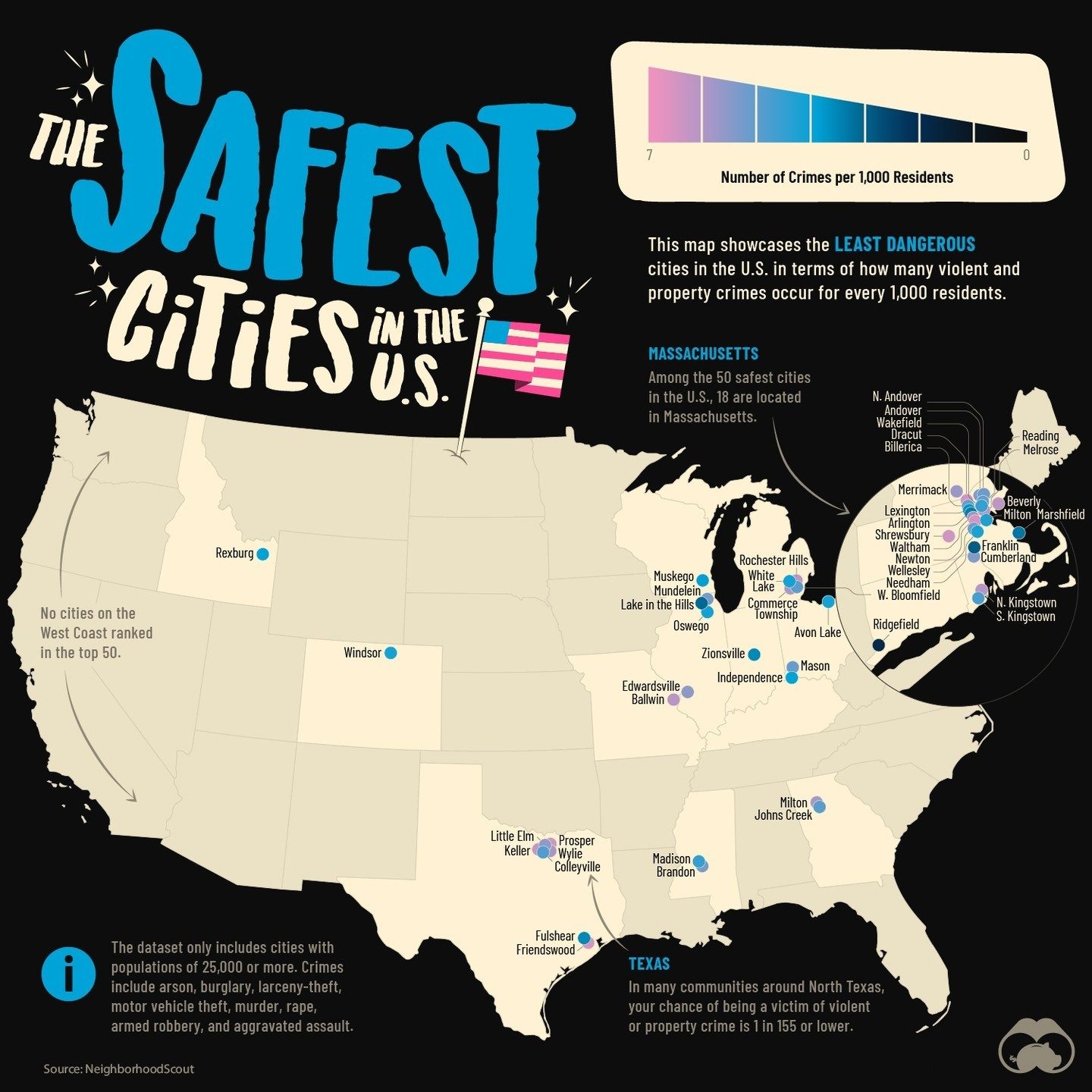
Safest Cities in the U.S.
When thinking of small towns in America, images of quiet streets, well-kept lawns, and safe neighborhoods often come to mind. However, the reality of modern-day suburbia can be more complex. Some of the smallest towns in the country have surprisingly high crime rates. Take, for example, Bessemer, Alabama, with a population of around 26,000 and a violent crime rate of 33.1 per 1,000 residents. This stark reality highlights the importance of understanding which urban areas are genuinely safe for families and individuals.
Context / Why this matters
The safety of a city is crucial for quality of life, and knowing where the safest places are can significantly impact decisions about where to live, work, and raise a family. While some small towns may have high crime rates, many others offer a haven of security. This article explores the safest cities in the U.S. using comprehensive data to provide a clear picture of where safety and tranquility can be found.
Data and Methodology
The data used to identify the safest cities in the U.S. comes from the FBI and Census Bureau populations, compiled by NeighborhoodScout in 2023. This analysis focuses on cities with a population of 25,000 or higher, providing a reliable snapshot of urban safety across the country. The rankings are based on total index crimes reported in each city, including both violent and property crimes.
Understanding the Data
Total index crimes encompass a range of offenses, including:
- Violent Crimes: Murder, rape, robbery, and aggravated assault
- Property Crimes: Burglary, larceny, motor vehicle theft, and arson
By considering these factors, the data offers a well-rounded view of urban safety. NeighborhoodScout ranks cities based on the number of crimes per 1,000 residents, making it easier to compare different areas regardless of their population size.
Key Findings
Some of the safest cities in the U.S. are located in Massachusetts and Texas. These states stand out for their relatively low crime rates, making them ideal for families seeking a secure environment. Cities like Rochester Hills in Massachusetts and several others in Texas feature prominently on the list, showcasing the diverse geographic distribution of safe urban areas.
Main discussion
Massachusetts
Massachusetts is renowned for its high-quality education, vibrant culture, and strong economy. It's also home to some of the safest cities in the U.S. Cities like Rochester Hills, with a low crime rate per 1,000 residents, exemplify the state's commitment to public safety. Several Massachusetts cities have implemented effective policing strategies, community engagement initiatives, and comprehensive safety programs to maintain their reputation as safe havens.
Texas
Texas, with its diverse landscape and dynamic urban centers, also boasts several cities with impressively low crime rates. These cities benefit from robust law enforcement, proactive community safety measures, and a strong emphasis on urban development. The state's commitment to safety is evident in its rankings, making it a top contender for families and individuals seeking secure living environments.
Other Notable Cities
While Massachusetts and Texas are highlighted for their safety, other states also feature cities with low crime rates. For example, cities in California, Florida, and New York contribute to the overall list of the safest cities in the U.S. These regions benefit from a combination of strong law enforcement, community involvement, and effective policing strategies. Each state has unique characteristics that contribute to its safety profile, offering diverse options for individuals and families seeking secure communities.
Practical tips
When considering where to live, safety is a paramount concern. Here are some practical tips for evaluating the safety of a city:
Research Crime Statistics
Use reliable sources like the FBI and local police departments to gather data on crime rates in the areas you're considering. Look at both violent and property crime statistics to get a comprehensive view of safety.
Explore Community Engagement
Look for cities that prioritize community involvement and engagement. Strong community bonds often translate to lower crime rates and a more cohesive social fabric.
Assess Local Services
Evaluate the quality of local services, including emergency response times, healthcare facilities, and public transportation. These factors can significantly impact your overall experience and sense of security in a new city.
Consider Neighborhood Watch Programs
Neighborhood watch programs and community policing initiatives are effective in maintaining safety. Check if the neighborhoods you're interested in have active watch programs or similar initiatives.
Important takeaways
Understanding the safest cities in the U.S. involves evaluating comprehensive data and considering various factors that contribute to urban safety. Here are some key takeaways:
- Data-Driven Decisions: Use reliable data sources like the FBI and local police reports to make informed decisions about where to live.
- Community Engagement: Prioritize communities that emphasize public safety and community engagement.
- State-Specific Trends: Recognize that safety trends can vary by state, with Massachusetts and Texas standing out for their low crime rates.
- Holistic Approach: Consider a range of factors, including crime rates, emergency services, and community programs, to assess the overall safety of a city.
- Individual Factors: Tailor your research to your specific needs, whether it's focusing on violent crimes, property crimes, or the presence of law enforcement.
Conclusion
Selecting a safe city to live in is a critical decision that can significantly impact your quality of life. By understanding the safest cities in the U.S. and the factors that contribute to their safety, you can make informed choices about where to live, work, and raise a family. Whether you're drawn to the comforts of Massachusetts or the dynamic energy of Texas, knowing the data and practical tips can guide you to a secure and fulfilling new home.
Watch the Reel
Questions readers ask
What is the ranking based on and how is it calculated?
The ranking is based on 2023 crime data, specifically focusing on violent and property crime rates. Cities are evaluated and ranked based on these statistics, with lower crime rates resulting in a higher ranking, making the list a reliable guide for those seeking safer environments.
Why are small towns sometimes surprisingly dangerous?
Small towns can sometimes have surprisingly high crime rates due to a variety of factors, including economic struggles, lack of resources, and societal issues. These factors can lead to higher instances of both violent and property crimes, making it essential to look beyond just the size of the town when considering safety.
Which city in Massachusetts is among the safest?
To find out which city in Massachusetts is on the list, you can refer to the top 50 safest cities in the U.S. based on the 2023 crime data. This list provides detailed information about each city's crime rates, helping you identify the safest options in the region.
Which cities in Texas are considered safe for living?
To identify the safest places to live in Texas, you can explore the top 50 safest cities in the U.S. The list is compiled using 2023 crime data, which includes statistics on both violent and property crimes, providing a clear picture of the safest neighborhoods in America.
How does the population of a city affect its crime rates?
The population of a city can significantly impact its crime rates. Larger cities often have higher crime rates due to factors like increased anonymity, greater socio-economic disparities, and limited resources. Conversely, some smaller cities with dense populations might experience lower crime rates due to stronger community bonds and more effective local policing.
Related deep dives
Similar reads based on topic and creator.




Recent articles
Fresh deep dives from the latest Reels we unpacked.




Comments
Be the first to comment.