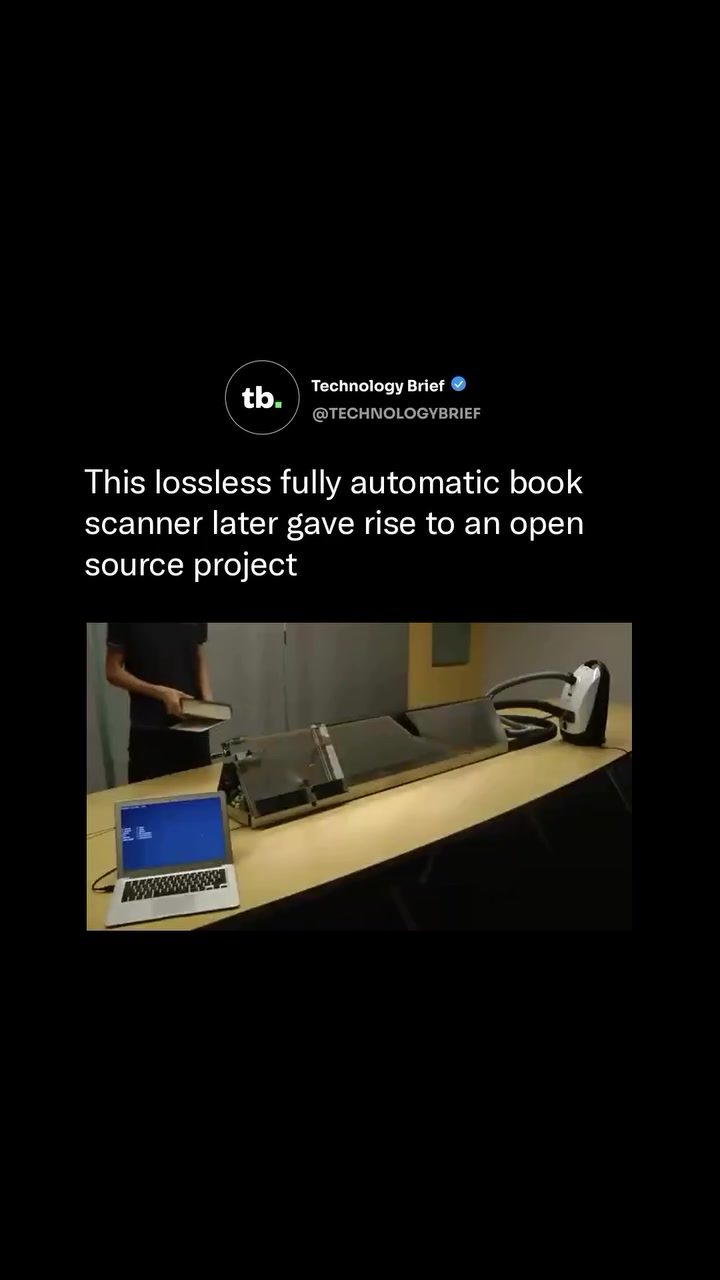
Linear Book Scanner: Automated Book Digitization
Automatic book scanners have revolutionized how we digitize books, making the process faster, more efficient, and more accessible. The Linear Book Scanner, originally developed by Google engineer Dany Qumsiyeh, is a prime example of this technological advancement. This fully automatic book digitizing machine moves an open book back and forth over a flat surface, using a vacuum system to turn pages and imaging sensors to capture each page. The digital output appears in real time on a connected screen, eliminating the need for manual page-turning. Its open-source nature has empowered communities worldwide to build and customize their own versions.
Why This Matters
Book digitization is crucial for preserving cultural heritage, making information accessible, and democratizing knowledge. Traditional methods of digitizing books can be time-consuming and costly, often requiring manual labor and expensive equipment. Automatic book scanners like the Linear Book Scanner address these issues by streamlining the process, reducing labor costs, and making digitization more accessible to a broader audience.
The Technology Behind the Scanner
Automatic Page-Turning
One of the standout features of the Linear Book Scanner is its automatic page-turning mechanism. The device uses a vacuum system to gently suck pages from one side to the other, ensuring that the book remains intact during the scanning process. This innovative approach not only speeds up the digitization process but also minimizes the risk of damage to the book.
Lossless Scanning
The scanner employs high-quality imaging sensors underneath the flat surface to capture each page with precision. This lossless scanning method ensures that the digital output is a faithful reproduction of the original book, preserving every detail, including text, images, and even subtle variations in the paper's texture. This level of detail is essential for preserving historical documents and rare books.
Real-Time Output
A connected screen displays the digital output in real time, allowing users to monitor the scanning process and verify the quality of the scans as they are captured. This real-time feedback is invaluable for ensuring that every page is digitized accurately and can help users identify any issues that may arise during the scanning process.
The Open-Source Community
After Google open-sourced the design, the Linear Book Scanner became a catalyst for innovation within the open-source community. Makers and community groups around the world began building their own versions, adapting the design to suit their specific needs and budgets. The initial hardware cost to build a Linear Book Scanner is around $1,500, but builders have found ways to reduce this cost by swapping expensive components with salvaged parts, such as flatbed scanner sensors.
Libreflip and Other Initiatives
Projects like Libreflip, developed out of a Berlin hackerspace with support from Wikimedia Deutschland, have pushed the concept of open-source book digitization even further. Libreflip and similar initiatives have improved upon the original design, adding new features and addressing common issues. These collaborative efforts have not only lowered the cost of building a book scanner but also made the technology more accessible to individuals and organizations with limited resources.
Community Collaboration
The open-source nature of the Linear Book Scanner has fostered a vibrant community of users and developers. By sharing their knowledge, resources, and modifications, community members have collectively improved the design, developed new tools, and created detailed guides to help others build their own scanners. This collaborative approach has led to the creation of numerous versions and adaptations of the Linear Book Scanner, each with its unique features and improvements.
Practical Tips for Building a Linear Book Scanner
Gather the Right Components
Before you start building your own Linear Book Scanner, make sure you have all the necessary components. The original design requires a flat surface, a vacuum system, imaging sensors, and a mechanism for moving the book back and forth. You can find detailed lists of required components in the open-source documentation and community forums.
Salvaged Parts and Cost-Saving Measures
To reduce the cost of building a Linear Book Scanner, consider using salvaged or repurposed components. Common sources for salvaged parts include old flatbed scanners, printers, and other electronic devices. Repurposing these components not only saves money but also contributes to a more sustainable approach to technology.
Join the Community
Engaging with the open-source community is an excellent way to gain insights, troubleshoot issues, and receive support. Join forums, social media groups, and other online communities dedicated to open-source book scanning projects. Sharing your experiences and learning from others can significantly enhance your building and digitization efforts.
Important Takeaways
The Linear Book Scanner represents a significant advancement in book digitization technology. Its automatic page-turning mechanism, lossless scanning, and real-time output make it a powerful tool for preserving and sharing knowledge. The open-source nature of the project has democratized access to book scanning technology, empowering individuals and communities to build and customize their own scanners. By fostering collaboration and innovation, the open-source community has pushed the boundaries of what is possible in book digitization, making it more accessible and affordable for everyone.
Conclusion
Book digitization is a critical endeavor for preserving cultural heritage and making information accessible to all. The Linear Book Scanner, with its innovative design and open-source community, has made significant strides in this field. By automating the digitization process, reducing costs, and fostering collaboration, the Linear Book Scanner has opened new avenues for preserving and sharing knowledge. Whether you are an individual, a library, or a community organization, building a Linear Book Scanner can help you contribute to this important mission and make a lasting impact on the preservation of written knowledge.
Watch the Reel
Questions readers ask
What makes the Linear Book Scanner unique compared to other book scanners?
The Linear Book Scanner stands out due to its automatic page-turning system, which uses a vacuum to gently turn pages, and its high-quality imaging sensors. Additionally, its open-source nature allows users to modify and improve upon the design, fostering innovation within the community.
Who developed the Linear Book Scanner and when did it become open source?
The Linear Book Scanner was originally developed by Dany Qumsiyeh, a Google engineer. The project was open-sourced, allowing for community contributions and customization.
What are the key components of the Linear Book Scanner?
The key components include a vacuum system for automatic page-turning, high-resolution imaging sensors for capturing page content, and a mechanism to move the book back and forth over a flat surface. This setup ensures efficient and accurate book scanning.
How does the Linear Book Scanner contribute to cultural heritage preservation?
By automating the digitization process, the Linear Book Scanner enables communities to quickly and efficiently convert physical books into digital formats. This makes cultural heritage more accessible and easier to preserve for future generations.
Can anyone build a Linear Book Scanner, and what benefits does it offer to communities?
Yes, because the Linear Book Scanner is open source, anyone with the necessary technical skills can build and customize their own scanner. This empowers communities to create their own book digitization projects, fostering local initiatives and reducing dependence on commercial solutions.
What type of community support is available for those interested in the Linear Book Scanner project?
As an open-source project, the Linear Book Scanner benefits from a global community of contributors and enthusiasts. This community provides support through forums, user-contributed modifications, and shared knowledge, making it easier for new users to get started and troubleshoot any issues.
How does the Linear Book Scanner ensure high-quality book scanning?
The Linear Book Scanner achieves high-quality scans through the use of precise imaging sensors and a consistent, automated scanning process. The vacuum system ensures smooth and gentle page-turning, minimizing the risk of damage to the book, and keeps the scanner's precision.
Related deep dives
Similar reads based on topic and creator.




Recent articles
Fresh deep dives from the latest Reels we unpacked.




Comments
Be the first to comment.