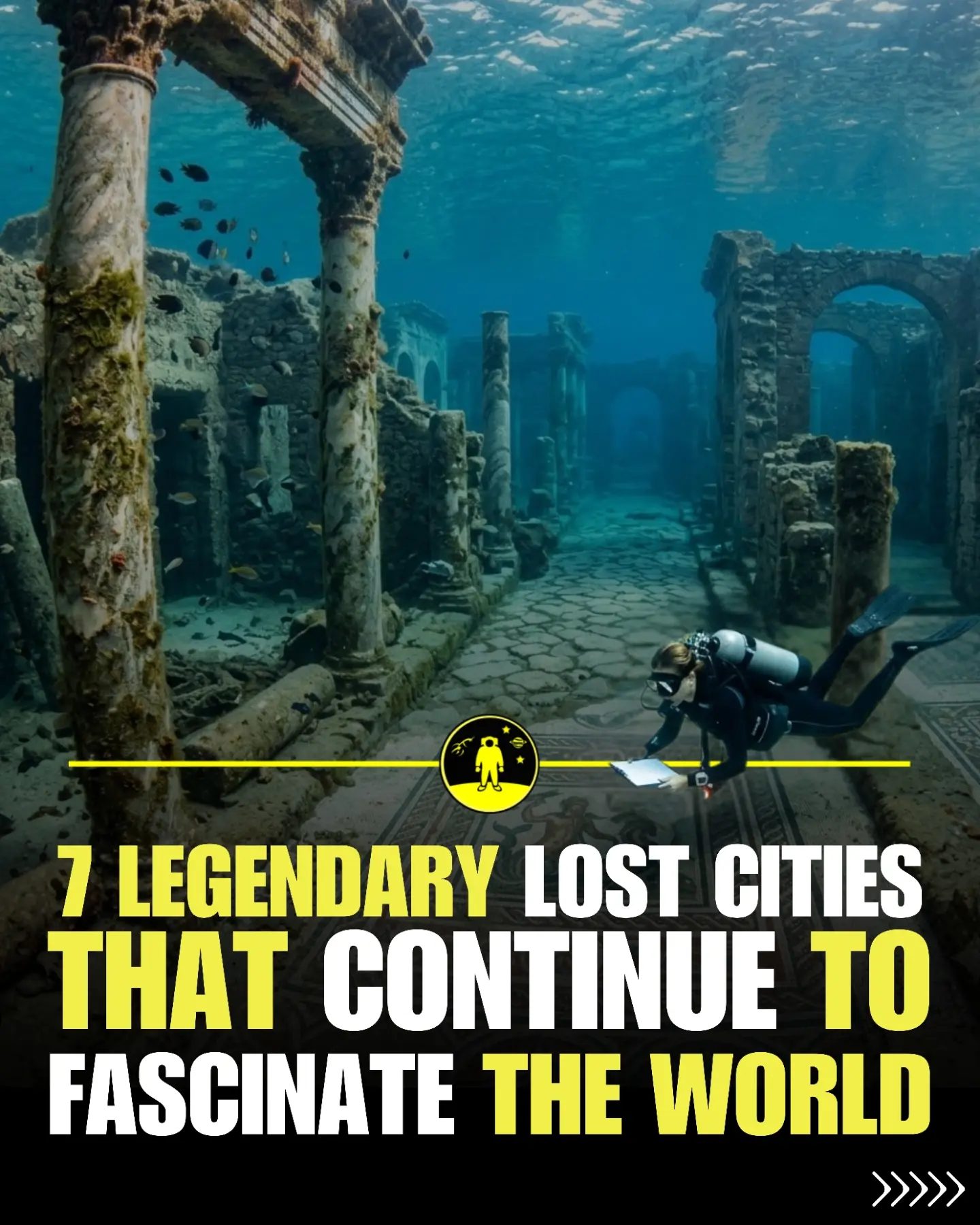
Legendary Lost Cities
From Atlantis to El Dorado, legendary lost cities have captivated human imagination for centuries. These mythical places, shrouded in mystery and intrigue, continue to fascinate adventurers, historians, and enthusiasts alike. Let's explore seven of the most renowned lost cities and delve into what makes them so intriguing.
Why This Matters
The allure of lost cities lies in their enigmatic nature. These are places that, for various reasons, have vanished from the map or remain undiscovered. Whether they were swallowed by the sea, swallowed by time, or simply lost to history, their stories inspire curiosity and imagination. Understanding their legends and the historical context can offer insights into ancient civilizations and the secrets they held.
Main Discussion
Atlantis
Perhaps the most famous of all legendary lost cities, Atlantis is often described as an advanced, utopian society that existed on an island in the Atlantic Ocean. According to the ancient Greek philosopher Plato, Atlantis was a powerful and wealthy civilization that was destroyed by a cataclysmic event around 9600 BC. The story of Atlantis is a blend of myth and historical accounts, making it a subject of enduring fascination and speculation.
Shambhala
Shambhala is a mythical kingdom in Buddhist tradition, symbolizing wisdom, peace, and enlightenment. Located in the Himalayas, it is described as a place of ultimate happiness and spiritual fulfillment. In folklore, Shambhala is often depicted as a hidden sanctuary, protected from the outside world. Its exact location, if it exists, remains a mystery, adding to its mystique.
Agartha
Agartha is another legendary underground kingdom, featured in folklore and esoteric traditions. Believed by some to exist beneath Earth’s surface, it is often depicted as a place of harmony and spiritual enlightenment. Descriptions of Agartha vary widely, but it is commonly associated with hidden knowledge and ancient wisdom.
El Dorado
El Dorado, meaning "the golden one," is a legendary city said to be filled with vast amounts of gold and precious stones. The legend originated in the 16th century when Spanish conquistadors in South America heard tales of a ruler who covered himself in gold dust and washed it off in a lake each day. The search for El Dorado led to many expeditions and ultimately became a symbol of the greed and ambition driving European colonization.
Atlantis of the Sands
Also known as the "Lost City of Z," this legendary metropolis is thought to have been an advanced civilization in the Amazon rainforest. The city was first described by the British explorer Percy Fawcett, who spent years searching for it in the early 20th century. Despite numerous expeditions, the city remains undiscovered, fueling speculation about its true existence and the secrets it might hold.
Paititi
Paititi is believed to be a hidden Incan city in the Andes Mountains. The legend of Paititi dates back to the 16th century and is associated with the Inca Empire’s escape from Spanish conquest. According to the story, a group of Incas fled to the Amazon rainforest and established a new city, hidden and protected from outsiders. Modern explorers and treasure hunters continue to seek Paititi, but its exact location remains elusive.
Tiahuanaco
Tiahuanaco, also known as Tiwanaku, is a ruined city near Lake Titicaca in Western Bolivia. Although it is not entirely lost, its origins and the reasons for its decline are shrouded in mystery. The city was once a major cultural and religious center, boasting advanced architecture and engineering that have puzzled archaeologists for centuries. Some theories suggest that Tiahuanaco was the inspiration for the legend of Atlantis, further enhancing its mystique.
Z
Z is the nickname for an ancient city deep within the Amazon rainforest. The city, which has never been found, has been speculated to have connections with the legendary kingdom of El Dorado. The exact location of Z is unknown, which makes it a controversial subject in archaeological circles. The city is believed to have been a hub of advanced civilization with deep cultural and anthropological significance.
Practical Tips
For those interested in exploring the legends of lost cities, several practical tips can enhance your journey:
- Research Historical Accounts: Start by studying the historical and mythical accounts of each city. Understanding their origins and the context in which they were described can provide valuable insights.
- Join Expeditions: Many organizations and individuals organize expeditions to search for lost cities. Joining one of these expeditions can be an exciting and educational experience.
- Visit Archaeological Sites: Even if the legendary cities remain undiscovered, visiting sites with similar historical significance can offer a sense of their grandeur and the mysteries they hold.
- Engage with Local Culture: Many legends of lost cities are deeply rooted in local folklore and traditions. Engaging with local communities can provide unique perspectives and insights.
- Use Modern Technology: Advances in technology, such as satellite imagery and remote sensing, have made it easier to search for and potentially discover lost cities. Utilizing these tools can enhance your exploration efforts.
Important Takeaways
The legends of lost cities are a testament to human curiosity and the enduring fascination with the unknown. These stories offer glimpses into ancient civilizations, their achievements, and the mysteries they left behind. While some of these cities may never be found, the search itself is a journey of discovery and enlightenment. Understanding their legends and the historical context can enrich our appreciation for the richness of human history and the mysteries that continue to captivate us.
Conclusion
The allure of legendary lost cities continues to inspire exploration, discovery, and the pursuit of knowledge. From the mythical Atlantis to the enigmatic Shambhala and the hidden Agartha, these cities represent a timeless quest for understanding and enlightenment. Whether they are real or mythical, their stories remind us of the endless possibilities and the mysteries that lie within our world. As we continue to explore, let the legends of these lost cities guide us on a journey of discovery and wonder.
Watch the Reel
Questions readers ask
What are some of the most famous legendary lost cities?
Some of the most famous legendary lost cities include Atlantis, Shambhala, Agartha, El Dorado, and Z. These cities are renowned for their mysterious disappearances and the intriguing stories surrounding them. Each of these places has inspired countless theories and expeditions in search of their whereabouts or remnants.
What makes lost cities so intriguing to people?
Lost cities are intriguing for several reasons, including their mysterious disappearances, the allure of uncovering ancient secrets, and the prospect of finding valuable artifacts or knowledge. The uncertainty surrounding their locations and histories fuels curiosity, imagination, and the desire to explore.
Are there any lost cities that are widely believed to be based on real places?
While many lost cities are steeped in myth and legend, some are believed to have real-world bases. For example, Atlantis is often linked to the volcanic eruption that destroyed the island of Santorini, while El Dorado is thought to be inspired by the wealthy Muisca civilization in Colombia. However, the exact locations and histories of these cities remain debated.
What are some of the most common theories about why ancient cities were lost?
Common theories about why ancient cities were lost include natural disasters such as earthquakes, tsunamis, or volcanic eruptions. Other theories suggest that war, invasion, or the exhaustion of resources led to the abandonment of these cities. In some cases, cities may have been intentionally concealed or hidden to protect their secrets.
What are Shambhala and Agartha, and what makes them significant?
Shambhala and Agartha are legendary lost cities that are often mentioned in ancient texts and mythology. Shambhala is believed to be a hidden sanctuary or utopia, while Agartha is thought to be an underground city. Both are significant due to their mythical associations and the intrigue surrounding their purported existence, which is one reason why they continue to inspire stories and exploration.
Related deep dives
Similar reads based on topic and creator.


Recent articles
Fresh deep dives from the latest Reels we unpacked.




Comments
Be the first to comment.