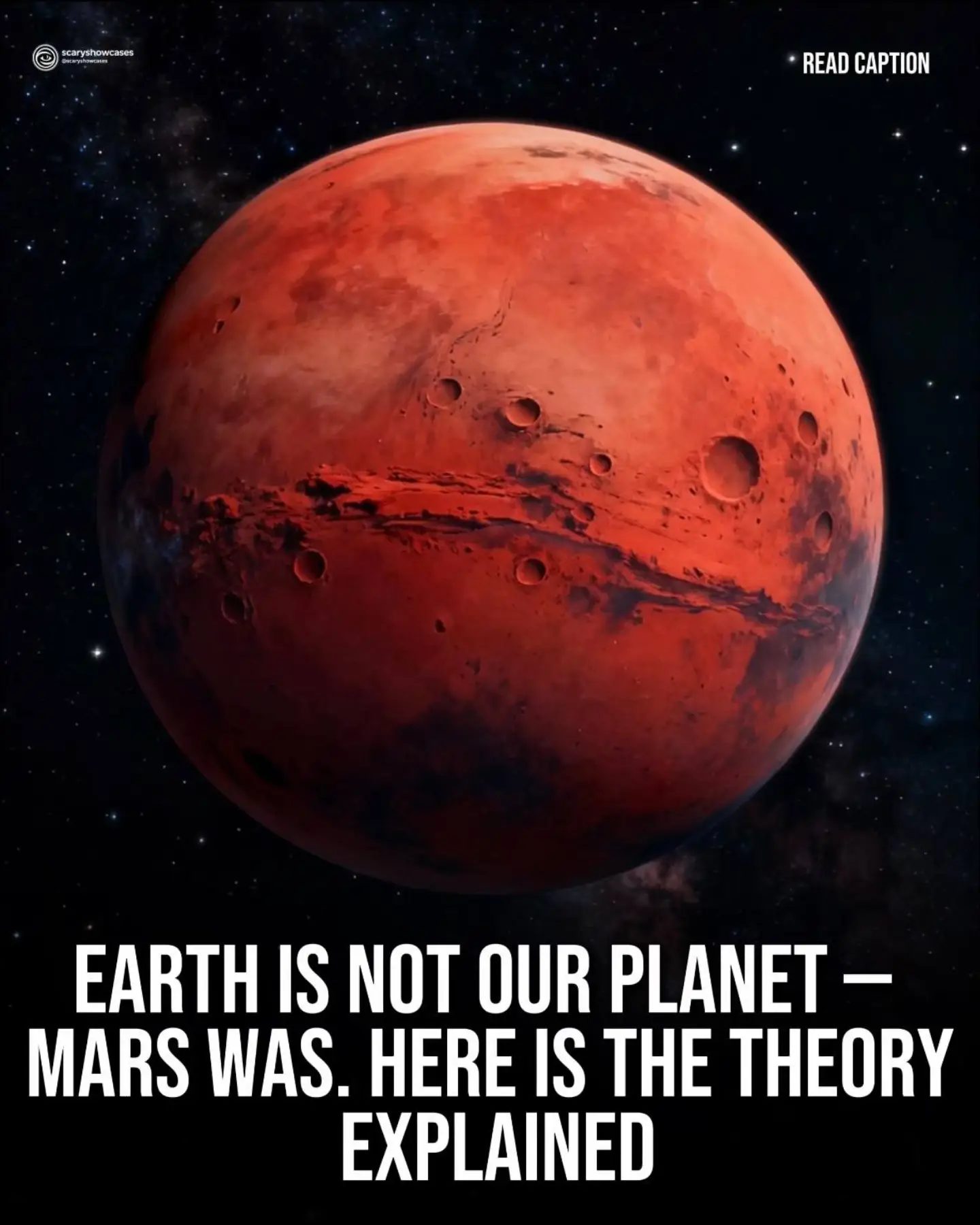
Mars theories capture our imagination, but one theory stands out for its controversial claims: humans originated on Mars and fled to Earth after the Red Planet became uninhabitable.
This controversial theory suggests that ancient humans lived on Mars. Proponents of this theory point to several pieces of evidence. One is the presence of ancient riverbeds on Mars, which suggest that the planet once had a much thicker atmosphere and liquid water. This environment could have supported life as we know it. Another piece of evidence is the unique characteristics that humans exhibit, such as chronic back pain, sun sensitivity, and our reliance on clothing, which some argue could be adaptations to a different environment.
If Mars was once habitable, what could have caused humans to flee to Earth? Some proponents of the theory suggest that a catastrophic event, such as a massive climate change or a collision with an asteroid, could have made Mars uninhabitable. This would have forced early humans to seek refuge on Earth, where they evolved and adapted to the new environment.
Why This Matters
The theory that humans originated on Mars challenges our understanding of human evolution and our place in the universe. It raises questions about the origins of life and the possibility of extraterrestrial intelligence. While mainstream science firmly supports the idea that humans evolved on Earth, the Mars theory refuses to die.
The idea of humans originating on Mars also has implications for our future. If we can understand how humans adapted to different environments in the past, we may be better equipped to adapt to challenges in the future. This could include adapting to climate change, exploring other planets, or even colonizing space.
The Theory in Detail
The Evidence from Mars
The evidence from Mars itself is compelling. Ancient riverbeds and deltas found on the planet suggest that it once had liquid water and a thicker atmosphere. This could have supported life as we know it. Some even speculate that there could be evidence of ancient microbial life on Mars.
Human Traits and Adaptations
Proponents of the theory also point to unique human traits as evidence. Chronic back pain, for example, could be a remnant of an evolutionary adaptation to lower gravity on Mars. Sun sensitivity and our reliance on clothing could also be adaptations to a different environment. This suggests that humans evolved under different conditions than those currently present on Earth.
The Cataclysmic Event
One of the most fascinating aspects of the theory is the idea of a cataclysmic event that forced humans to flee Mars. This event could have been a massive climate change, a collision with an asteroid, or even a supernova. The theory suggests that this event made Mars uninhabitable, forcing early humans to seek refuge on Earth.
How Humans Adjusted to Earth
If humans did originally come from Mars, they would have had to adapt to the very different conditions on Earth. This would have involved evolving new traits to cope with Earth's gravity, atmosphere, and climate. Some proponents of the theory suggest that these adaptations are still evident in humans today, such as our vulnerability to certain diseases and our reliance on technology.
Practical Tips
While this theory is fascinating, it's important to approach it with a critical eye. Here are some practical tips for evaluating such theories:
Understand the Context
Always understand the context in which a theory is presented. What evidence is being used to support it? What are the alternatives? Understanding the context can help you evaluate the plausibility of a theory.
Evaluate the Evidence
Evaluate the evidence used to support the theory. Is it reliable? Is it consistent with our understanding of the world? Is it open to alternative interpretations?
Consider the Implications
Think about the implications of a theory. How would it change our understanding of the world? What would it mean for our future? Considering the implications can help you evaluate whether a theory is worth taking seriously.
Seek Multiple Perspectives
Seek out multiple perspectives on a theory. Talk to scientists, historians, and other experts. Read books, articles, and other sources that present different viewpoints.
Stay Open-Minded
Be willing to change your mind. Science is always evolving, and new evidence can challenge our most deeply held beliefs. Stay open to the possibility that we might be wrong.
Important Takeaways
We need to be open to new ideas, but also critical in our evaluation. The Mars origin theory is a fascinating idea that challenges conventional thinking about human evolution. While it lacks definitive evidence, it encourages us to think more deeply about our origins and place in the universe.
The idea of a cataclysmic event forcing humans to flee Mars is intriguing and raises many questions. It suggests that humans may have evolved under different conditions than those currently present on Earth. If true, this could have profound implications for our understanding of human evolution and our future as a species.
Conclusion
The theory that humans originated on Mars is a controversial but captivating idea. It invites us to question our assumptions about human evolution and our place in the universe. Whether or not the theory is true, it serves as a reminder that our understanding of the world is always evolving, and that there is still much to learn. If we approach such ideas with an open mind and a critical eye, we can gain a deeper understanding of our origins and our future.
Watch the Reel
Questions readers ask
What is the main idea behind the theory that humans originated on Mars?
The theory suggests that ancient humans lived on Mars and migrated to Earth after a catastrophic event made Mars uninhabitable. Proponents of this theory point to evidence like Mars' ancient riverbeds and unique human characteristics as support.
What evidence do proponents of the Mars human origin theory use to support their claims?
Advocates of this theory highlight Mars' ancient riverbeds, which indicate a past environment with liquid water. They also point to human characteristics, such as chronic back pain and sun sensitivity, as possible adaptations to a different environment, like Mars' lower gravity and reduced sunlight.
Why do mainstream scientists reject the idea that humans evolved on Mars?
Mainstream science is firmly convinced that humans evolved on Earth due to the overwhelming evidence of human evolution found on our planet. This includes the fossil record, genetic evidence, and the understanding of Earth's environmental changes over time.
What might have caused ancient humans to leave Mars for Earth, according to this theory?
The theory proposes that a catastrophic event, such as a dramatic climate change or a large-scale natural disaster, made Mars uninhabitable. This would have driven ancient humans to seek refuge on Earth, which was more hospitable at the time.
How do ancient riverbeds on Mars support the theory of human origin on the Red Planet?
Ancient riverbeds on Mars suggest that the planet once had a thicker atmosphere and liquid water, creating an environment that could have supported life as we know it. This provides a potential habitat for ancient human life on Mars before a catastrophic event.
What unique human characteristics do proponents of the Mars human origin theory attribute to life on the Red Planet?
Proponents of the theory point to characteristics like chronic back pain, which could be a remnant of adaptation to lower gravity, and sun sensitivity, which might indicate evolution under different solar conditions than those found on Earth. Additionally, the theory suggests that our reliance on clothing might be an adaptation to a different environment.
Related deep dives
Similar reads based on topic and creator.



Recent articles
Fresh deep dives from the latest Reels we unpacked.



Comments
Be the first to comment.