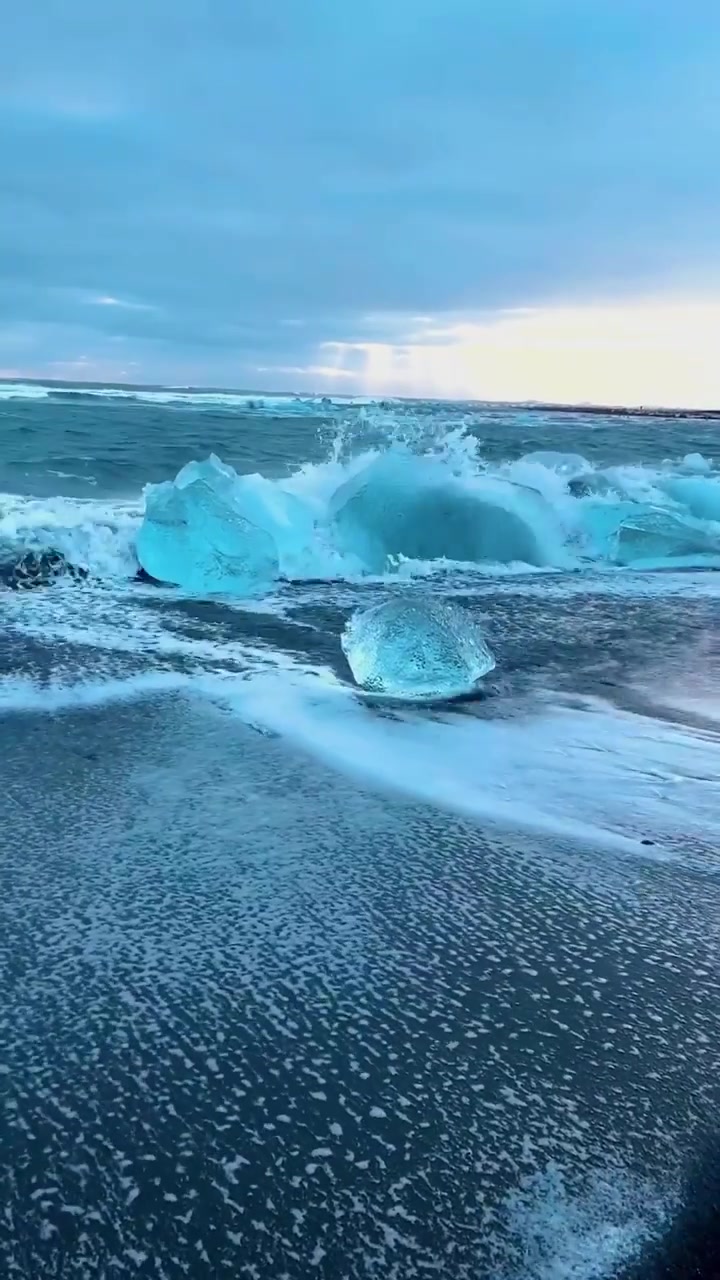
Diamond Beach in Iceland is a beach made famous by icebergs that are washed ashore. That redolent voice that echoes 'I know you're tired of loving, I'm loving with nobody to know,' is the speaker's voice is silent in Iceland, serenaded only by the otherworldly backdrop of Diamond Beach.
Glacial Gems
Diamond Beach in Iceland is a unique geographical location where the glacial tongue of the Vatnajökull glacier meets the sea. Diamond Beach is created by the floating icebergs, the size of houses. These icebergs are pushed back and forth by the waves and tides, and they wash up onto the black sand shore. When the icebergs wash up on the shore, they reflect the blue sky and their different forms are highlighted. The distinctive appearance of this beach is due to the large icebergs spread around. When icebergs wash up on a beach, they will not remain one single iceberg, but will be broken up and reform into many different shapes. This causes the icebergs to have different shapes, sizes and colors, some of the icebergs will be smaller and appear to be more white ice, the size of a person. Other large icebergs, which have a blue hue, can be found to be larger in size and will intrigue the senses of the viewer. The scale of the large iceberg from the Vatnajökull glacier in Iceland is often greater than average. The icebergs that are not already cracked will be pushed into the shore to be broken down by the waves into smaller pieces. This is due to the sheer volume of ice that is carried out into the sea.
The allure of a rare beach
The allure of the icebergs on Diamond Beach is a testament to the way that nature is capable of creating beauty from chaos. With the direction of the wind and weather, the diamond-shaped icebergs may reflect the blue sky or hint at the ancient history of the landscape. This environment is a pristine reflection of the unique beauty that can be found in Iceland. Diamond Beach is only one of a few beaches around the world that have such a unique composition. The drama of the dramatic landscape on Diamond Beach is well in comparison to the wide array of placid beaches around the world. The landscape that is filled with icebergs is able to make a clear distinction to other beaches around the world.
The Whispers of Ice
Icebergs that whisper
The sounds created by the icebergs are caused by the waves and the icebergs crashing into the shore. Videos of similar beaches show the sounds the icebergs create as a rumbling sound. The thundering sounds are the icebergs against the shore. The sound of the icebergs moving away from the shore is a change in the pitch of the sound as it gets softer. A commonly asked question is whether the icebergs can make music. When the icebergs are moving underwater, it does not produce enough sound to be heard above the surface. However, as the icebergs are pushed into the shore, the vibrations are loud enough to be heard.
Geological Cycles
Icebergs will form in the glacial cycle. The icebergs are formed from the glacier. When this iceberg calves, it will go through the glacial cycle. When the iceberg forms, it will be pushed into the sea, because the icebergs are heavier than the sea, it will drop down because of gravity, but the icebergs will be pushed back to the surface by the buoyancy of the water. The iceberg will drift in the sea until it is pushed to land by the waves, the wind or the tide. Once the iceberg reaches the beach, it will be broken by the waves and the wind. The broken icebergs will melt in the sun, and the melting ice will go back in to the seas and rivers.
How time reshapes the ice
The icebergs are shaped by the waves and the wind. When the icebergs are formed in the glacier, they will be a certain shape. When the wind and the waves hit the ice, the ice will start to break and the icebergs will take on different shapes. The wind will push the ice down and the waves will push the ice up, this will cause the icebergs to move and impact against each other. The icebergs will keep changing shape until they melt.
The Last Dance
The large icebergs will be very slow to melt, but they will melt eventually. The large icebergs are formed from the glaciers. The large icebergs that are made from the glaciers will stay on the black sand beach for a long time, but as time goes on the glaciers will melt back into the sea and the icebergs will diminish in size and amount.
Relief from Glassy Polar Regions
Visitors often ask how to spend a day on the beach. The weather in Iceland can be unpredictable and unpredictable. The best time to visit Diamond Beach is in the summer, as the weather is milder and the days are longer. The icebergs can be seen during the day and the nights are longer. If the weather is right, the sun can be seen reflecting on the icebergs, which can make the beach look golden. Diamond Beach in Iceland in summer: Iceland’s weather is unpredictable, so dress in layers. Expect the wind and rain. The most comfortable option is layers of clothing and breathable materials. Stout hiking boots will protect from the sharp, uneven shards. The beach is made of black sand, so it is important to wear shoes that can grip and provide traction on the uneven, grabbled shards of ice. Time of day: The best time for a visit is morning or afternoon. The most beautiful time to visit is around noon, as the light is the best and the icebergs will be visible. In the winter, it does get dark. If you plan to visit in the winter, plan for a snowy adventure. The cold weather can make for a unique and charming experience.
A Last Walk
Iceland’s Diamond Beach is an otherworldly place. The icebergs are not just slick; they are as rough as the screams in silence. The icebergs are large and sturdy enough to be stood on. There is no need for concern with the risk of slipping. The sounds of the icebergs crashing against the shore are eerily reminiscent of the haunting music of a suspenseful movie. The disconcerting truth of Iceland’s Diamond Beach is that these icebergs and their rumbling music will last forever.
Watch the Reel
Questions readers ask
What causes the icebergs on Diamond Beach to change shape and size?
The icebergs on Diamond Beach are constantly reshaped by the waves and tides. When they wash ashore, they often break apart and reform into various shapes and sizes, creating a dynamic and ever-changing landscape. This process is accelerated by the sheer volume of ice pushed into the sea from the Vatnajökull glacier.
How do the icebergs on Diamond Beach create their unique sounds?
The sounds you hear at Diamond Beach are primarily caused by the icebergs crashing into the shore and the waves colliding against them. As the icebergs move, they produce a rumbling sound that changes in pitch as they shift or move away from the shore. However, the sounds are not musical, but rather a natural byproduct of the icebergs' movement and interaction with the water and shore.
Are there other beaches like Diamond Beach elsewhere in the world?
Diamond Beach is quite unique, but there are a few other beaches around the world that feature icebergs, such as those in Greenland and Antarctica. However, the combination of black sand and the sheer scale of the icebergs make Diamond Beach particularly distinctive and dramatic compared to more placid beaches.
Is Diamond Beach accessible to visitors, and when is the best time to visit?
Diamond Beach is accessible to visitors, but the best time to visit can vary. The icebergs are typically more abundant and visible during the summer months, from June to August, when the weather is milder and the days are longer. However, the beach can be visited year-round, and each season offers a different perspective on the landscape.
Can visitors safely approach the icebergs on Diamond Beach?
While the icebergs on Diamond Beach are a stunning sight, it's important to maintain a safe distance. The icebergs can be unstable and may shift or break apart unexpectedly. Additionally, the waves and tides can be powerful, so visitors should stay on designated paths and follow any safety guidelines provided by local authorities.
How do the icebergs on Diamond Beach reflect the natural beauty of Iceland?
The icebergs on Diamond Beach serve as a testament to Iceland's raw, untamed beauty. Their unique shapes and sizes, along with the contrasting black sand, create a striking and otherworldly landscape. The icebergs' constant movement and the sounds they produce add to the dynamic and awe-inspiring atmosphere of the beach.
What is the glacial cycle and how does it relate to the icebergs on Diamond Beach?
The glacial cycle refers to the process by which icebergs are formed from glaciers and eventually calve into the sea. At Diamond Beach, the icebergs originate from the Vatnajökull glacier, which pushes large chunks of ice into the ocean. These icebergs then undergo a series of transformations as they are shaped and reshaped by the waves and tides, contributing to the ever-changing landscape of the beach.
Related deep dives
Similar reads based on topic and creator.




Recent articles
Fresh deep dives from the latest Reels we unpacked.




Comments
Be the first to comment.