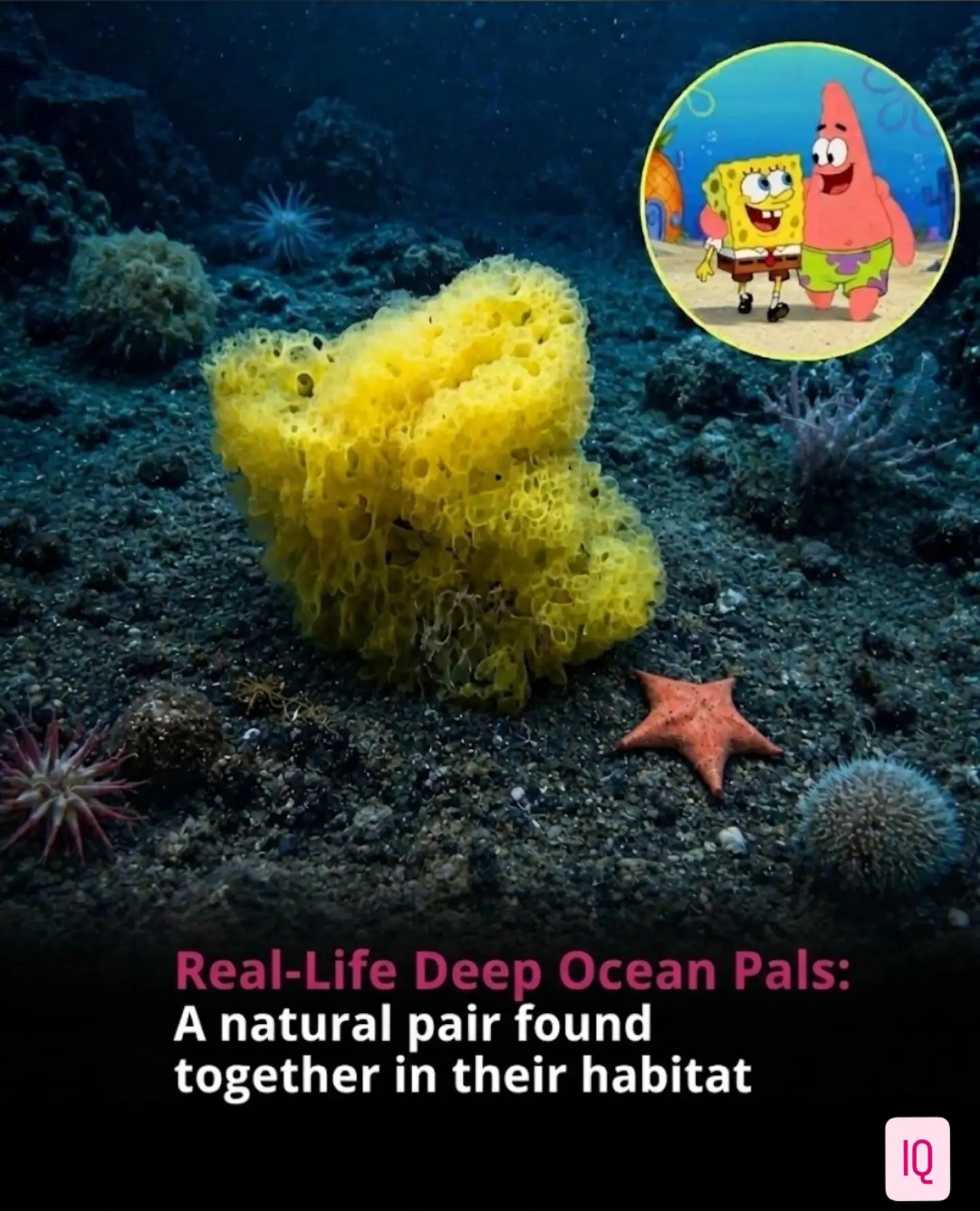
Deep-Sea Encounters: The Remarkable Pairing of Hertwigia falcifera and Chondraster
The deep ocean is home to some of the most fascinating and mysterious ecosystems on Earth. Among these, the interaction between a marine sponge (Hertwigia falcifera) and a sea star (Chondraster) provides a unique glimpse into the intriguing dynamics of deep-sea life. Captured in 2021 by NOAA’s Explorer remotely operated vehicle (ROV) at a depth of 1,885 meters on the Retriever Seamount off the coast of New England, this encounter offers more than just a visual parallel to the beloved cartoon characters SpongeBob SquarePants and Patrick Star.
Why This Matters
The deep sea, often shrouded in darkness and mystery, is a critical component of our planet's biodiversity. Understanding the intricate relationships between its inhabitants is essential for comprehending the broader ecological balance. The encounter between Hertwigia falcifera and Chondraster highlights the complexity of predator-prey dynamics in deep-sea ecosystems, offering insights that go beyond the surface-level resemblance to cartoon characters.
The Deep Sea: A Hidden World
The deep ocean, often referred to as the abyssal zone, is one of the least explored regions on Earth. Characterized by extreme conditions, including high pressure, low temperatures, and near-total darkness, this environment is home to a diverse array of marine organisms. Among these are sponges and sea stars, which play crucial roles in the ecosystem.
The Marine Sponge: Hertwigia falcifera
Hertwigia falcifera is a type of marine sponge found in deep-sea environments. Sponges are filter-feeders, using their porous bodies to trap and consume plankton and other small particles from the water. They are essential components of benthic communities, providing habitat and substrate for a variety of marine organisms.
The Sea Star: Chondraster
Chondraster is a genus of sea stars that are active predators in the deep-sea ecosystem. Unlike the marine sponge, which filters the water, Chondraster sea stars are mobile and feed on a variety of prey, including other marine invertebrates. Their presence in the deep sea is a testament to the diverse and dynamic nature of this environment.
The Encounter: A Natural Pairing
The encounter between Hertwigia falcifera and Chondraster showcases a natural pairing found together in their habitat. The proximity of these two organisms suggests a predator-prey relationship, with the sea star likely approaching the sponge to feed on it. This dynamic offers a rare and compelling glimpse into the benthic predator-prey dynamics of the deep ocean.
Predator-Prey Dynamics in the Deep Sea
The deep sea is a challenging environment for survival, and organisms have evolved unique adaptations to thrive in these conditions. The predator-prey relationship between Hertwigia falcifera and Chondraster is a prime example of these adaptations. The sponge's porous structure and filter-feeding mechanism provide it with a constant source of nutrition, while the sea star's mobility and predatory behavior allow it to hunt and consume a variety of prey.
The interaction between these two organisms highlights the delicate balance of the deep-sea ecosystem. The sponge provides a critical habitat for a variety of marine organisms, while the sea star helps maintain the ecological balance by controlling the population of its prey.
The Role of NOAA’s Explorer ROV
NOAA’s Explorer remotely operated vehicle (ROV) has played a pivotal role in exploring the deep-sea environment. Equipped with advanced imaging and sampling capabilities, the ROV has enabled scientists to capture high-quality images and videos of deep-sea organisms in their natural habitats. The encounter between Hertwigia falcifera and Chondraster is just one of many discoveries made possible by the ROV.
Practical Tips for Understanding Deep-Sea Life
Understanding the deep sea and its inhabitants involves a combination of scientific research and technological advancements. Here are some practical tips for gaining a deeper understanding of this fascinating environment:
Engage with Scientific Research
Scientific research is the foundation of our understanding of the deep sea. Engaging with scientific literature, attending conferences, and following the work of organizations like NOAA can provide valuable insights into the latest discoveries and developments in deep-sea exploration.
Support Technological Advancements
Technological advancements, such as the ROV, are essential for exploring the deep sea. Supporting organizations that develop and deploy these technologies can help drive further discoveries and a deeper understanding of the deep-sea environment.
Participate in Citizen Science Projects
Citizen science projects allow individuals to contribute to scientific research by collecting and analyzing data. Participating in these projects can provide a hands-on experience in deep-sea exploration and contribute to a broader understanding of the environment.
Important Takeaways
The encounter between Hertwigia falcifera and Chondraster offers a unique and fascinating glimpse into the deep-sea ecosystem. Key takeaways include:
- Deep-sea environments are home to a diverse array of marine organisms, each with unique adaptations for survival.
- The interaction between Hertwigia falcifera and Chondraster highlights the predator-prey dynamics of the deep-sea ecosystem.
- The deep sea is a critical component of our planet's biodiversity, and understanding its inhabitants is essential for comprehending the broader ecological balance.
- Technological advancements and scientific research play a crucial role in exploring and understanding the deep sea.
Conclusion
The deep sea is a hidden world filled with mysteries and wonders. The encounter between Hertwigia falcifera and Chondraster is a testament to the complexity and diversity of this environment. By engaging with scientific research, supporting technological advancements, and participating in citizen science projects, we can gain a deeper understanding of the deep sea and its inhabitants. This knowledge is essential for preserving the ecological balance and ensuring the sustainability of our planet's biodiversity.
Watch the Reel
Questions readers ask
What are the species names of the sponge and sea star involved in this deep-sea interaction?
The species involved are *Hertwigia falcifera* (marine sponge) and *Chondraster* (sea star).
Where and how was this deep-sea pairing discovered?
The pairing was captured by NOAA’s *Explorer* remotely operated vehicle (ROV) at a depth of 1,885 meters on the Retriever Seamount off the coast of New England in 2021.
What can this predator-prey dynamic tell us about deep-sea ecosystems?
This pairing offers insight into the behavior of deep-sea predators and prey, as well as the biodiversity of these ecosystems. It also highlights the importance of exploring and understanding these underwater environments.
What is the significance of the depth at which this interaction was observed?
The depth of 1,885 meters is significant because it is in the deep ocean, where light is scarce and ecosystems are highly adapted to these extreme conditions. This depth falls within the abyssal zone, which is one of the least explored areas of the ocean.
What other deep-sea creatures might interact with *Hertwigia falcifera* and *Chondraster*?
While the article does not specify other creatures, it is likely that a variety of deep-sea organisms interact with these species. For instance, other deep-sea predators, scavengers, and even microorganisms may play a role in the ecosystem dynamics where *Hertwigia falcifera* and *Chondraster* are found.
How do deep-sea predators like *Chondraster* adapt to their environment?
Deep-sea predators like *Chondraster* adapt to their environment through various means, such as developing keen senses to detect prey in the dark, conserving energy due to the scarcity of food, and exhibiting unique behaviors suited to the high-pressure, low-temperature conditions of the deep sea.
Related deep dives
Similar reads based on topic and creator.



Recent articles
Fresh deep dives from the latest Reels we unpacked.




Comments
Be the first to comment.