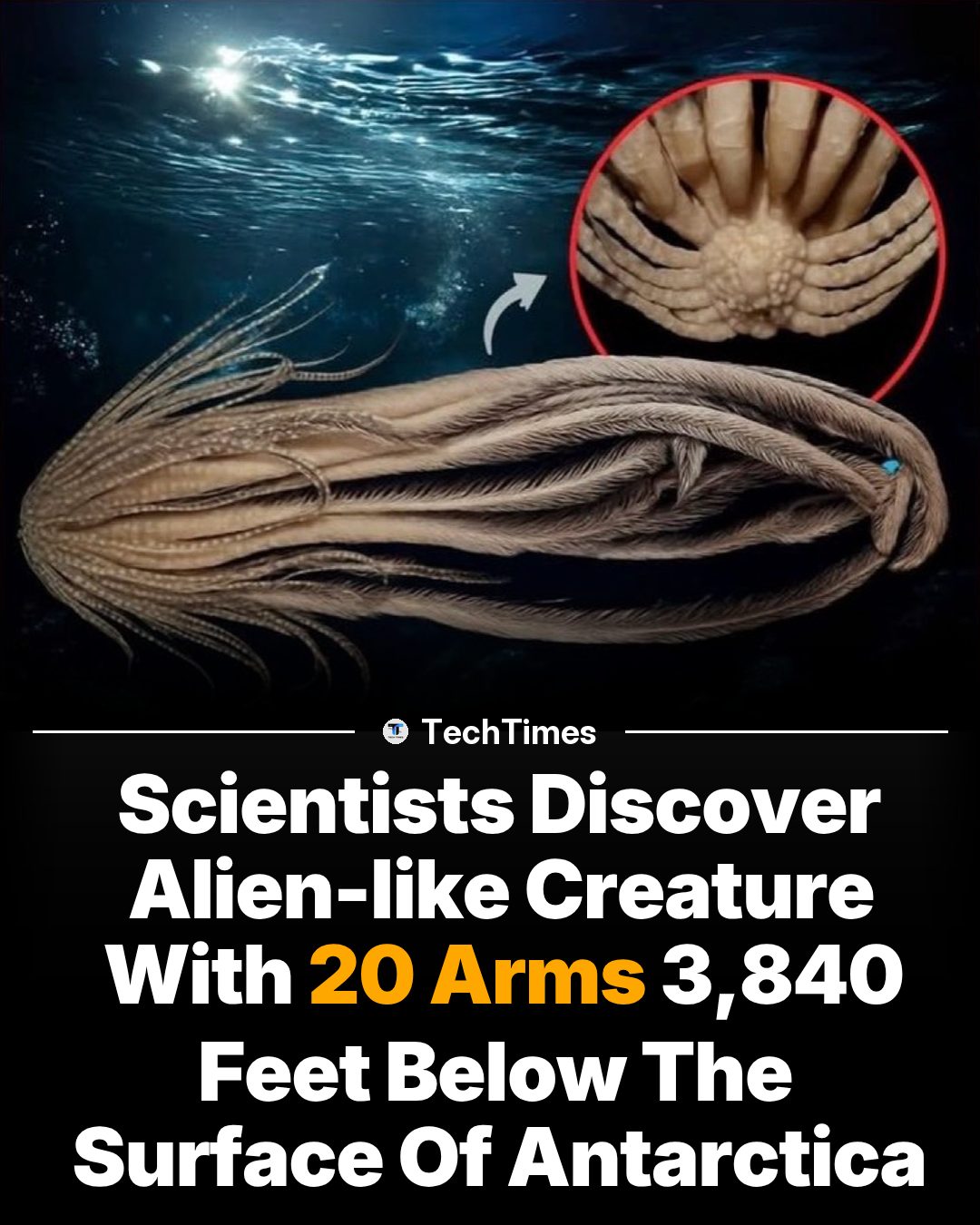
The deep sea, a realm of perpetual darkness and crushing pressure, has yielded another bizarre inhabitant — a 20-armed creature discovered 3,840 feet below Antarctica, where few humans will ever venture. These occurrences are not anomalies; each discovery adds to a larger picture of the deep sea's vast, still-mysterious ecosystem. As more is revealed, questions grow instead of diminishing. The 20-armed creature, dubbed an "alien-like" organism, emerges as the protagonist in a story of scientific exploration and our tentative grasp of ocean depths.
The 20-armed denizen of Antarctic waters
Researchers have identified a newly discovered deep-sea creature with an astonishing 20 arms. Designated as an octopus or close relative, this alien-like specimen was found 3,840 feet below the surface, bearing witness to the plethora of mysteries still hidden within the deep sea. This finding corroborates the notion that the ocean's depths still remain a land of the enigma. The discovery was facilitated through state-of-the-art underwater technology, which allowed scientists to capture imagery of the creature in its natural habitat. In contrast to other octopuses, which usually have eight arms, this specimen's unique biology adds to its intrigue. The creature is likely an entirely new species, as 20-armed cephalopods have never been recorded before. For scientists, this discovery supports the idea that there is a vast scope of unexplored marine creatures still awaiting discovery, especially in the deep sea. It highlights the deep sea's tendency to yield surprises. The harsh conditions at this depth — extreme cold, pressure, and lack of sunlight — make it challenging for most creatures to survive, necessitating adaptability for the creatures that thrive there. The 20-armed creature illustrates an extreme example of those adaptations and a fascinating glimpse into the depth's unique ecosystems.
Why the deep sea's mysteries still captivate us
The deep sea has long captured the human imagination. This newest discovery depicts the ocean's depths as an ideal underexplored territory. Despite a high degree of exploration, there still aren't even remotely close enough maps compared to land, and the deep sea remains one of the least understood ecosystems on Earth. Each discovery highlights how much we still have to learn and admire. Furthermore, this discovery underscores the immense significance of continued exploration. Scientific advances often begin with basic questions about unknown creatures and ecosystems. The deep sea's mysteries are a voucher for humanity's ongoing curiosity and our urge to explore.
An otherworldly apparition?
The discovery of the 20-armed creature underscores the alien nature of deep-sea life. This 20-armed creature vividly illustrates the sheer difference of deep-sea biology from surface creatures, and to human eyes, this little animal appears more at home in a science fiction film than in the ocean. The deep sea's extreme conditions have led to astonishing adaptations in its creatures. From bioluminescent organisms to deep-sea anglerfish that use bioluminescent lures to catch prey, the deep sea is home to some of the planet's most bizarre and intriguing creatures. In this context, the 20-armed creature stands out for its unique physical characteristics. Many deep-sea creatures have evolved unique traits to cope with harsh conditions, while this creature seems to stress how alien and otherworldly these adaptations can be. This unusual discovery affirms the deep sea's reputation as a realm of bizarre and often terrifying creatures. It’s a habitat that challenges any preconceptions of what life should look like. This deep-sea creature is a stunning example of the evolutionary feats that thrive in this environment.
What does this mean for the octopus family?
The appearance of the 20-armed creature may prompt scientists to further investigate the evolutionary history of octopuses. The 20-armed creature’s resemblance to an octopus raises vital questions. Is it a new species of octopus, or is it an entirely new creature? Scientists will likely analyze its DNA to track its evolutionary journey. They can find out where and how it branched off from other known octopuses. This deep sea discovery may provide missing pieces on the evolutionary timeline of octopuses.
Why can’t we go down there?
Despite technological advancements, deep-sea exploration remains challenging. Entering the deep-sea environment requires specialized equipment and immense caution. The extreme pressure and lack of sunlight can significantly affect explorers and their technology. For instance, the 20-armed creature was discovered at a depth of 3,840 feet. That's around a mile below the surface, where a human would be crushed by pressure. This explains why tools like ROVs (Remotely Operated Vehicles) are essential. These robots can withstand the harsh conditions and are equipped with cameras to record footage and data, aiding in deep sea discoveries.
Practicing discovery from a distance
Living in a world where we are privileged to have access to information these days, let us embrace the power of technology. The chances of you visiting the deep-sea are low, but you can still support and enjoy the discovery process.
- Explore deep-sea imagery: Websites like NOAA’s Ocean Explorer and the Monterey Bay Aquarium Research Institute (MBARI) feature deep-sea images and videos.
- Natural history museums: Many museums have deep-sea exhibits, complete with specimens and interactive displays.
- Read science journals and textbooks: For the most detailed and peer-reviewed info, the internet doesn't beat online libraries and online science journals.
- The internet: Listen to talks and follow scientists on social media. Experts often share their discoveries and insights with the public through these channels. This deep-sea discovery validates the continued support and funding of scientific research and exploration.
The deep sea is still a mystery
Deep-sea exploration highlights the vastness of our ocean's secrets. Each discovery, like the 20-armed creature, reveals a mere fraction of the deep ocean's total biology. There are billions of potential species occupying these depths. Just as this creature is a surprise, evidence of how unknown the deep sea is, future discoveries are bound to show extreme adaptability and even more alien-like creatures. It's a reminder that there is a lot we still don't know about our planet.
Watch the Reel
Questions readers ask
What kind of technology allowed scientists to capture images of the 20-armed creature in its natural habitat?
The discovery was made possible by state-of-the-art underwater technology. This advanced equipment enabled scientists to venture into the deep sea and capture imagery of the creature at a depth of 3,840 feet, where conditions are extremely harsh and sunlight cannot penetrate.
How does the 20-armed creature's biology compare to that of other octopuses?
Unlike typical octopuses, which have eight arms, this newly discovered creature has an astonishing 20 arms. This unique biological feature sets it apart from known octopus species and suggests that it could be an entirely new species, as 20-armed cephalopods have never been recorded before.
What makes the deep sea such a challenging environment for most creatures to survive?
The deep sea is characterized by extreme cold, immense pressure, and a lack of sunlight, making it a harsh environment for most life forms. Only highly adaptable creatures can thrive in these conditions, such as the 20-armed creature, which illustrates the incredible adaptations required to survive in such an extreme ecosystem.
Why is the discovery of the 20-armed creature significant for scientific exploration?
This discovery underscores the vast scope of unexplored marine life, particularly in the deep sea. It highlights the need for continued exploration and the potential for many more extraordinary creatures to be discovered, furthering our understanding of the deep sea's unique ecosystems.
How does the 20-armed creature contribute to our understanding of the deep sea's ecosystems?
The 20-armed creature serves as a fascinating glimpse into the deep sea's unique adaptations and ecosystems. Its discovery adds to the growing body of knowledge about the deep sea, illustrating the incredible diversity and adaptability of life in this extreme environment.
What role does curiosity play in deep-sea exploration, as highlighted by this discovery?
The discovery of the 20-armed creature underscores the importance of curiosity in driving scientific exploration. Each new finding in the deep sea generates more questions and highlights the vast amount we still have to learn, fueling our ongoing quest to understand these mysterious ecosystems.
What other unusual adaptations might we find in deep-sea creatures, similar to the 20-armed creature?
Deep-sea creatures exhibit a wide range of extraordinary adaptations, from bioluminescent organisms to deep-sea anglerfish with bioluminescent lures. These adaptations are driven by the need to survive in an environment of extreme cold, pressure, and darkness, making the deep sea a treasure trove of biological wonders.
Related deep dives
Similar reads based on topic and creator.

Recent articles
Fresh deep dives from the latest Reels we unpacked.




Comments
Be the first to comment.