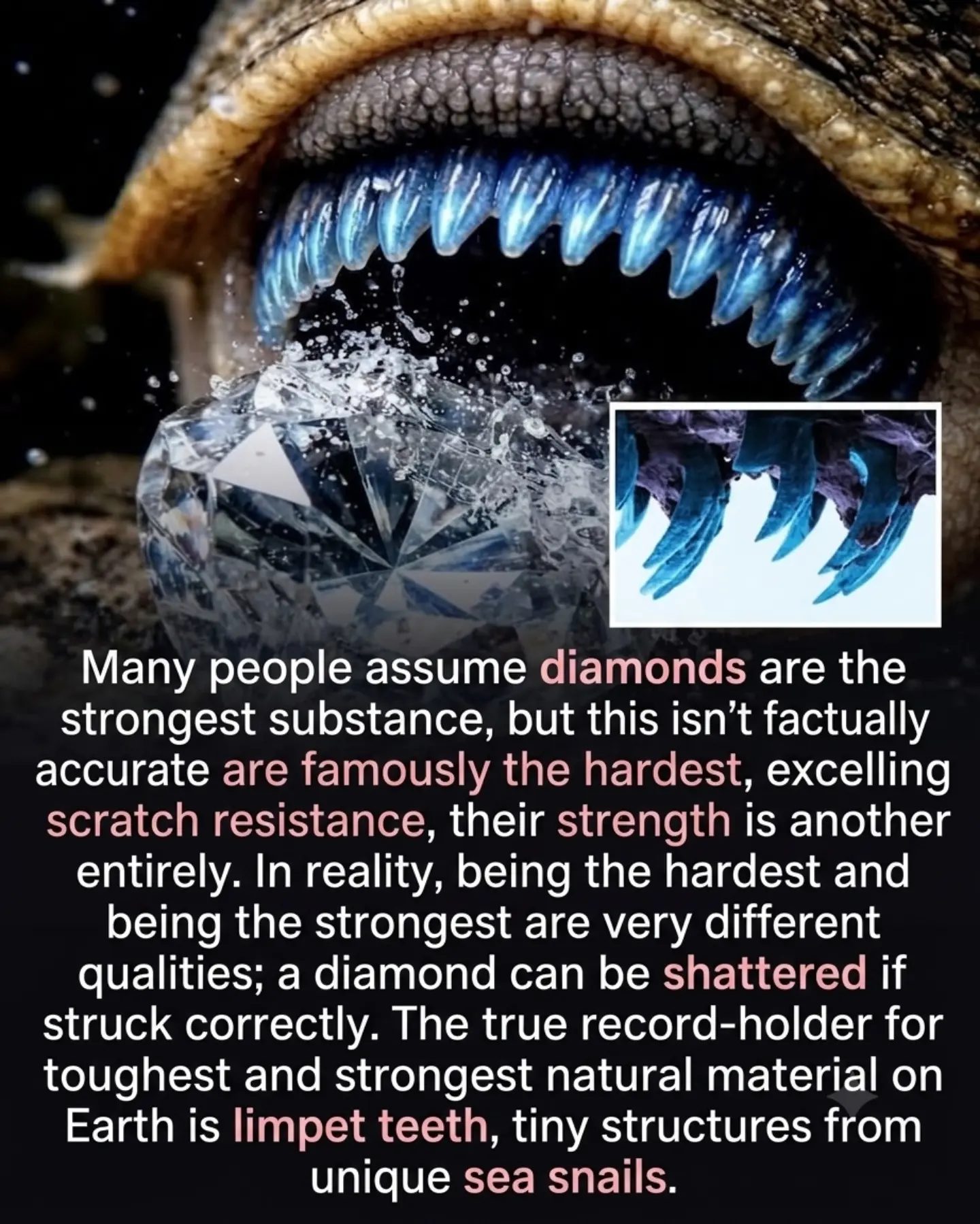
Diamonds and the Myth of Strength
Diamonds have long been celebrated for their unyielding hardness and exceptional sparkle. However, the perception that diamonds are the strongest material on Earth is actually a misconception. The truth is much more nuanced. Diamonds are indeed the hardest natural substance, but hardness and strength are not the same properties. This brings us to the question: if not diamonds, what is the strongest natural material?
Context / Why this matters
Understanding the difference between hardness and strength is crucial in various scientific and industrial applications. Hardness measures a material’s resistance to scratching and indentation, whereas strength refers to a material's ability to withstand forces that could cause it to break or deform. For example, diamonds can be shattered if struck in the right spot, despite their remarkable hardness.
This distinction becomes particularly relevant in fields like materials science, engineering, and biology, where understanding these properties can lead to breakthroughs in creating more durable and resilient materials.
Main discussion
Hardness vs. Strength
Diamonds are renowned for their hardness, which means they resist scratches and cuts exceptionally well. This property makes them ideal for industrial applications, such as cutting tools and drill bits, where durability and sharpness are paramount. Diamonds can withstand tremendous pressure and maintain their shape, which adds to their allure in both jewelry and industrial settings.
However, this hardness does not equate to strength. Strength, on the other hand, refers to the ability of a material to withstand stress without breaking. Diamonds, while incredibly hard, can fracture if struck with enough force in the right spot. This is because diamonds have a crystalline structure that, while robust in one direction, can be susceptible to shattering under impact from the right angle.
The Materials Behind the Myth
Limpet teeth, small structures found in the mouths of tiny sea snails, hold the title of the strongest natural material on Earth. Limpet teeth are composed of a super-dense mineral-protein composite that surpasses even spider silk and diamonds in tensile strength.
These tiny, incredibly strong teeth are essential to limpets, enabling them to scrape algae off rugged ocean rocks without breaking. The strength of limpet teeth lies in their unique structure, which is optimized for both hardness and resilience.
Understanding Limpet Teeth
Limpet teeth are a fascinating example of natural engineering excellence. Their mineral-protein composite structure allows them to withstand immense pressure and tension. This is particularly remarkable because these structures are so small, yet they outperform materials that are much larger and more complex.
The tensile strength of limpet teeth comes from their nanoscale structure, which includes microscopic crystals that are highly aligned and tightly packed. This alignment and packing give the teeth their extraordinary strength.
Limpet teeth are also notable for their unique ability to maintain their structure under extreme conditions, such as those found in the ocean depths. This resilience is due to their composition, which includes a mix of minerals and proteins that work together to provide both hardness and flexibility.
Practical Tips
When considering materials for industrial or scientific applications, it is essential to understand the distinction between hardness and strength. Here are a few practical tips:
-
Identify the Requirement: Determine whether your application requires a material that resists scratches or one that can withstand significant impact. For example, if you need a cutting tool, hardness is crucial. If you need a material for braces or other high-impact applications, strength is more important.
-
Consider the Environment: Understand the conditions under which the material will be used. For example, in marine or underwater applications, materials like limpet teeth, which can withstand harsh conditions, may be more suitable.
-
Explore Natural Inspiration: Look to nature for inspiration. Many natural materials, such as spider silk and limpet teeth, have evolved to be highly efficient and resilient under various conditions.
-
Test and Validate: Always conduct thorough testing and validation to ensure the chosen material meets the required specifications. This includes not just hardness and strength tests, but also assessments of durability, flexibility, and resistance to environmental factors.
Important takeaways
-
Hardness vs. Strength: Understanding the difference between these two properties can help in selecting the right material for specific needs. Hardness refers to a material's resistance to scratches or dents, while strength measures a material's ability to withstand stress without breaking.
-
Superior Natural Materials: Limpet teeth are the strongest natural material, composed of a unique mineral-protein composite. Their structure and properties make them ideal for applications requiring both hardness and resilience.
-
Biological Inspiration: Natural materials like limpet teeth offer valuable insights and inspiration for developing new and improved synthetic materials.
Conclusion
The misconception that diamonds are the strongest material on Earth overlooks the critical distinction between hardness and strength. While diamonds are the hardest natural substance, limpet teeth are the strongest. By understanding this difference and drawing inspiration from natural materials, we can make more informed choices in materials science and engineering.
Watch the Reel
Questions readers ask
What makes limpet teeth stronger than diamonds?
Limpet teeth are stronger than diamonds because of their unique hierarchical structure, which includes fibers and mineralized layers, making them more resistant to breakage and deformation. Diamonds, while hard, lack this complex structure and are brittle, which means they can shatter under certain conditions.
How do limpet teeth compare to diamonds in terms of hardness and strength?
Diamonds are the hardest natural substance, meaning they resist scratching and indentation better than limpet teeth. However, limpet teeth are stronger, as they can withstand greater forces without breaking or deforming. This is why limpet teeth are considered the strongest natural material.
Why is it important to understand the difference between hardness and strength?
Understanding the difference between hardness and strength is vital in various scientific and industrial applications. Hardness measures a material’s resistance to scratching and indentation, while strength refers to a material's ability to withstand forces that could cause it to break or deform. This knowledge helps in selecting the right materials for specific tasks.
What are the specific features of limpet teeth that contribute to their strength?
Limpet teeth have a unique hierarchical structure with fibers and mineralized layers. These features allow the teeth to distribute stress more effectively, making them incredibly durable and resistant to breaking under pressure.
Can the strength of limpet teeth be replicated in human-made materials?
Scientists and engineers are actively studying limpet teeth to understand their strength and durability. While replicating the exact structure of limpet teeth in human-made materials is challenging, researchers are exploring biomimicry to develop stronger and more resilient materials inspired by these tiny sea snails.
How do limpet teeth maintain their strength over time?
Limpet teeth maintain their strength through continuous renewal and repair by the limpet itself. As the teeth wear, the limpet grows new material using a combination of minerals, making them a model of resilience and durability in the natural world.
What are some practical applications of understanding limpet teeth strength?
The understanding of limpet teeth strength can inspire the development of stronger and more durable materials for various industries, such as construction, aerospace, and manufacturing. This knowledge can also contribute to advancements in biomimicry, leading to innovative designs and technologies.
Related deep dives
Similar reads based on topic and creator.




Recent articles
Fresh deep dives from the latest Reels we unpacked.




Comments
Be the first to comment.