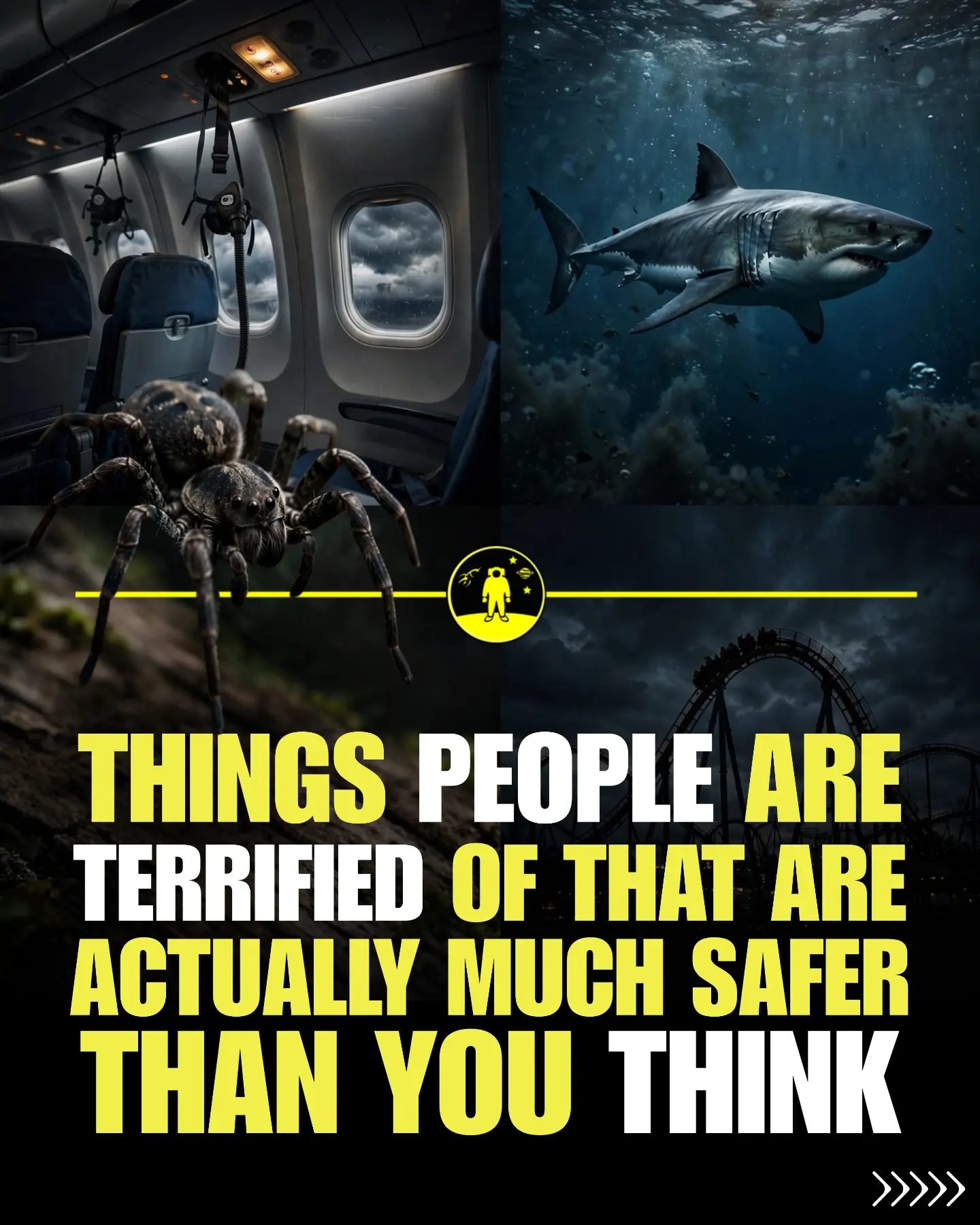
Things People Fear That Are Statistically Safer
Fear is a universal human emotion, often driven by stereotypes and misconceptions. Many everyday activities or elements of nature that people commonly fear are much safer than their reputations suggest. Understanding the actual risks can help separate fear from reality and make informed decisions.
Why This Matters
The way we perceive risk can significantly impact our daily lives. For instance, flying in a commercial airliner is statistically safer than driving a car, but many people are more afraid of air travel than of driving. This disconnect between perceived and actual risk can lead to unnecessary anxiety and avoidance behaviors that affect personal and professional choices.
Main Discussion
Sharks
Sharks are often portrayed as dangerous predators in movies and media. However, the reality is quite different. In 2024, there were just 47 unprovoked shark bites worldwide, and only 4 were fatal. This translates to an extremely low incidence rate considering the millions of people who enter the ocean every year. The likelihood of being bitten by a shark is minimal, and the chances of a fatal encounter are even lower. Most shark species are not aggressive towards humans, and incidents are often due to mistaken identity or defensive behavior. Avoiding shark-infested waters or swimming during peak shark activity times can further minimize this already low risk.
Flying
Commercial aviation is one of the safest modes of transportation. Despite the fear of turbulence and crashes, flying remains statistically safer than driving or riding a bicycle. The exceptional safety record of commercial airlines is due to rigorous safety protocols, advanced technology, and highly trained crew members. Turbulence, while uncomfortable, is a normal part of flying and rarely poses a significant danger. Passengers can enhance their safety during turbulence by keeping their seatbelts fastened and following crew instructions. Additionally, the chances of a plane crash are incredibly low, with extensive safety measures in place to prevent such incidents.
Lightning
Lightning is a natural phenomenon that often evokes fear. However, the risk of being struck by lightning is relatively low, especially when compared to other everyday risks. The probability of being struck by lightning in a given year is about 1 in 500,000, and the fatality rate is even lower. To minimize risk, people should avoid open fields, high ground, and tall structures during thunderstorms. Taking shelter indoors or in a vehicle can significantly reduce the likelihood of being struck.
Roller Coasters
Roller coasters are popular attractions in theme parks, but they are also associated with fear due to their high speeds and steep drops. However, the safety measures in place, such as safety harnesses and thorough inspections, make roller coasters a relatively safe activity. The risk of injury on a roller coaster is extremely low, and fatalities are exceedingly rare. Following safety guidelines, such as adhering to height and weight restrictions, and keeping hands and feet inside the ride at all times, further minimizes the already low risk.
Quicksand
Quicksand often conjures images of people being sucked under and drowning, thanks to its portrayal in media. In reality, quicksand is not as dangerous as it is depicted. Quicksand is a mixture of sand and water that can become unstable, but it is not strong enough to pull a person under. If someone falls into quicksand, they can usually free themselves by spreading their weight and slowly moving towards the edge. The real danger lies in attempts to struggle or thrash, which can cause a person to sink deeper. Understanding how to react in such a situation can reduce the risk of any harm.
Practical Tips
Stay Informed
One of the best ways to manage fear is to stay informed. Understanding the statistics and facts about common fears can help separate myth from reality. Reliable sources of information, such as scientific studies, public health reports, and expert opinions, can provide accurate data on risk levels.
Learn Safety Protocols
Each fear-inducing scenario has specific safety protocols that can reduce the risk. Familiarize yourself with these guidelines, such as keeping seatbelts fastened during turbulence, following safety instructions on roller coasters, and seeking shelter indoors during thunderstorms.
Practice Mindfulness
Fear is often driven by the brain's natural tendency to remember dramatic events more vividly than ordinary ones. Practicing mindfulness and focusing on the present moment can help manage anxiety and reduce the impact of fear on daily life. Techniques like deep breathing, meditation, and cognitive-behavioral therapy can be effective in managing fear.
Important Takeaways
Fear is a natural response, but it can sometimes be disproportionate to the actual level of danger. Learning to separate fact from fiction can help manage fear and make informed decisions in everyday life. Many common fears, such as those related to sharks, flying, lightning, roller coasters, and quicksand, are statistically safer than perceived.
Understanding the actual risks and following safety guidelines can significantly reduce the impact of these fears. Staying informed, learning safety protocols, and practicing mindfulness are practical steps to manage fear and lead a more balanced life.
Conclusion
The world is often safer than it appears, and understanding the actual risks can help manage fear and make informed decisions. By separating fact from fiction and following safety guidelines, people can better navigate their fears and lead more informed, balanced lives.
Watch the Reel
Questions readers ask
How likely am I to be involved in a shark attack?
Shark attacks are extremely rare. According to the International Shark Attack File, the chance of being attacked by a shark is about 1 in 11.5 million. This means you are more likely to be struck by lightning than attacked by a shark.
Is flying in an airplane as dangerous as many people believe?
Flying is statistically one of the safest ways to travel. The chance of dying in a plane crash is about 1 in 9,821, for comparison the chance of dying in a car crash is 1 in 114. Understanding flying turbulence facts can also help alleviate anxiety, as turbulence, while uncomfortable, is rarely dangerous.
What are the odds of being struck by lightning?
The odds of being struck by lightning in any given year are about 1 in 1,200,000. While this is a low probability, it is still more likely than being attacked by a shark, highlighting the disconnect between perceived and actual risk.
How do the risks of everyday activities compare to more feared events?
Many everyday activities, such as driving a car or even walking down the street, pose a higher risk than events that are often feared, such as shark attacks or plane crashes. For instance, the risk of dying in a car accident is significantly higher than dying in a plane crash.
Why is it important to understand the statistics behind everyday risks?
Understanding the statistics behind everyday risks can help individuals make better decisions and alleviate unnecessary anxiety. By separating fear from reality, people can engage in activities they might otherwise avoid, leading to a more fulfilling life.
What are some common fears that are less dangerous than perceived?
Common fears that are statistically safer than many people realize include fear of sharks, fear of flying, and fear of lightning strikes. By learning the facts, individuals can better assess the actual risks and make informed decisions.
How can knowledge of travel safety statistics help me as a traveler?
Knowing travel safety statistics can help travelers make informed decisions about their journeys. For example, understanding that flying is safer than driving can help alleviate anxiety about air travel. This knowledge can also help travelers choose safer modes of transportation and destinations.
Related deep dives
Similar reads based on topic and creator.




Recent articles
Fresh deep dives from the latest Reels we unpacked.




Comments
Be the first to comment.