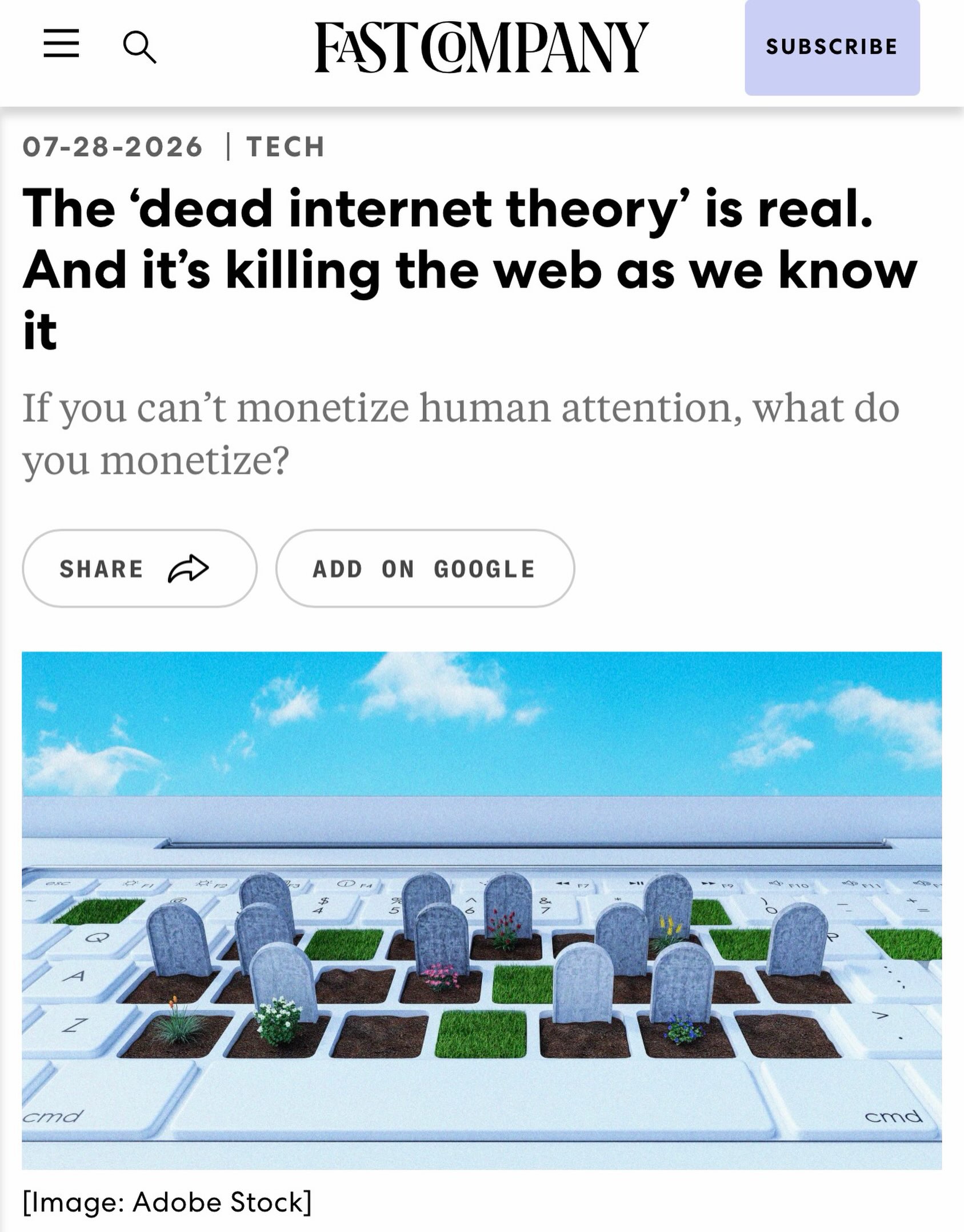
The Bell Tolls for the Internet
The internet, as we know it, is dying. This is the stark claim of the Dead Internet Theory, a concept suggesting that the web is increasingly populated by bots and AI-generated content. The number of human users is in decline. The decline is symbolic in many ways, but monetization is a heavy one. The theory is frightening not just for its implications about artificial engagement, but because the internet has fundamentally depended on human attention as a commodity. Advertising dollars have dwindled for many brands, as monetizing these metrics is more challenging with a declining user base.
The Web's Graveyard
Dead Internet Theory suggests that a new internet is replacing the old one, one that does not rely on human interaction to function. "The ‘dead internet’ ... it’s killing the web as we know it." Instead of humans, bots and AI can generate content, interact with each other, and drive engagement. This concept makes sense in the context of the last few years. As SEO (search engine optimization) and affiliate marketing have become more sophisticated, the demand from content creators has increased. The real users are becoming harder to find.
The Last Breath of Human Attention
Businesses are finding it harder to monetize the internet. The internet has previously been a place where user attention is a commodity. The money is in the numbers, whether it was banner ads, Google Ads, or viral content. The internet has always been a way to reach a mass audience, and spend less. That is changing as fast as the internet itself. An increasingly automated internet has become less interactive with humans. It has become a place where a large portion of social interactions are between bots. Human users are depleting as the number of bots rises, if we are to believe the theory. It has become harder to find content connected to a real audience.
An Automated Web's Growth
The Graveyard of Raw Human Content
The Dead Internet Theory is based on the decline of human content creation in the digital space. For example, dead blogs exist that once were prolific. High traffic sites now exist to generate clickbait headlines. This is something that is happening across many different platforms. The internet is now flooded with multiple articles on the same topic, written by AIs. We’ve seen it happen before with online forums like Reddit where it was easier to find a post with authentic engagement. That's declining, though, as the website becomes increasingly flooded with bot accounts. The creator’s audience is increasingly consumed by bots — not actual humans who interact and provide comments, views, or shares.
The Rise of AI Presences
The Dead Internet Theory also describes the rise of AI-generated content, which has grown increasingly sophisticated. AI can mimic human writing styles, create images, and even generate videos. It’s the realization that it’s becoming easier to vet something without someone to verify. We saw this in 2024, when the first AI-generated music video was released on a major platform, and was believed to be human-created. A user on Reddit posted "So, I just realized that 70% of [the platform] is AI-generated content. It's insane." This means that the internet is not just flooded with bots but also with AI-generated content that mimics real content. This is frightening because it’s harder to monitor.
The Digital Plague
The idea that the internet is dying as user interaction decreases is significant. Internet users increasingly have concerns about privacy, security, social media companies exploiting their data, and the overall negative impact of social media on mental well-being. It is not difficult to see. For example, as algorithms and AI-driven content become more prevalent, the web’s content increasingly becomes indistinguishable from the real thing. This also leads to the spread of misinformation and fake news. Bots and algorithms can generate misleading content on an unprecedented scale, which affects the way the internet operates. It is becoming increasingly harder to verify sources.
Monitoring the Digital Pulse
To illustrate the theory, Dead Internet Theory uses the analogy of human content — as an organic part of the web. Human content is then effectually dying as more automated and sophisticated creations come onto the internet. The declining human attention means that the internet is losing the fundamental human element that made it valuable in the first place. "If you can’t monetize human attention, what do you monetize?" Real engagement in the age of automation is becoming increasingly scarce and valuable.
Real Debates
Dead Internet Theory is controversial. Some argue that the internet is evolving rather than dying, with AI and automation enhancing, not replacing, human interaction. Others point out that the internet has always had a significant amount of bot content, and the prevalence of AI-generated content is just a continuation of this trend. However, many agree on the premise that those generating content for a human audience are dwindling.
Living in the Age of Digital Decay
Dead Internet Theory predicts that the future of the internet is one where human engagement and attention are no longer valuable to online businesses. It suggests that the internet will consist of mostly AI-generated content that interacts with other bots, creating a vast and complex digital ecosystem. The future will be one where human attention and engagement are valued commodities, and businesses will need to find new ways to monetize the internet. However, much of the Dead Internet Theory relies on the decline of human engagement. Where there is a decline of human engagement, there is an increase in AI content. And while users are becoming more aware of the theory’s implications, we have already seen things moving in this direction. Content creators are already creating AI-driven content, and online businesses are already monetizing AI-driven engagement. This is the foundation of Web 3.0.
Treading the Digital Graveyard
In the absence of concrete ways to “cure” the Dead Internet Theory, the best practice is to safeguard your correspondence on the internet. Irrespective of AI content and declining human engagement, the internet is still a place for humans to learn and connect. It is possible to safeguard the integrity of your content by avoiding the use of AI-generated content. You can also maintain human engagement by interacting with other users and producing content that is valuable to human readers. If you have to use artificial intelligence, make sure to let your readers know that the content is AI-generated.
Watch the Reel
Questions readers ask
What exactly is the Dead Internet Theory and who proposed it?
The Dead Internet Theory is a concept suggesting that the internet is increasingly populated by bots and AI-generated content, leading to a decline in human users. It proposes that the web is evolving into a place where human interaction is less prevalent, and the internet is becoming a space where bots interact with each other. The theory is based on observations of declining human engagement and the rise of automated content. It's not attributed to a single source, but has gained traction in recent discussions about the internet's future.
How does the Dead Internet Theory impact online monetization?
The Dead Internet Theory suggests that as the number of human users declines, so does the value of online advertising. Since human attention has been a primary commodity for monetization, a shift towards bot-driven engagement makes it harder for businesses to reach real audiences. This decline in human interaction can lead to a decrease in advertising revenue, as bots do not generate the same level of engagement or purchasing power as human users.
What are some examples of how the Dead Internet Theory is manifesting?
One example is the decline of authentic user engagement on platforms like Reddit, where bot accounts are increasingly common. Another is the proliferation of AI-generated content across various platforms, such as multiple articles on the same topic written by AI. Additionally, the rise of sophisticated AI-generated media, like music videos, that can mimic human creativity and deceive users about the source of the content.
Can I still find authentic human content on the web, or is it all bots and AI now?
While the Dead Internet Theory suggests a decline in authentic human content, it doesn't mean that all content is generated by bots and AI. There are still creators and platforms focusing on authentic engagement, and many users continue to seek out genuine interactions. However, it may require more effort to find and engage with real human content amidst the increasing noise of automated interactions.
How can businesses adapt to the changes suggested by the Dead Internet Theory?
Businesses need to focus on strategies that prioritize real human engagement and authentic content. This could involve investing in community building, creating high-quality content that resonates with real users, and leveraging platforms that still have a strong human presence. Additionally, businesses may need to adapt their monetization strategies to account for the shift in user engagement, potentially focusing on niche audiences or alternative revenue streams.
Is the Dead Internet Theory something that can be reversed, or is it an inevitable part of the web's evolution?
The Dead Internet Theory presents a concerning trend, but it's not necessarily inevitable. Efforts to promote genuine engagement, support human creators, and regulate the use of bots and AI could help mitigate the decline in human interaction. However, it will require a collective effort from users, creators, and platforms to prioritize authenticity and combat the proliferation of automated content.
What role do social media platforms play in the Dead Internet Theory, and can they do anything to stop it?
Social media platforms are significant contributors to the Dead Internet Theory, as they are where much of the bot activity and AI-generated content occurs. Platforms can take steps to combat this by implementing stricter verification processes, improving algorithms to detect and remove bot accounts, and promoting policies that encourage authentic user engagement. However, the effectiveness of these measures will depend on the platforms' commitment to prioritizing real human interaction over automated engagement.
Related deep dives
Similar reads based on topic and creator.



Recent articles
Fresh deep dives from the latest Reels we unpacked.




Comments
Be the first to comment.