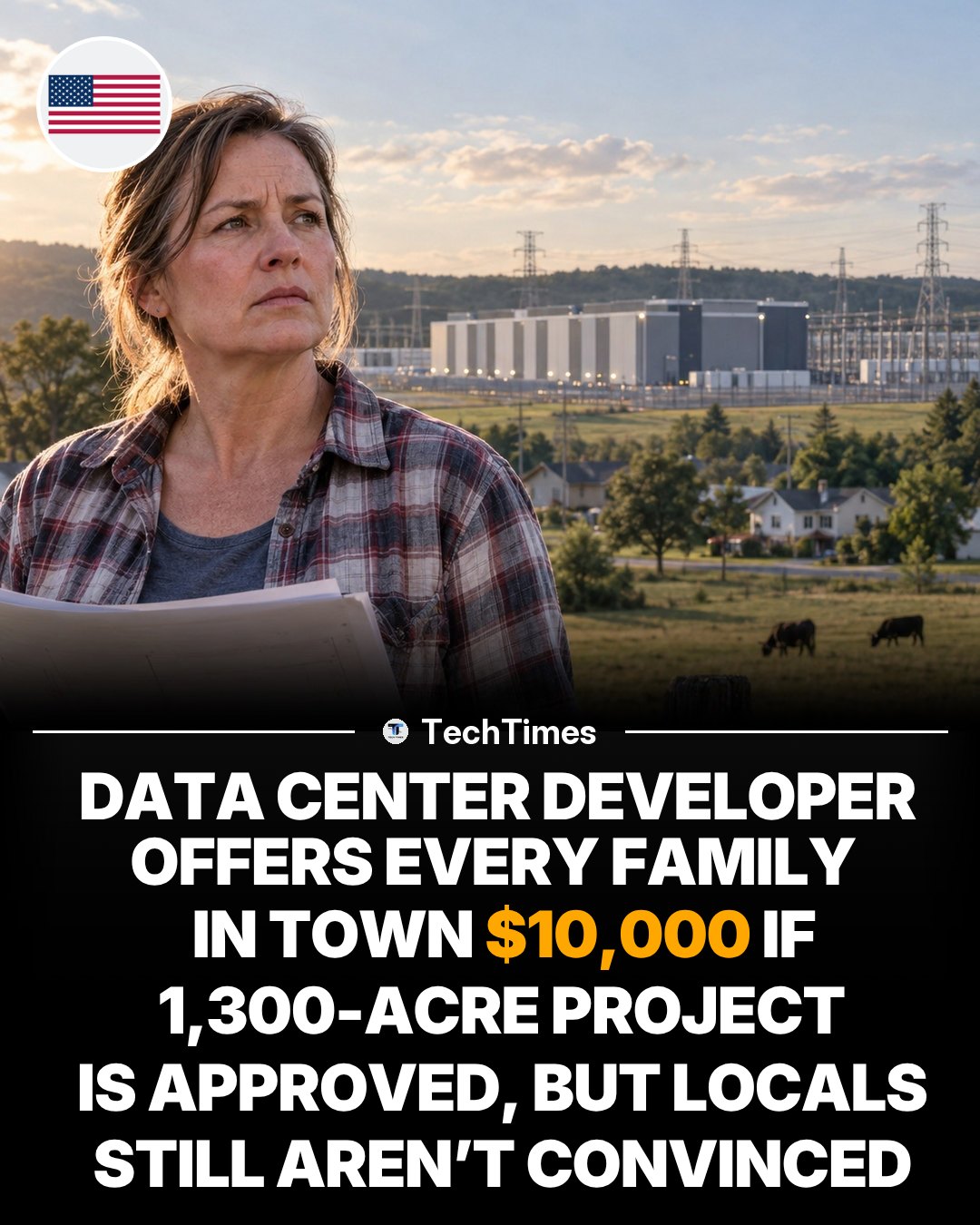
The episode described a developer's bold proposal in a rural town. The offer? Ten thousand dollars for each family — if a 1,300-acre data center project gets the green light. The plan is more than just a financial windfall for the town, but what is it? And in a story that has the town buzzing, why are locals still unconvinced? In rural America, a developer has offered a substantial incentive. In the proposal, residents would each receive $10,000. The offer hinges on the approval of a 1,300-acre project, which the developer must have in place. Other details remain undocumented. The developer would need to receive the green light for a data center project. That might seem like a win-win, but locals aren't convinced yet. Whether it can overcome residents' concerns remains to be seen.
The Data Center Offer
The idea of the $10,000 offer seems so a rich creative way to gain public support. The proposed data center could bring opportunity to a town — but at what cost? A $10,000 incentive is certainly a compelling offer, but it comes with strings attached. The project’s scope is massive: 1,300 acres. Dedicated to community engagement? Or just a bold land grab? The developer's offer includes incentives. But the incentive is contingent. The town doesn't know what is involved. The developer might be offering to every family in town $10,000 if 1,300-acre project is approved. To approve the project means the town must assess the balance of the project's benefits and its inevitable impact. The fact that locals remain unconvinced suggests that the town's residents are not sure about the data center developer's offer.
The Price of Prosperity
The developer's plan is just one example of a broader trend in rural America. Data centers are increasingly viewed as catalysts for economic growth and infrastructure development. These developments can bring jobs, tax revenue, and other economic benefits to communities that might otherwise struggle to attract investment. In exchange, developers demand significant infrastructure changes and resources. Data centers require not just massive facilities, but also substantial power, water, and other resources. The massive proposal is a clear sign that data centers demand huge resources. Even if the project is approved, the potential for economic gains and jobs might not be enough. And as climate change pressues persist, the environmental impact of massive infrastructure projects is increasingly under scrutiny. The $10,000 offer could be an enticement to cover up the social and environmental costs of the project. Yet the townsfolk's resistance is a real sign of the struggle to consider the long-term effects of this type of economic development.
### The Financial Offer
The financial incentive stands as the core of the proposal: a $10,000 bounty for each family, contingent on project approval. That's a tantalizing offer for residents. However, the strings attached are what makes it controversial. A $10,000 cash injection could alleviate financial strains and even stimulate the local economy. The developer could use the offer to buy community goodwill.
### Environmental Concerns
Increasing residents' financial stability could be a distraction from the environmental costs. Data centers need massive resources to operate. Water needed for cooling, power for the servers and land for the facility. The impact might be even more pronounced in rural areas. So securing the funding might not be enough. The rural area's sustainability might be an issue if the residents approve.
### Rural Revolution
Rural communities like this face challenges that data centers address. Access to quality infrastructure and services is not guaranteed. Data centers can bring economic development, investment and jobs. At the same time, this development might be changing the rural landscape more than just financially. The developer’s plan is a clear indicator of such pressures. As rural residents consider their future. Money from outsiders might buy a short-term gain, but the specifics can reveal the larger pressures. Future rural growth might mean weighing outside investment and the local impact.
Neighborly Advice
The offer is certainly tempting.
- Weigh Up Your Values: Let’s start with an obvious one — think about the values that matter to your community. $10,000 can buy a lot. However, weighing the long-term impact of environmental damage, or the loss of rural character.
- Ask Questions: Have a voice in the process. Ask for specifics. What is the exact plan? What will be the land usage and the impact on the environment?
- Consider Consultants: This could be a first for your community. Ask outside experts. They can help evaluate the success of these type of projects to ensure the $10,000 is a real offer.
- Stimulate Community Engagement: Engage residents on the project. Host discussions and town halls. And spread the word on potential impacts. The developer's promise has lit a spark for change. Yet despite the lucrative offer, locals are still unconvinced. In the end, it’s not about the money. It’s about what they’re bringing to your community. Ultimately, rural towns face a choice: Can you afford to reject economic gains? Or, is the price of prosperity too high to accept?
Watch the Reel
Questions readers ask
Why would a developer offer $10,000 to each household in a rural town?
The developer is offering $10,000 to each household as an incentive to gain public support for a proposed 1,300-acre data center project. The offer is contingent on the project's approval, aiming to secure community backing for what would be a significant infrastructure development. The developer hopes that the financial incentive will outweigh any concerns residents might have about the project.
What are the potential benefits of the data center project for the town?
The data center project could bring several benefits to the town, including job creation, increased tax revenue, and overall economic growth. Data centers often require substantial infrastructure investments, which can improve local services and attract further development. However, these benefits come with significant trade-offs, including environmental impacts and resource demands.
What are the environmental concerns surrounding the data center project?
The environmental concerns include the massive land use of 1,300 acres, as well as the substantial power, water, and other resources required to operate the data center. Additionally, the environmental impact of such large-scale infrastructure projects is increasingly scrutinized, especially in the context of climate change. Residents are likely worried about long-term effects on the local ecosystem and community well-being.
How does the developer plan to address the concerns of the locals?
The article does not specify how the developer plans to address the locals' concerns. However, the $10,000 offer is likely an attempt to mitigate some of these worries by providing a financial incentive. The developer might also need to engage in more community dialogue, or provide more detailed plans about how the project will benefit the town and mitigate environmental impacts.
What happens if the town rejects the data center project?
If the town rejects the data center project, the developer's offer of $10,000 per household would likely be withdrawn. The town would miss out on the potential economic benefits, but it could also avoid the environmental and resource challenges associated with the project. The town would need to weigh these factors carefully in their decision-making process.
Are there other similar data center projects in rural America?
Yes, data centers are increasingly being viewed as catalysts for economic growth in rural America. Many rural communities are considering or have already approved similar projects, which can bring jobs, tax revenue, and infrastructure development. However, these projects also come with significant environmental and resource demands, making them a contentious issue in many communities.
Recent articles
Fresh deep dives from the latest Reels we unpacked.




Comments
Be the first to comment.