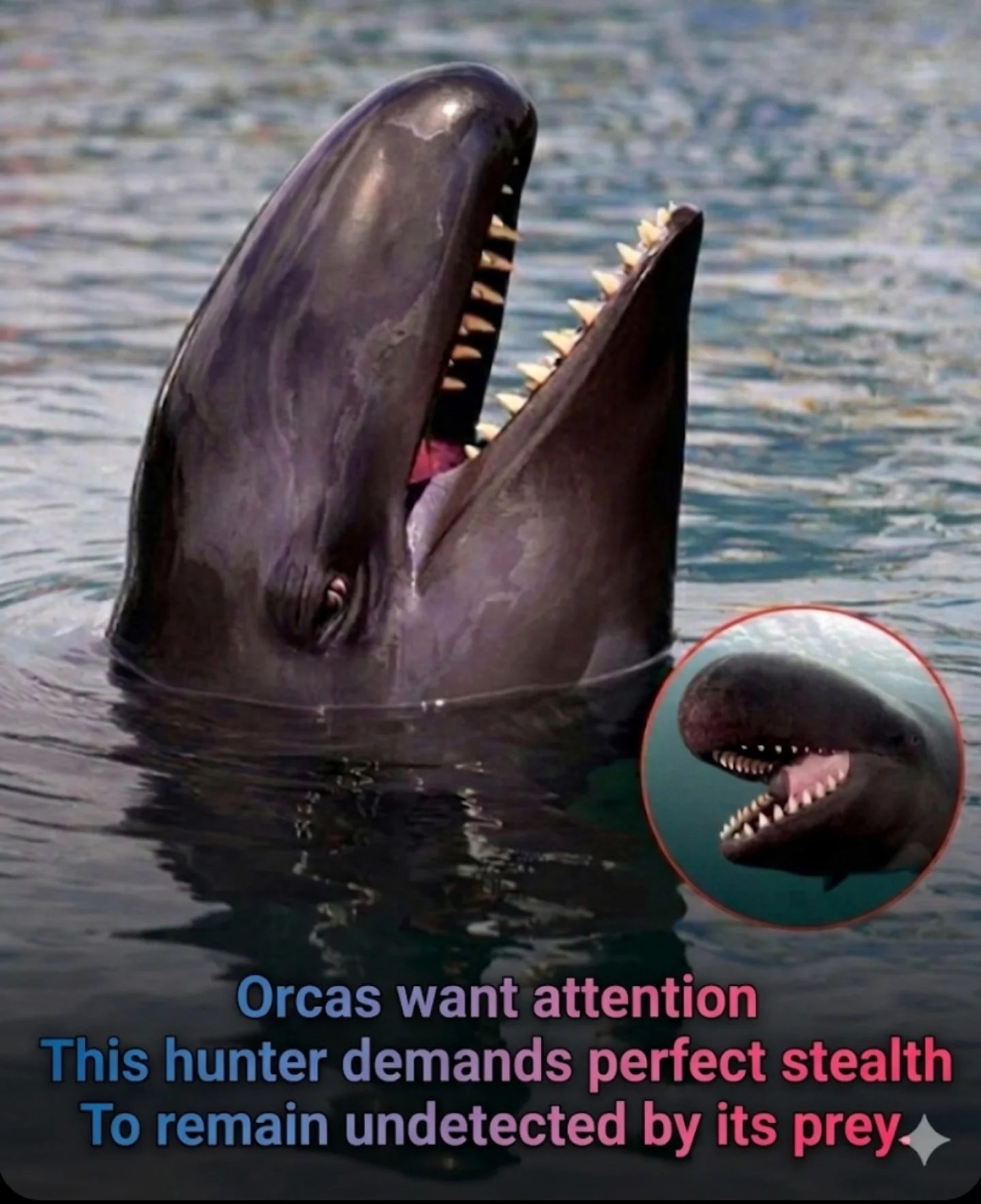
The False Killer Whale
The False Killer Whale (Pseudorca crassidens) is a fascinating marine mammal that defies many common expectations about dolphins. Known for its sleek, all-black appearance and intimidating size, this creature is often mistaken for a whale due to its name. However, it is actually a giant dolphin, belonging to the dolphin family.
Why This Matters
Understanding the False Killer Whale's behavior and characteristics provides valuable insights into marine ecology and the complex social structures of marine mammals. These creatures are not only intriguing subjects for marine biologists but also have a significant impact on the ocean's ecosystem, particularly through their hunting strategies and interactions with other species.
The False Killer Whale: An Overview
A Misleading Name
Despite its name, the False Killer Whale is not a whale at all. The term "false" is a bit of a misnomer, stemming from a mistaken identity in 1846 when a scientist discovered a fossilized skull and misidentified it as a killer whale, although not quite a perfect match. This misunderstanding led to the creature being dubbed the "False" Killer Whale. The name, however, is far from accurate.
Physical Characteristics
False Killer Whales are notably larger than their dolphin cousins, reaching up to 20 feet in length and weighing as much as a heavy-duty pickup truck. Their sleek, black coloration and powerful, streamlined bodies make them formidable predators in the deep sea. These marine mammals are known for their robust build and their ability to swim with incredible agility.
Habitat and Distribution
These creatures are found in tropical and subtropical waters around the world. They prefer to stay in deeper oceans, where they can hunt effectively and avoid human interference. Their range includes the Pacific, Atlantic, and Indian Oceans, often near islands and continental shelves where prey is abundant.
Stealth and Strategy: The Hunting Tactics
An Elusive Predator
False Killer Whales are masters of stealth, earning them the title of the "ninjas of the deep blue sea." Their hunting strategy is meticulously planned and executed with precision. They use advanced echolocation to navigate and locate prey in total darkness. This method allows them to remain undetected by their prey, which often includes other dolphins and even baby whales.
Coordinated Attacks
These whales hunt in highly coordinated wolfpacks, using their advanced echolocation and social intelligence to stalk and ambush their prey. Their synchronized attacks are a testament to their complex social structure and teamwork. False Killer Whales are known to target high-speed ocean prey like tuna and mahi-mahi, as well as other marine mammals.
Picking on Prey
False Killer Whales are not afraid to go after prey that is their own size or even larger. They have been observed hunting other dolphins and even teaming up to take down baby whales. Their hunting behavior often involves strategic maneuvers to separate a prey from its group and then isolate and attack it.
The False Killer Whale and Humans
Interaction with Fishermen
False Killer Whales have a complex relationship with humans, particularly with commercial fishermen. These whales have learned that fishing boats are a source of easy food and will often swim up to long fishing lines to steal fish off the hooks. This behavior, while problematic for fishermen, underscores the whales' problem-solving abilities and adaptability.
Ecosystem Role
False Killer Whales play a crucial role in the marine ecosystem. As apex predators, they help regulate the populations of their prey, maintaining a balance in the food chain. Their presence can also indirectly affect the health of various marine habitats, as their hunting activities shape the behavior and distribution of other marine species.
Practical Tips for Observing False Killer Whales
Ethical Viewing
If you ever have the chance to observe False Killer Whales in the wild, it's important to do so responsibly. Maintain a safe distance to avoid disturbing them. Remember, these are wild animals and should be treated with respect and caution. Use binoculars or a spotting scope for a closer look without intruding on their natural behavior.
Learning More
For those interested in learning more about these magnificent creatures, there are numerous resources available. Books, documentaries, and marine biology courses can provide in-depth knowledge about their behavior, habitat, and conservation status. Engaging with local marine conservation groups can also offer hands-on experiences and opportunities to contribute to their protection.
Important Takeaways
False Killer Whales are remarkable creatures with a unique blend of physical prowess and social intelligence. Their misnamed identity and stealthy hunting strategies make them stand out in the marine world. Understanding their behaviors and the challenges they face is essential for appreciating their role in the ocean's ecosystem and ensuring their conservation.
Conclusion
The False Killer Whale is more than just an intriguing marine mammal; it is a testament to the diverse and complex nature of marine life. From their stealthy hunting tactics to their interactions with humans, these creatures offer a wealth of knowledge about the deep-sea world. By protecting and studying False Killer Whales, we can not only deepen our understanding of marine ecology but also ensure the health and sustainability of our oceans.
Watch the Reel
Questions readers ask
What makes the hunting tactics of False Killer Whales so effective?
False Killer Whales employ a combination of stealth, strategy, and physical strength to hunt successfully. They often use the element of surprise, working together in pods and employing coordinated attacks to overwhelm their prey. Their sheer size and powerful jaws, equipped with sharp teeth, enable them to take down a variety of marine animals, from fish to other dolphin species, making them formidable predators in the deep sea.
How do False Killer Whales' hunting tactics impact the marine ecosystem?
False Killer Whales' hunting tactics significantly impact marine ecosystems as they help control the populations of various species. Their predation can influence the balance of fish and squid populations, which in turn affects other marine animals that rely on these species for food. However, their hunting strategies can also disrupt ecosystems when they target vulnerable or endangered species, potentially altering the dynamics of marine communities.
Do False Killer Whales exhibit any unique social behaviors during hunting?
False Killer Whales demonstrate complex social behaviors while hunting, often working in pods to encircle and disorient their prey, making it easier to capture. These coordinated efforts highlight the advanced communication and teamwork among these dolphins, showcasing their intelligence and adaptability.
Are there any differences between the hunting tactics of False Killer Whales and those of Orcas?
While both species are known for their advanced hunting tactics, False Killer Whales and Orcas (Killer Whales) differ in their methods. False Killer Whales often rely on stealth and group coordination, whereas Orcas are more likely to employ a variety of techniques, such as using waves to wash prey onto shore or working together to herd prey. False Killer Whales are generally less aggressive towards other marine mammals while Orcas are known to be more predatory.
What kinds of prey do False Killer Whales commonly target with their hunting tactics?
False Killer Whales have a diverse diet, targeting a range of marine animals. Their common prey includes various species of fish, squid, and other dolphins. Their powerful jaws and sharp teeth allow them to feed on a variety of prey, making them versatile predators in the deep sea.
How does the physical appearance of False Killer Whales contribute to their hunting success?
False Killer Whales' sleek, all-black appearance and large size contribute to their hunting success by allowing them to move swiftly and quietly through the water. Their streamlined bodies reduce drag, enabling them to reach high speeds, while their dark color provides camouflage in the deep sea, allowing them to approach prey undetected. Their powerful jaws and sharp teeth are also crucial for capturing and subduing their prey.
What role does the social structure of False Killer Whales play in their hunting tactics?
The social structure of False Killer Whales is integral to their hunting tactics. These dolphins are known to form strong bonds within their pods, which enhances coordination and cooperation during hunts. This social cohesion allows them to employ sophisticated hunting strategies, such as encircling and herding prey, making them highly effective predators.
Related deep dives
Similar reads based on topic and creator.


Recent articles
Fresh deep dives from the latest Reels we unpacked.



Comments
Be the first to comment.