Bio-Concrete: The Living Building Material of the Future
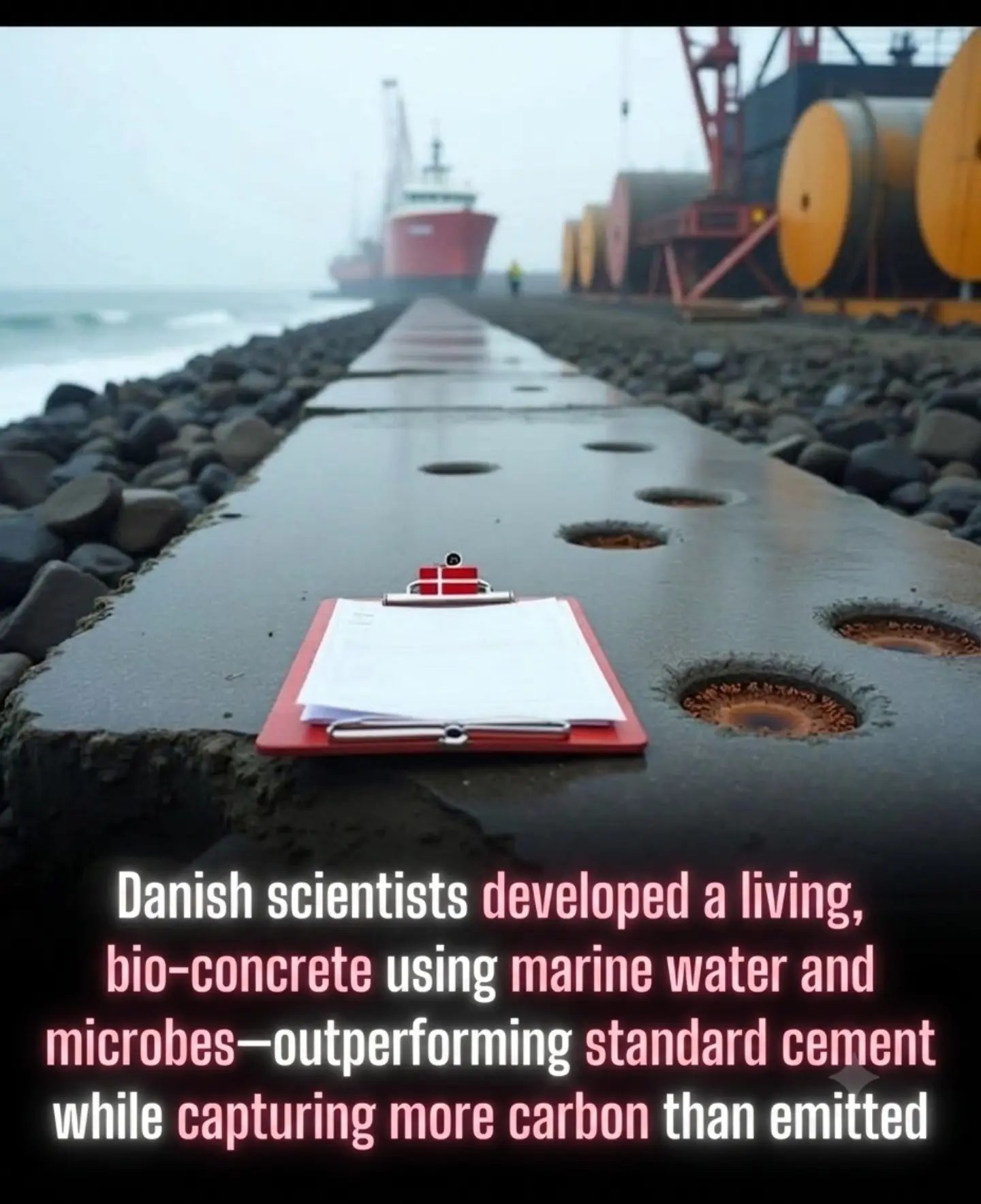
Bio-concrete, a revolutionary development in construction materials, is changing the way we think about building structures. This innovative material, developed by Danish scientists, uses marine water and microbes to create a living, breathing concrete that outperforms traditional cement in multiple ways. Let's dive into the world of bio-concrete, exploring its benefits, applications, and the science behind this groundbreaking material.
Context / Why this matters
Traditional cement, a cornerstone of modern construction, accounts for nearly 8% of global CO2 emissions. This staggering statistic underscores the urgent need for more sustainable building materials. Bio-concrete addresses this issue by not only reducing emissions but also actively capturing carbon from the atmosphere. This makes it a game-changer in the quest for eco-friendly construction solutions.
The Science Behind Bio-Concrete
Bio-concrete is created using a combination of marine water, microbes, and sustainable minerals. The microbes play a crucial role in the material's unique properties. These microorganisms are capable of binding the concrete together, enhancing its strength and durability. Moreover, the microbes facilitate a process called biomineralization, where they produce minerals that fill in the pores of the concrete, making it more robust and less prone to cracking.
Components and Processes
The key components of bio-concrete include:
- Marine Water: Provides the necessary environment for the microbes to thrive and perform their binding functions.
- Microbes: The living organisms that drive the biomineralization process, enhancing the concrete's strength and self-healing capabilities.
- Sustainable Minerals: These minerals work in conjunction with the microbes to create a durable and environmentally friendly material.
Environmental Benefits
One of the standout features of bio-concrete is its ability to capture more carbon than it emits during production. This makes it a carbon-negative material, a significant advantage over traditional cement, which is a major contributor to greenhouse gas emissions.
Main discussion
Strength and Durability
Bio-concrete outperforms standard cement in terms of strength and durability. The biomineralization process enhances the material's structural integrity, making it more resistant to wear and tear. This means that buildings, bridges, and other structures made from bio-concrete can withstand the test of time more effectively than those made from traditional materials.
Self-Healing Properties
Another remarkable feature of bio-concrete is its self-healing capability. The microbes within the material can repair minor cracks and damages, extending the lifespan of the structure. This not only reduces the need for frequent maintenance but also ensures that the building remains structurally sound over a longer period.
Carbon Capture
Bio-concrete's ability to capture more carbon than it emits is a significant environmental benefit. Traditional cement production is energy-intensive and releases large amounts of CO2 into the atmosphere. In contrast, bio-concrete actively absorbs carbon, making it a valuable tool in the fight against climate change.
Applications in Construction
The versatility of bio-concrete makes it suitable for a wide range of applications in construction. From building houses and commercial structures to creating sea walls and bridges, bio-concrete offers a sustainable and durable solution. Imagine cities, bridges, and sea walls that not only endure the elements but also actively heal themselves and absorb pollution from the atmosphere. This vision is becoming a reality with the advent of bio-concrete.
Potential Challenges
While bio-concrete holds immense promise, there are a few challenges that need to be addressed. The production process can be more complex and time-consuming compared to traditional cement. Additionally, the cost of producing bio-concrete may be higher initially, although the long-term benefits and reduced maintenance costs could offset this.
Practical tips
Choosing the Right Material
When considering the use of bio-concrete, it's essential to weigh its benefits against traditional materials. For large-scale construction projects, especially those in environmentally sensitive areas, bio-concrete is a superior choice. Its self-healing properties and carbon capture capabilities make it an ideal solution for sustainable development.
Cost Considerations
While the initial cost of bio-concrete may be higher, it's important to consider the long-term savings. The reduced need for repairs and maintenance, along with its environmental benefits, can make bio-concrete a cost-effective choice over time.
Implementation
For builders and architects, understanding the unique properties of bio-concrete is crucial. Working with experts in the field can help ensure that the material is used effectively, maximizing its benefits and addressing any potential challenges.
Important takeaways
Bio-concrete represents a significant leap forward in sustainable construction. Its ability to outperform traditional cement, capture carbon, and heal itself makes it a valuable material for building durable and eco-friendly structures. As the world continues to seek sustainable solutions, bio-concrete stands out as a promising option for the future of construction.
Conclusion
Bio-concrete is more than just a building material; it's a symbol of innovation and sustainability. By harnessing the power of marine water and microbes, scientists have created a living, breathing material that not only meets but exceeds the performance of traditional cement. As we continue to explore the potential of bio-concrete, it's clear that this revolutionary material has the power to transform the way we build and shape our cities for a greener future.
Watch the Reel
Questions readers ask
How does bio-concrete capture carbon from the atmosphere?
Bio-concrete captures carbon through a natural process involving microbes. These microbes feed on calcium lactate, a byproduct of the fermentation process of sugars, and produce calcium carbonate, which strengthens the concrete and sequesters carbon dioxide.
What are the key differences between bio-concrete and traditional cement?
Bio-concrete differs from traditional cement in several ways. It is a living material that strengthens over time, uses marine water and microbes in its creation, and actively captures carbon from the atmosphere, unlike traditional cement which is inert and has a significant carbon footprint.
Can bio-concrete be used in the same applications as traditional cement?
Yes, bio-concrete can be used in many of the same applications as traditional cement, such as in the construction of buildings and infrastructure. Its unique properties, including self-repairing capabilities, make it an attractive option for various construction projects.
What is the role of microbes in bio-concrete?
Microbes play a crucial role in bio-concrete by facilitating the production of calcium carbonate. This process not only strengthens the concrete but also helps to capture and sequester carbon dioxide from the atmosphere, making bio-concrete a sustainable alternative to traditional cement.
How does bio-concrete contribute to reducing global emissions?
Bio-concrete contributes to reducing global emissions by capturing carbon dioxide from the atmosphere during its production and throughout its lifecycle. This process helps to offset the emissions produced by other industrial activities, making it a valuable tool in the fight against climate change.
What is the future of bio-concrete technology?
Bio-concrete technology holds significant promise for the future of construction. As research and development continues, we can expect to see advancements in the material's properties, scalability, and integration into various building projects, further enhancing its sustainability benefits.
Who developed bio-concrete, and what inspired this innovation?
Bio-concrete was developed by Danish scientists as a response to the environmental impact of traditional cement. Inspired by the need to reduce global CO2 emissions, these innovators created a sustainable alternative that not only outperforms traditional cement but also actively contributes to carbon capture.
Related deep dives
Similar reads based on topic and creator.




Recent articles
Fresh deep dives from the latest Reels we unpacked.




Comments
Be the first to comment.