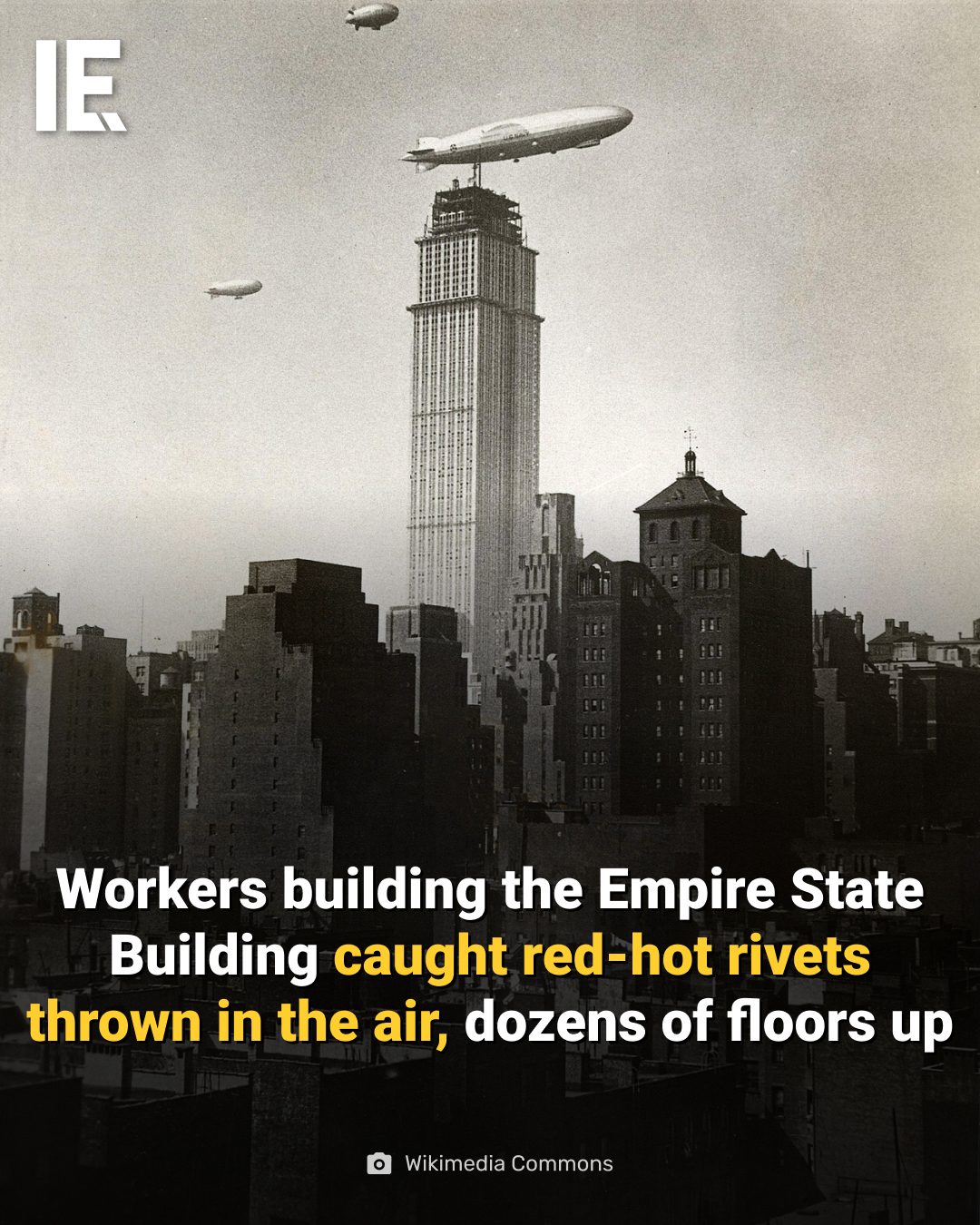
The Empire State Building: A Marvel of Historical Construction
The Empire State Building, an iconic skyscraper in New York City, stands as a testament to the engineering prowess of the early 20th century. Completed 94 years ago, this monumental structure was erected at an astonishing rate of 14 floors per week, a feat unheard of at the time. The construction process, particularly the riveting technique, offers a fascinating glimpse into the engineering and labor practices of the era.
Context: Why This Matters
The Empire State Building's construction is not just a historical milestone but also a window into the industrial and safety standards of the 1930s. Understanding the methods and risks involved in building such a colossal structure provides valuable context for modern engineering practices and safety standards. The techniques used, while dangerous by today's standards, were state-of-the-art at the time and played a crucial role in shaping the skyline of New York City.
The Construction Process
The Riveting Technique
One of the most distinctive and dangerous aspects of the construction process was the riveting technique. Workers known as "heaters" would heat iron rivets in a portable forge until they glowed red-hot. These rivets were then hurled through the air to a "catcher" standing on the open steel framework. The catcher, equipped with a metal cone or bucket, would catch the rivets mid-flight and immediately pass them to a crew who would drive them into the steel before they cooled. This entire sequence had to be executed in mere seconds, a task that required immense skill and precision.
The Roles and Risks
The workers involved in this process faced significant risks. The "heater" and "catcher" were not the only roles in this high-stakes game. The crew who drove the rivets into the steel also played a vital part. The entire process was carried out dozens of floors up, with no safety nets in place. This underscores the bravery and dedication of the workers who undertook this perilous task. Over 7 million rivets were used in the construction of the Empire State Building, each one a testament to the labor and ingenuity of the workers.
The Speed of Construction
The Empire State Building was constructed at an unprecedented rate, with 14 floors being added per week. This rapid pace was made possible by the use of innovative techniques and the relentless efforts of the workers. The construction process not only demonstrated the efficiency of the team but also highlighted the importance of teamwork and coordination in large-scale projects.
Practical Tips
While the methods used in the construction of the Empire State Building are not applicable to modern safety standards, they offer several practical insights:
- Precision and Speed: The riveting process required extreme precision and speed. While modern construction methods have evolved, the importance of accuracy and efficiency remains paramount.
- Teamwork and Coordination: The successful completion of the Empire State Building relied heavily on the coordination and teamwork of the workers. Effective communication and collaboration are essential in any large-scale project.
- Innovation and Adaptability: The use of portable forges and the development of the riveting technique show how innovation and adaptability can overcome significant challenges.
Important Takeaways
The construction of the Empire State Building is a marvel of historical engineering. The building's completion at such a rapid rate, despite the lack of modern safety measures, underscores the resilience and dedication of the workers. The riveting technique, while risky, was a testament to the ingenuity and skill of the laborers.
Conclusion
The Empire State Building remains an enduring symbol of human achievement and engineering prowess. Its construction, completed 94 years ago, offers valuable insights into the engineering and labor practices of the early 20th century. From the riveting technique to the speed of construction, the Empire State Building serves as a reminder of the incredible feats that can be accomplished through innovation, teamwork, and dedication.
Watch the Reel
Questions readers ask
What was the riveting technique used in the construction of the Empire State Building?
The riveting technique involved workers, known as riveters, heating iron rivets and then using a hammer to secure them in place. This process was crucial for connecting the steel beams that formed the building's structure.
Why was riveting considered a dangerous job during the Empire State Building's construction?
Riveting was dangerous because workers often had to haul and secure hot iron rivets high above the ground, sometimes without safety nets. The risk of falling or being injured by falling debris was significant.
How many floors were completed each week during the Empire State Building's construction?
The Empire State Building was constructed at an impressive rate of 14 floors per week. This rapid pace required immense skill and precision from the workers, especially the riveters.
What role did riveters play in the construction of the Empire State Building?
Riveters were essential to the construction process. They were responsible for joining the steel beams that formed the building's skeleton, ensuring the structure's integrity and stability. Their work was vital to the overall success of the project.
What safety measures, if any, were in place for Empire State Building riveters?
Safety measures were minimal by today's standards. Many riveters worked without safety nets, relying on their own skills and the support of fellow workers. The lack of adequate safety measures made their job exceptionally hazardous.
How were the steel rivets heated and secured during the construction of the Empire State Building?
Steel rivets were heated in a forge until they were red hot. Once heated, the riveters would quickly maneuver the rivets into place and secure them by hammering on the ends, expanding them to lock the steel beams together.
What challenges did Empire State Building riveters face due to the construction method?
Riveters faced numerous challenges, including working at extreme heights without adequate safety measures, handling hot metal, and the physical demands of the riveting process. These challenges made their work both demanding and perilous.
Related deep dives
Similar reads based on topic and creator.


Recent articles
Fresh deep dives from the latest Reels we unpacked.




Comments
Be the first to comment.