The Underwater Cockroach Suit Revolution in Disaster Rescue
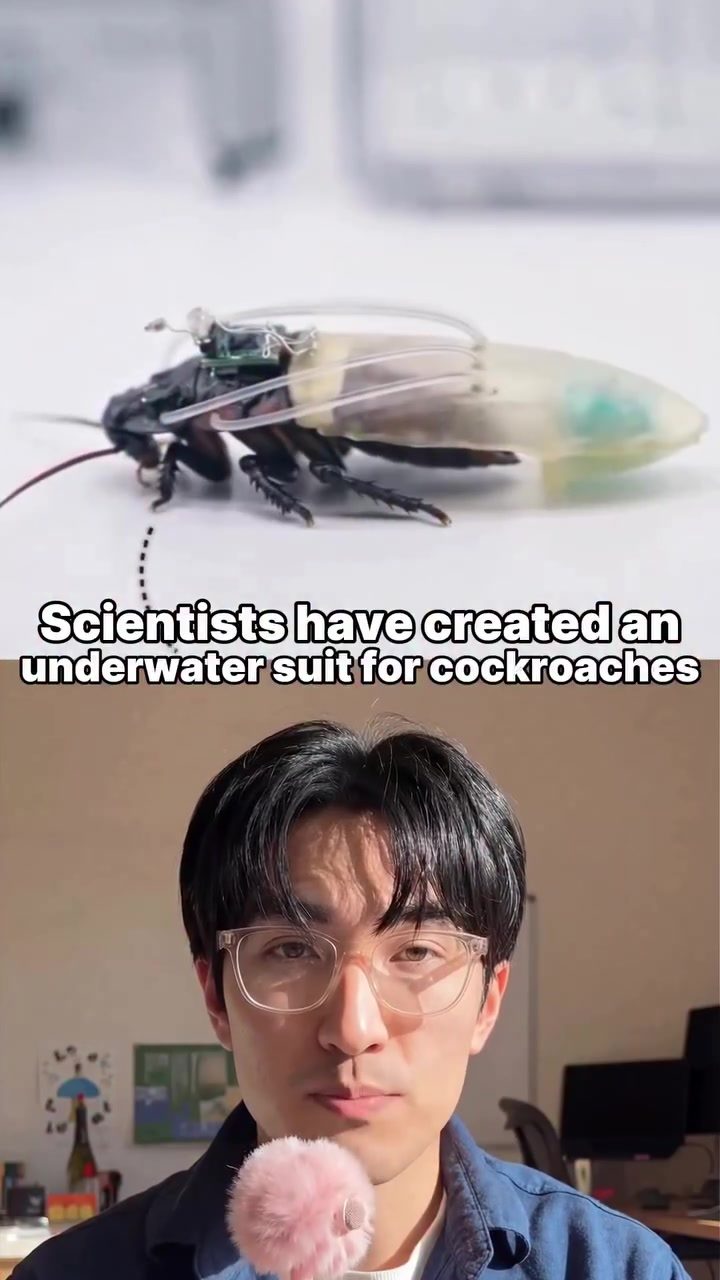
The underwater cockroach suit, a fascinating innovation in disaster rescue technology, represents a groundbreaking advancement in the field of cyborg insects. Scientists from Singapore and Japan have engineered a 3D-printed flexible shell that allows cockroaches to breathe underwater. This remarkable innovation is designed to navigate through flooded disaster zones where traditional robots cannot go.
Why This Matters
Disaster sites, especially those affected by flooding, present unique challenges for rescue efforts. Traditional robots, while advanced, often struggle to navigate through waterlogged environments. Flooded basements, puddles, and half-submerged rubble create obstacles that even the most sophisticated robots can't easily overcome. This is where the underwater cockroach suit comes into play, offering a novel solution for search and rescue operations in wet disaster zones.
The Science Behind the Cockroach Suit
The Design and Functioning
The underwater cockroach suit is a 3D-printed flexible shell sealed around the abdomen of the cockroach. Inside this shell is a chemical oxygen generator, a sponge coated in manganese dioxide. When hydrogen peroxide is dripped onto this sponge, it breaks down into water and pure oxygen, providing the necessary oxygen for the cockroach to breathe underwater.
The ingenuity of this design lies in its simplicity. Unlike traditional robots, this suit does not require a battery or any moving parts. The oxygen generator is passive, relying on the chemical reaction between hydrogen peroxide and manganese dioxide. This makes the suit lightweight and efficient, allowing the cockroach to move at about one body length per second underwater, which is faster than most amphibious robots.
The Role of Cyborg Insects
Researchers in Singapore and Japan have been at the forefront of developing cyborg insects. These are living animals, such as cockroaches, that are steered by electrodes and tiny wireless backpacks. These cyborg insects are employed for search and rescue missions in hard-to-reach areas. The underwater cockroach suit is an evolution of this technology, designed to tackle the waterlogged scenarios frequently encountered in disaster zones.
The Advantages
The primary advantage of using a cockroach suit in disaster zones is its mobility. Cockroaches are known for their ability to navigate through narrow gaps and crevices. With the suit, they can explore areas that are inaccessible to larger robots. This makes the cockroach suit a valuable tool for search and rescue teams, enabling them to locate survivors and assess damage more effectively.
Practical Tips for Utilizing the Cockroach Suit
Deployment and Training
For rescue teams to effectively use the underwater cockroach suit, proper training and deployment strategies are essential. A team of experts can guide the deployment process, ensuring that the cockroaches are properly equipped and ready for the mission. Training programs can also be developed to teach rescue teams how to handle and control the cyborg insects.
Integration with Existing Rescue Systems
The underwater cockroach suit should be integrated into existing rescue systems. Teams need to have protocols in place for how to use this technology alongside other rescue tools and equipment. Collaborative efforts between robotics experts and rescue teams can help in creating a seamless integration process.
Important Takeaways
The underwater cockroach suit represents a significant leap forward in disaster rescue technology. It provides a cost-effective, efficient, and agile solution for navigating through waterlogged disaster zones. This innovation highlights the potential of leveraging natural organisms for search and rescue missions, offering new possibilities for disaster response and rescue operations.
The cockroach suit also emphasizes the importance of interdisciplinary collaboration. Researchers, engineers, and rescue teams need to work together to fully harness the potential of this technology. This collaboration can lead to further advancements in disaster rescue technology, improving the way we respond to natural disasters and save lives.
Conclusion
The underwater cockroach suit is a remarkable innovation that addresses the challenges of navigating flooded disaster zones. By leveraging the natural agility of cockroaches and combining it with advanced technology, researchers have created a tool that can reach places where traditional robots cannot. This innovation underscores the importance of interdisciplinary collaboration and the potential of cyborg insects in search and rescue missions. As we continue to advance our technologies, such innovative solutions will play a crucial role in improving disaster response and saving lives.
Watch the Reel
Questions readers ask
How do cyborg cockroaches help in disaster rescue missions?
Cyborg cockroaches assist in disaster rescue by using their natural agility to navigate through flooded environments. Equipped with 3D-printed underwater suits, these insects are better able than traditional robots to traverse submerged areas and find survivors.
What makes the 3D-printed underwater cockroach suit effective?
The 3D-printed underwater cockroach suit is effective due to its flexible design, which allows cockroaches to move freely underwater. The suit includes an oxygen generator, enabling the cockroaches to breathe while submerged. This enhances their ability to explore flooded zones, making them invaluable for rescue missions.
Who developed the underwater cockroach suit?
Scientists from Singapore and Japan collaborated to develop the underwater cockroach suit. This innovative design addresses the challenges posed by flooded disaster sites, where traditional rescue robots often struggle to operate effectively.
What are the main challenges that cyborg cockroaches solve in flooded areas?
Cyborg cockroaches overcome major challenges in flooded areas by navigating through waterlogged environments that traditional robots cannot access. These environments often include flooded basements, submerged rubble, and other obstacles that are difficult for conventional rescue robots to navigate.
How do cyborg cockroaches breathe underwater with their 3D-printed suits?
The 3D-printed suits designed for cyborg cockroaches include an underwater chemical generator that produces oxygen. This feature allows the cockroaches to breathe while submerged, making them capable of exploring underwater environments for extended periods, which is crucial for disaster response.
What are the benefits of using cyborg cockroaches in rescue missions over traditional robots?
Cyborg cockroaches offer several benefits over traditional robots in rescue missions. They can navigate through narrow, flooded spaces and maintain mobility in underwater environments, where traditional robots often fail. Additionally, their natural agility and ability to breathe underwater make them more adaptable to challenging disaster conditions.
Can traditional rescue robots follow cyborg cockroaches into flooded areas?
Traditional rescue robots often cannot follow cyborg cockroaches into heavily flooded areas. The unique challenges of waterlogged environments, such as flooded basements and submerged rubble, typically hinder the effectiveness of conventional rescue robots, making the agile cyborg cockroaches a more reliable option for exploration in such conditions.
Related deep dives
Similar reads based on topic and creator.
Recent articles
Fresh deep dives from the latest Reels we unpacked.




Comments
Be the first to comment.