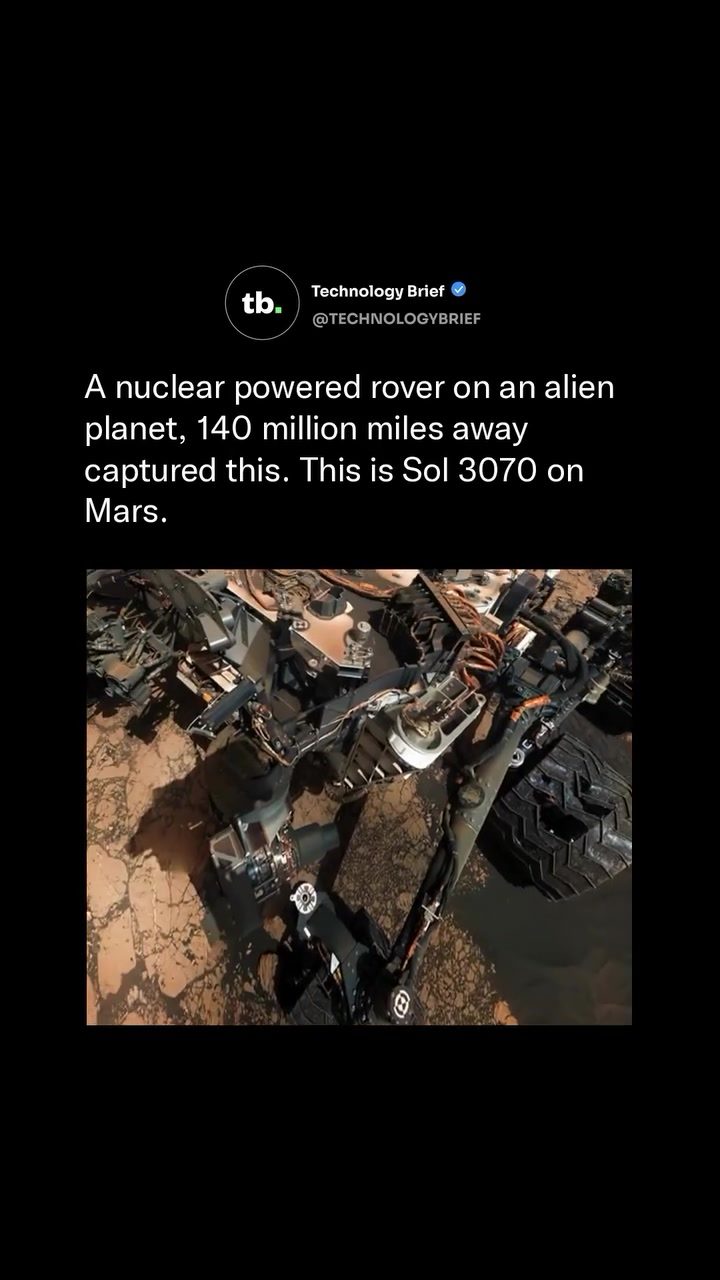
NASA's Curiosity Rover: Exploring Mars on Sol 3070
NASA's Curiosity rover, a nuclear-powered marvel, captured striking footage on Sol 3070 (March 25, 2021) while stationed at a drill site near Mont Mercou, a towering rock formation on Mars. This mission, part of a decade-long exploration, provides invaluable insights into the Red Planet.
Context / Why this matters
Every Martian day, or sol, last about 24 hours and 37 minutes. Sol 3070 marks approximately 3,070 Martian days since Curiosity landed in August 2012. The rover's journey, which has surpassed 20 miles (33 km) across the Martian surface, includes significant milestones such as climbing the 3-mile-tall Mount Sharp and uncovering the first-ever pure sulfur rocks found on another planet. The images and data gathered by Curiosity offer a unique glimpse into Mars' geological history and potential for past habitability.
Main discussion
The Power of Nuclear Energy
Curiosity is equipped with a Radioisotope Thermoelectric Generator (RTG), a nuclear battery that converts heat from decaying plutonium-238 into electricity. This power source is crucial for Curiosity's operations, allowing it to function day and night, in any season, without relying on solar panels. The RTG's longevity and reliability have enabled Curiosity to explore Mars for over a decade, far exceeding the initial mission duration.
Advantages of Nuclear Power
Nuclear power provides several advantages for space exploration:
- Continuous Operation: Unlike solar panels, which rely on sunlight, nuclear power sources can operate continuously, ensuring that the rover can function around the clock.
- Seasonal Independence: Mars experiences significant seasonal variations in sunlight. Nuclear power allows the rover to operate consistently, regardless of the time of year.
- Extended Mission Duration: The longevity of nuclear power sources enables extended mission durations, allowing rovers like Curiosity to explore Mars for many years.
The Martian Landscape
The images captured by Curiosity on Sol 3070 provide a vivid portrayal of Mars' landscape.
Mont Mercou
Mont Mercou is a fascinating geological feature on Mars. The towering rock formation offers insights into the planet's geological history and potential for past habitability. Curiosity's observations at this site contribute to our understanding of Mars' past environments and the conditions that may have supported life.
Mars' Distant Location
At the time Curiosity captured these images, Mars was approximately 140 million miles from Earth. This immense distance highlights the challenges and complexities of space exploration, including communication delays and the need for robust, self-sufficient technology.
Scientific Discoveries
Curiosity's journey has yielded significant scientific discoveries, including the first-ever pure sulfur rocks found on another planet. These findings enhance our understanding of Mars' geological processes and potential for past habitability.
Pure Sulfur Rocks
The discovery of pure sulfur rocks on Mars is a groundbreaking finding. Sulfur is a key element in many biological processes on Earth, and its presence on Mars suggests that similar processes may have occurred in the planet's past. This discovery adds to the growing body of evidence indicating that Mars may have once been habitable.
Practical tips
Planning Future Missions
Understanding the capabilities and limitations of nuclear-powered rovers like Curiosity is crucial for planning future Mars missions. Key considerations include:
- Power Requirements: Assess the power needs of future missions and select appropriate power sources.
- Communication: Develop robust communication strategies to overcome the challenges posed by the vast distance between Earth and Mars.
- Scientific Objectives: Define clear scientific objectives and design missions to achieve them effectively.
Engaging with Mars Exploration
For enthusiasts and scientists alike, exploring Mars through the lens of Curiosity's mission offers a unique opportunity to engage with cutting-edge space exploration. Practical steps for engagement include:
- Stay Informed: Follow updates from NASA and other space agencies to stay informed about the latest discoveries and mission progress.
- Participate in Citizen Science: Contribute to scientific research by participating in citizen science projects related to Mars exploration.
- Support Education: Encourage educational initiatives that promote space exploration and scientific literacy.
Important takeaways
- NASA's Curiosity rover has been exploring Mars for over a decade.
- Nuclear-powered rovers offer sustainable, long-term exploration capabilities.
- The rover's discoveries, including the first-ever pure sulfur rocks on another planet, enhance our understanding of Mars' geological history.
- The mission has traveled over 20 miles and climbed a 3-mile-tall mountain, uncovering key insights into Mars' past.
Conclusion
The footage captured by the Curiosity rover on Sol 3070 offers a unique glimpse into Mars' fascinating landscapes and geological features. The rover's nuclear-powered design, which allows for continuous operation and extended mission durations, has enabled significant scientific discoveries. As we continue to explore Mars, the insights gained from missions like Curiosity will guide future endeavors and deepen our understanding of the Red Planet.
Watch the Reel
Questions readers ask
What is a 'sol' and how does it relate to the Curiosity rover's mission on Mars?
A 'sol' is a Martian day, which lasts approximately 24 hours and 37 minutes. The Curiosity rover's mission is measured in sols, with Sol 3070 marking the 3,070th Martian day since the rover landed on Mars in 2012. This measurement helps scientists understand the timeline of the rover's activities and discoveries.
What is the significance of the drill site near Mont Mercou for the Curiosity rover?
The drill site near Mont Mercou is significant because it provides a unique opportunity for the Curiosity rover to investigate the geological history of Mars. The area is rich in mineral diversity, which aids in understanding the planet's past environments and potential for habitability.
Why is the Curiosity rover's nuclear power source important for its mission?
The Curiosity rover's nuclear power source, provided by a Radioisotope Thermoelectric Generator (RTG), is crucial because it allows the rover to operate continuously, regardless of sunlight availability or dust storms. This power source has enabled the rover to function effectively for over a decade, far exceeding the initial mission duration.
What are some of the key findings from the Curiosity rover's exploration of Mars?
Key findings include the discovery of the first-ever pure sulfur rocks found on another planet, evidence of past water activity on Mars, and insights into the planet's geological history. These discoveries have significantly advanced our understanding of Mars' potential to support life.
How has the Curiosity rover's journey across Mars benefited scientific research?
The Curiosity rover's journey has benefited scientific research by providing a wealth of data and images from diverse Martian landscapes. Its exploration has included climbing the 3-mile-tall Mount Sharp and investigating various geological features, enhancing our comprehension of Mars' geological processes and atmospheric conditions.
What is the duration of a Martian day, and how does it compare to an Earth day?
A Martian day, or sol, is about 24 hours and 37 minutes long, which is roughly 2.7% longer than an Earth day. This difference in day length is an important factor for planning and scheduling the Curiosity rover's daily activities and scientific observations.
What is the significance of the footage captured by the Curiosity rover on Sol 3070?
The footage captured by the Curiosity rover on Sol 3070 is significant because it provides a visual record of the rover's operations and the Martian landscape. This footage helps scientists monitor the rover's performance, plan future activities, and share the mission's progress with the public, thereby fostering engagement and support.
Related deep dives
Similar reads based on topic and creator.



Recent articles
Fresh deep dives from the latest Reels we unpacked.




Comments
Be the first to comment.