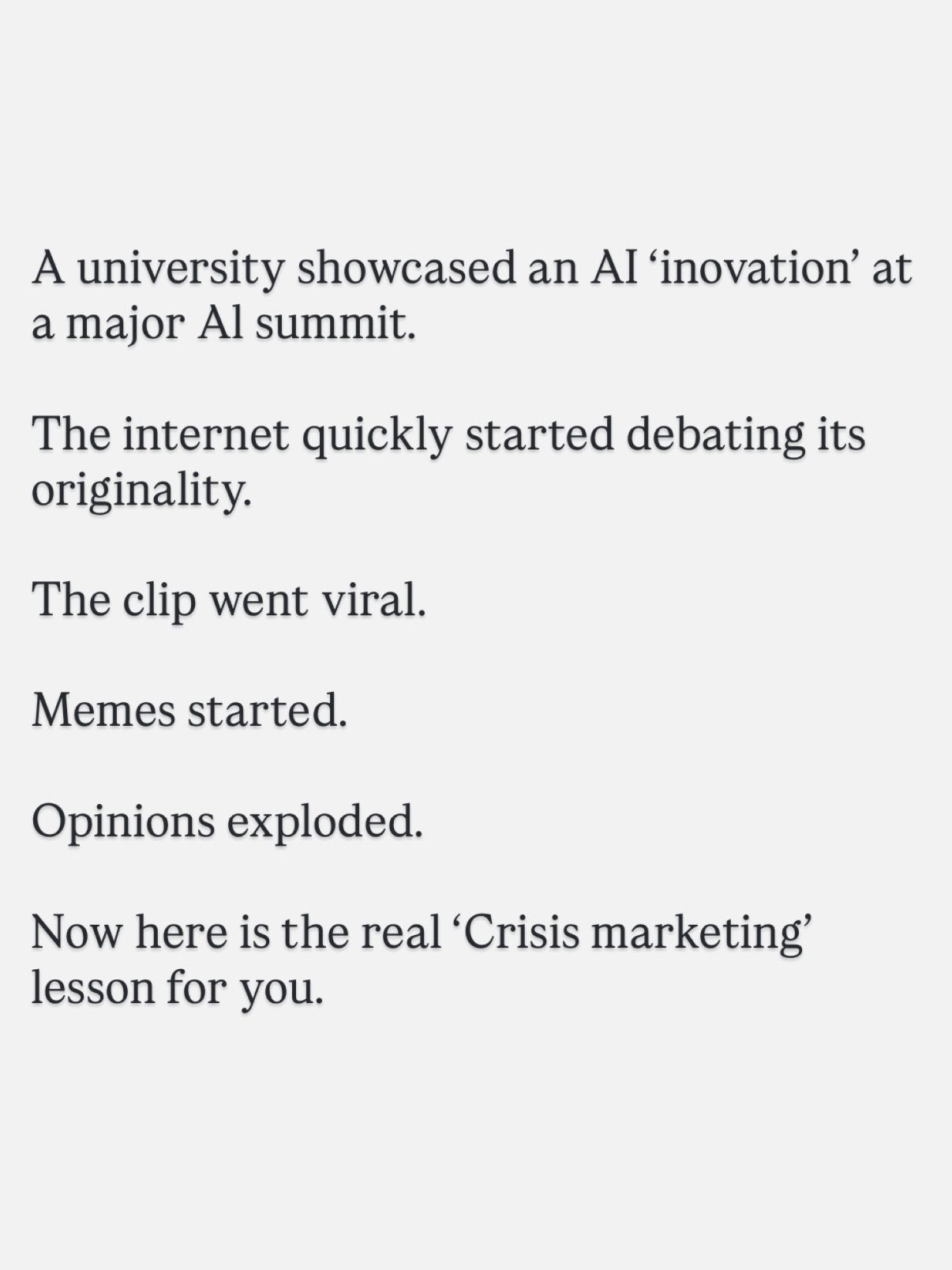
Crisis Marketing: Managing Perception in the Age of Viral Content
Crisis marketing is a critical aspect of managing an organization's reputation, especially in today's fast-paced digital world. When a situation goes viral, the focus quickly shifts from the incident itself to how it affects the organization's perception. This shift is particularly important for 'serious' institutions like universities, corporations, and non-profits, where trust, admissions, and long-term credibility are paramount.
Why This Matters
In the digital age, information spreads rapidly, and opinions form almost instantaneously. A single incident can spark a cascade of reactions, from social media posts to mainstream media coverage. For institutions, the primary concern during such crises is not how to win arguments online, but how to stabilize trust and credibility while the noise is at its peak. Good marketing in crisis moments is about managing perception and ensuring that the organization's long-term strengths remain at the forefront.
Main Discussion
Tracking the Spread of News
When a situation goes viral, the first step for marketing and leadership teams is to track how quickly the news is spreading. This involves monitoring social media, blogs, and other online platforms where discussions about the incident are taking place. The speed at which information travels can significantly impact the organization's reputation. By keeping a close eye on the spread of news, teams can gauge the severity of the situation and plan their response accordingly.
Monitoring Media Coverage
Mainstream media coverage is another critical factor to consider. If the incident is picked up by major news outlets, it can amplify the impact on the organization. Keeping track of what is being reported and by whom can help in formulating a strategic response. It is essential to understand the narrative being shaped by the media and how it affects the organization's reputation.
Assessing Impact on Inquiries and Reputation
The real impact of a viral situation often goes beyond social media noise. Inquiries, admissions, or other reputation signals can be severely affected. Organizations need to assess whether the incident is influencing potential clients, students, or stakeholders. This assessment helps in understanding the broader implications of the crisis and planning a response that addresses these concerns.
Differentiating Between Viral Noise and Real Impact
While viral noise can be loud and overwhelming, it does not always translate into real impact. Organizations should avoid the trap of assuming that every negative comment or meme will have long-term consequences. By differentiating between viral noise and real impact, teams can focus on addressing genuine concerns rather than getting caught up in the hype.
Avoiding Prolonged Defense
Prolonged defense in a crisis can be counterproductive. Every additional response to online criticism can fuel more discussion and extend the life of the controversy. Instead of engaging in prolonged arguments, organizations should focus on clarifying the situation and redirecting attention towards their long-term strengths. This approach helps in managing the crisis more effectively and minimizing its long-term impact.
Redirecting Attention Towards Long-Term Strengths
In the age of viral content, perception can change rapidly. Organizations need to be proactive in redirecting attention towards their long-term strengths. This can be achieved through strategic communication, highlighting the organization's achievements, values, and mission. By focusing on these aspects, teams can help mitigate the damage caused by the crisis and rebuild trust.
Practical Tips
- Monitor Social Media and Online Platforms: Use tools to track the spread of news and understand the narrative being shaped.
- Engage with Mainstream Media: Keep an eye on what major news outlets are reporting and how it affects your organization.
- Assess Real Impact: Differentiate between viral noise and real impact on inquiries, admissions, and reputation.
- Avoid Prolonged Defense: Focus on clarifying the situation and redirecting attention towards long-term strengths.
- Communicate Strategically: Use strategic communication to highlight the organization's achievements, values, and mission.
Important Takeaways
In crisis moments, the focus should be on stabilizing trust and credibility. Organizations need to track the spread of news, monitor media coverage, and assess the real impact on their reputation. Avoiding prolonged defense and redirecting attention towards long-term strengths are essential strategies for managing crises effectively. The key is to differentiate between viral noise and real impact and focus on rebuilding trust and credibility.
Conclusion
Crisis marketing is about managing perception and ensuring that the organization's long-term strengths remain at the forefront. By tracking the spread of news, monitoring media coverage, and assessing real impact, organizations can formulate a strategic response that minimizes long-term damage. The focus should be on clarity, strategic communication, and redirecting attention towards the organization's strengths. This approach helps in stabilizing trust and credibility, even in the face of a viral controversy.
Watch the Reel
Questions readers ask
How should universities respond to a viral controversy?
Universities should prioritize timely and strategic communication. This involves acknowledging the issue promptly, expressing empathy, and providing accurate information. The goal is to stabilize trust, not to engage in online arguments.
What are the key components of an effective crisis marketing strategy for universities?
An effective crisis marketing strategy includes proactive planning, clear and consistent messaging, and leveraging multiple communication channels to reach stakeholders. It's also important to have a dedicated crisis response team to manage the situation.
How does a viral controversy impact university admissions?
A viral controversy can significantly impact admissions by influencing public perception and the institution's reputation. Prospective students, parents, and other stakeholders may reconsider their association with the university, leading to a potential drop in admissions.
Which stakeholders should universities engage with during a viral controversy?
Universities should engage with a variety of stakeholders, including current and prospective students, parents, faculty, staff, alumni, and the broader community. Maintaining open lines of communication with these groups can help manage the crisis and mitigate potential damage to the institution's reputation.
What lessons can universities learn from past viral controversies?
Universities can learn the importance of swift and transparent communication, the value of empathy in messaging, and the need for a well-prepared crisis response plan. They can also gain insights into how to leverage social media effectively, and the importance of involving key stakeholders in the response process.
Why is perception management crucial during a viral controversy?
Perception management is crucial because it helps to control the narrative and stabilize trust. By addressing the situation proactively and empathetically, universities can mitigate negative impacts on their reputation and maintain long-term credibility with stakeholders.
How can universities maintain long-term trust with students and other stakeholders during a crisis?
Universities can maintain long-term trust by being transparent, consistent, and empathetic in their communication. It's important to provide regular updates and show a genuine commitment to resolving the issue. Additionally, involving stakeholders in the response process can build trust and demonstrate accountability.
Related deep dives
Similar reads based on topic and creator.


Recent articles
Fresh deep dives from the latest Reels we unpacked.




Comments
Be the first to comment.