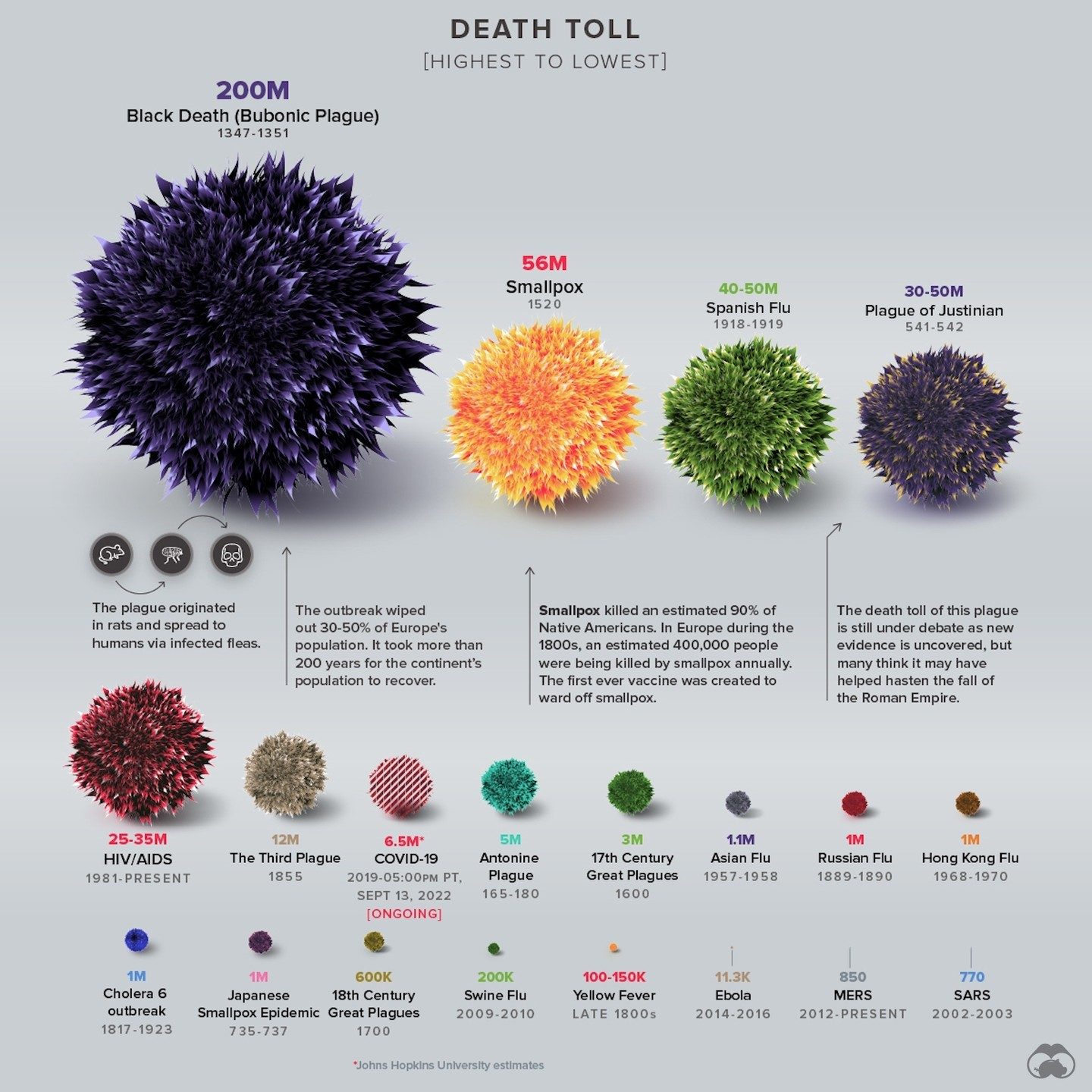
Pandemic Death Toll Comparison
Pandemics have shaped human history in profound ways, and one of the most stark measures of their impact is the death toll. Comparing the death tolls of various pandemics throughout history provides a grim but essential perspective on the scale and consequences of these global health crises. This comparison not only highlights the devastating impact of past pandemics but also helps contextualize the ongoing COVID-19 pandemic.
Why This Matters
Understanding the death tolls of past pandemics is crucial for several reasons. It helps in assessing the severity of current and future health crises, aids in planning public health response strategies, and underscores the importance of preparedness and preventive measures. Additionally, comparing these figures provides a historical context that can inform policy decisions and public awareness.
Main Discussion
The Black Death: The Most Devastating Pandemic
The Black Death, caused by the Bubonic Plague, is the most deadly pandemic in recorded history. Estimates place the death toll at around 200 million people, roughly 30-50% of Europe's population at the time. The plague originated in rats and spread to humans via infected fleas, leading to widespread devastation. The outbreak took more than 200 years for the continent’s population to recover, highlighting the long-term impact of such a catastrophic event.
Smallpox: A Global Killer
Smallpox, another deadly pandemic, had a profound impact, especially on indigenous populations. Estimates suggest that it killed around 90% of Native Americans and may have contributed to the fall of the Roman Empire during the 17th century. The global death toll from smallpox is estimated at 56 million, although the exact numbers are still debated.
Spanish Flu: The Deadliest Pandemic of the 20th Century
The Spanish Flu, which occurred between 1918 and 1919, is one of the deadliest pandemics of the 20th century. Estimates suggest that it resulted in 40-50 million deaths, making it one of the most lethal outbreaks in history. The flu affected a significant portion of the global population, with an estimated 2.5% of the world's population at the time succumbing to the disease.
Russian Flu: A Historical Pandemic
The Russian Flu, which occurred in 541-542 AD, is another significant historical pandemic. Estimates put the death toll between 30-50 million, although the exact numbers are uncertain. This pandemic is notable for its early occurrence in history and its widespread impact.
HIV/AIDS: An Ongoing Global Health Crisis
The HIV/AIDS pandemic, which began in 1981, continues to be a global health crisis. As of the latest estimates, it has resulted in 25-35 million deaths. The ongoing nature of this pandemic underscores the need for sustained efforts in prevention, treatment, and awareness.
COVID-19: The Latest Global Pandemic
The COVID-19 pandemic, which began in 2019, has had a significant impact on global health. As of this update, Johns Hopkins University estimates the global death toll of COVID-19 to be 6.5 million. While this figure is lower than some of the deadliest pandemics in history, the ongoing nature of the pandemic and its widespread impact highlight the importance of continued vigilance and public health measures. COVID-19 has affected an estimated 0.08% of the global population.
Practical Tips
When comparing the death tolls of various pandemics, it is essential to consider several factors. The data should include both absolute numbers and percentages to provide a comprehensive understanding of the impact. Additionally, it is crucial to consider the context of each pandemic, including the population estimates and the time periods involved. This contextual information helps in accurately assessing the severity and impact of each pandemic.
Important Takeaways
-
Context Matters: The impact of a pandemic can be better understood by looking at the percentage of the population affected rather than just the absolute numbers. This provides a more accurate picture of the scale of the crisis.
-
Historical Perspectives: Understanding the impact of past pandemics can help in preparing for and responding to future health crises. Historical data provides valuable insights into how these crises unfold and their long-term effects.
-
Continued Vigilance: The ongoing nature of some pandemics, like HIV/AIDS and COVID-19, underscores the need for sustained efforts in prevention, treatment, and public awareness.
-
Global Impact: Pandemics have a global impact, affecting populations across different regions and continents. This global perspective is crucial for understanding the scale and severity of these health crises.
-
Data Accuracy: The accuracy of data is essential for a reliable comparison. Sources like Johns Hopkins University provide well-researched estimates that help in maintaining the accuracy of the data.
Conclusion
Pandemics have had a profound impact on human history, and comparing their death tolls provides valuable insights into their severity and long-term effects. From the Black Death to COVID-19, each pandemic has left a unique mark on global health. By understanding the scale and impact of these crises, we can better prepare for and respond to future health challenges. Accurate data, historical context, and a global perspective are essential for a comprehensive understanding of the impact of pandemics.
Watch the Reel
Questions readers ask
How does the COVID-19 death toll compare to the Black Death?
The Black Death, which occurred in the mid-14th century, had an estimated death toll of 75-200 million people, making it one of the deadliest pandemics in history. While the COVID-19 death toll is significant, it is considerably lower than that of the Black Death, although the exact numbers depend on ongoing reports from sources like the Johns Hopkins COVID tracker.
What was the death toll of the Spanish Flu compared to COVID-19?
The Spanish Flu, which occurred in 1918-1920, had an estimated death toll of 50-100 million people. Compared to the COVID-19 pandemic, the Spanish Flu had a much higher death toll, even though COVID-19 has infected a larger number of people, making the mortality rate of the Spanish Flu much higher.
How does the Smallpox death toll compare to the COVID-19 death toll?
Smallpox, which emerged around 13,000 years ago, had an estimated death toll of 300-500 million people over the centuries. The COVID-19 death toll is significantly lower, even though it has been the most widespread pandemic in recent history. However, the COVID-19 death toll is still ongoing and subject to change.
Why is it important to compare the COVID-19 death toll to historical pandemics?
Comparing the COVID-19 death toll to historical pandemics helps in understanding the severity and impact of the current health crisis. It aids in planning effective public health responses, highlights the importance of preparedness, and provides a historical context for the ongoing pandemic.
Which historical pandemic had the highest death toll?
The Black Death, which occurred in the mid-14th century, had the highest death toll of any known pandemic in history, with an estimated 75-200 million deaths. The Smallpox pandemic, which occurred over centuries, had the next highest death toll, estimated at 300-500 million. These death tolls underscore the devastating impact of historical pandemics.
What factors should be considered when comparing pandemic death tolls?
When comparing pandemic death tolls, factors such as population size, mortality rates, global reach, and the availability of medical treatments and vaccines should be considered. These factors provide a more comprehensive understanding of the impact of each pandemic and how they compare to one another.
Related deep dives
Similar reads based on topic and creator.




Recent articles
Fresh deep dives from the latest Reels we unpacked.




Comments
Be the first to comment.