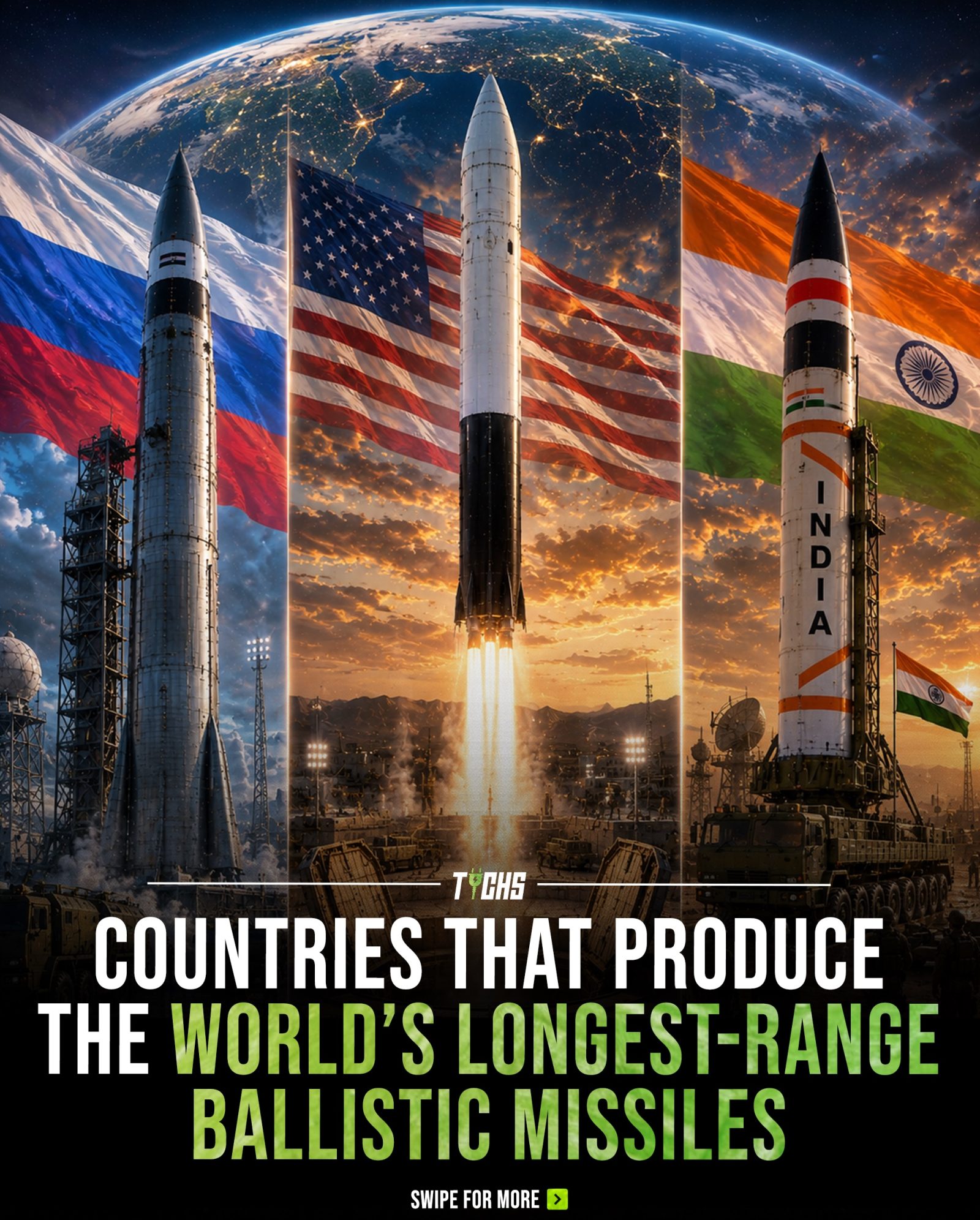
Long-Range Ballistic Missiles
Ballistic missiles are a critical component of global military strategy, serving as potent symbols of a nation's ability to project power and deter aggression. These high-tech systems, capable of striking targets thousands of kilometers away within minutes, are developed and deployed by several countries, each with its unique capabilities and strategic imperatives.
Ballistic missiles come in various ranges, from short-range systems that can travel a few hundred kilometers to intercontinental ballistic missiles (ICBMs) capable of striking targets on the other side of the globe. The focus here is on the latter, the long-range systems that embody the pinnacle of missile technology and geopolitical influence.
Why This Matters
The development and deployment of long-range ballistic missiles are driven by several factors. Firstly, they serve as a deterrent, making potential adversaries think twice before launching an attack. Secondly, they enhance a nation's ability to project power globally, ensuring that even distant targets are within reach. Lastly, these systems are a testament to a country's technological prowess and industrial capabilities, making them a source of national pride and a symbol of military might.
The Key Players
Several countries are at the forefront of long-range ballistic missile technology. These include:
The United States
The United States has a long history of developing and deploying advanced missile systems. The LGM-35 Sentinel, an ICBM developed by the U.S., is a prime example of the country's capabilities in this area.
Russia
Russia's RS-28 Sarmat, also known as Satan 2, is one of the most powerful ICBMs in the world, capable of carrying multiple warheads and evading missile defense systems. This missile is a significant part of Russia's nuclear triad and a key component of its strategic deterrence.
China
China's ballistic missile program has seen significant advancements in recent years. The country produces the JL-2, a submarine-launched ballistic missile (SLBM) with a range of 11,000 km, and the Dongfeng-41 (DF-41). The DF-41 is a road-mobile ICBM with a range of 15,000 km, making it one of the longest-range missiles in the world.
North Korea
North Korea's Hwasong-19, an ICBM developed by the country, can reach targets across the globe, including the United States. The missile is a part of North Korea's effort to develop a credible nuclear deterrent and a key component of its strategic ambitions.
United Kingdom
The United Kingdom's Trident II D5 is a submarine-launched ballistic missile (SLBM) with a range of over 12,000 km. The missile is carried by the U.K.'s Vanguard-class submarines and is a key component of the country's nuclear deterrent.
France
France's M51 is a submarine-launched ballistic missile (SLBM) with a range of over 8,000 km. The missile is carried by the French Navy's Triomphant-class submarines and is a key component of France's nuclear deterrent.
India
India's Agni-V is an ICBM with a range of over 5,000 km. The missile is a part of India's effort to develop a credible nuclear deterrent and a key component of its strategic ambitions.
Turkey
Turkey has been actively developing its ballistic missile program in recent years. The country's efforts include the development of the Bora II, a tactical ballistic missile, and the development of the Jericho, a long-range ballistic missile.
Types of Ballistic Missiles
Intercontinental Ballistic Missiles (ICBMs)
ICBMs are designed to travel intercontinental distances, typically more than 5,500 kilometers. They are launched from fixed sites or mobile launchers and can carry nuclear, chemical, or conventional warheads. Examples include the RS-28 Sarmat (Russia), the LGM-35 Sentinel (United States), and the Agni-V (India).
Submarine-Launched Ballistic Missiles (SLBMs)
SLBMs are launched from submarines and are designed to evade detection and destruction. They provide a survivable leg of the nuclear triad and are a key component of many nations' strategic deterrent. Examples include the Trident II D5 (United Kingdom) and the M51 (France).
Practical Tips
For those interested in understanding the geopolitical implications of ballistic missiles, here are some practical tips:
- Stay Informed: Keep up with the latest developments in missile technology and geopolitics. Follow reliable sources of information, including government statements, academic research, and reputable news outlets.
- Understand the Terminology: Familiarize yourself with key terms such as ICBM, SLBM, MIRV (Multiple Independently Targetable Reentry Vehicle), and others. Understanding the terminology will help you better grasp the nuances of missile technology and its implications.
- Analyze the Motivations: Understand the strategic motivations behind a country's missile development. This includes deterrence, power projection, and national pride.
- Consider the Implications: Think about the broader implications of missile technology. This includes the arms race, the risk of conflict, and the potential for arms control and disarmament.
Important Takeaways
Long-range ballistic missiles are a critical component of global military strategy, serving as potent symbols of a nation's ability to project power and deter aggression. The development and deployment of these systems are driven by a range of factors, including deterrence, power projection, and national pride.
Several countries, including the United States, Russia, China, North Korea, the United Kingdom, France, India, and Turkey, are at the forefront of this technology, each with its unique capabilities and strategic imperatives. The types of ballistic missiles, including ICBMs and SLBMs, vary in range, launch platform, and payload, each serving different strategic needs.
Conclusion
The world of long-range ballistic missiles is complex and ever-evolving. Understanding the technology, the key players, and the strategic implications is crucial for anyone interested in geopolitics and military strategy.
Watch the Reel
Questions readers ask
Which countries possess the most advanced long-range ballistic missiles?
The United States and Russia are widely recognized for possessing the most advanced long-range ballistic missiles. These countries have developed intercontinental ballistic missiles (ICBMs) that can travel thousands of kilometers and deliver multiple warheads, ensuring they have a formidable global reach.
What makes ICBMs significant in global defense strategies?
ICBMs are significant because they can strike targets on the other side of the globe within minutes, making them a crucial component of nuclear deterrence. This capability allows countries to project power and deter potential aggressors, playing a pivotal role in global military strategy.
How do countries like China and North Korea compare in terms of missile technology?
China and North Korea have made significant strides in developing their long-range missile capabilities. China, in particular, has developed the DF-41, which is capable of carrying multiple warheads and reaching targets in the United States. North Korea, while less advanced, continues to test and improve its missile systems, including the Hwasong-15, which has a range that could potentially reach the continental United States.
What are the key differences between short-range, medium-range, and long-range ballistic missiles?
Short-range ballistic missiles can travel a few hundred kilometers, medium-range ballistic missiles can cover distances up to 3,000 kilometers, and long-range ballistic missiles, including ICBMs, can reach targets thousands of kilometers away. The key difference lies in their range and the strategic implications, with long-range missiles being the most powerful tools for global deterrence and power projection.
How do advancements in missile technology impact global security?
Advancements in missile technology heighten global security concerns by increasing the range and accuracy of weapon systems, reducing response times, and complicating defense strategies. These developments necessitate continuous innovation in defense missile technologies to maintain a balance of power and ensure global stability.
What are the primary challenges in developing and maintaining long-range ballistic missiles?
Developing and maintaining long-range ballistic missiles pose several challenges, including the need for advanced materials and technologies, precise engineering, and extensive testing. Additionally, these systems require significant resources for deployment and maintenance, making them a substantial investment for any country.
Which countries have the ability to launch ballistic missiles from submarines?
The United States and Russia are the most notable countries with the capability to launch ballistic missiles from submarines. This feature adds an extra layer of deterrence, as submarine-launched ballistic missiles (SLBMs) are difficult to detect and intercept, making them a critical component of their nuclear arsenals.
Related deep dives
Similar reads based on topic and creator.




Recent articles
Fresh deep dives from the latest Reels we unpacked.




Comments
Be the first to comment.