Costa Rica Leads the Americas in Happiness
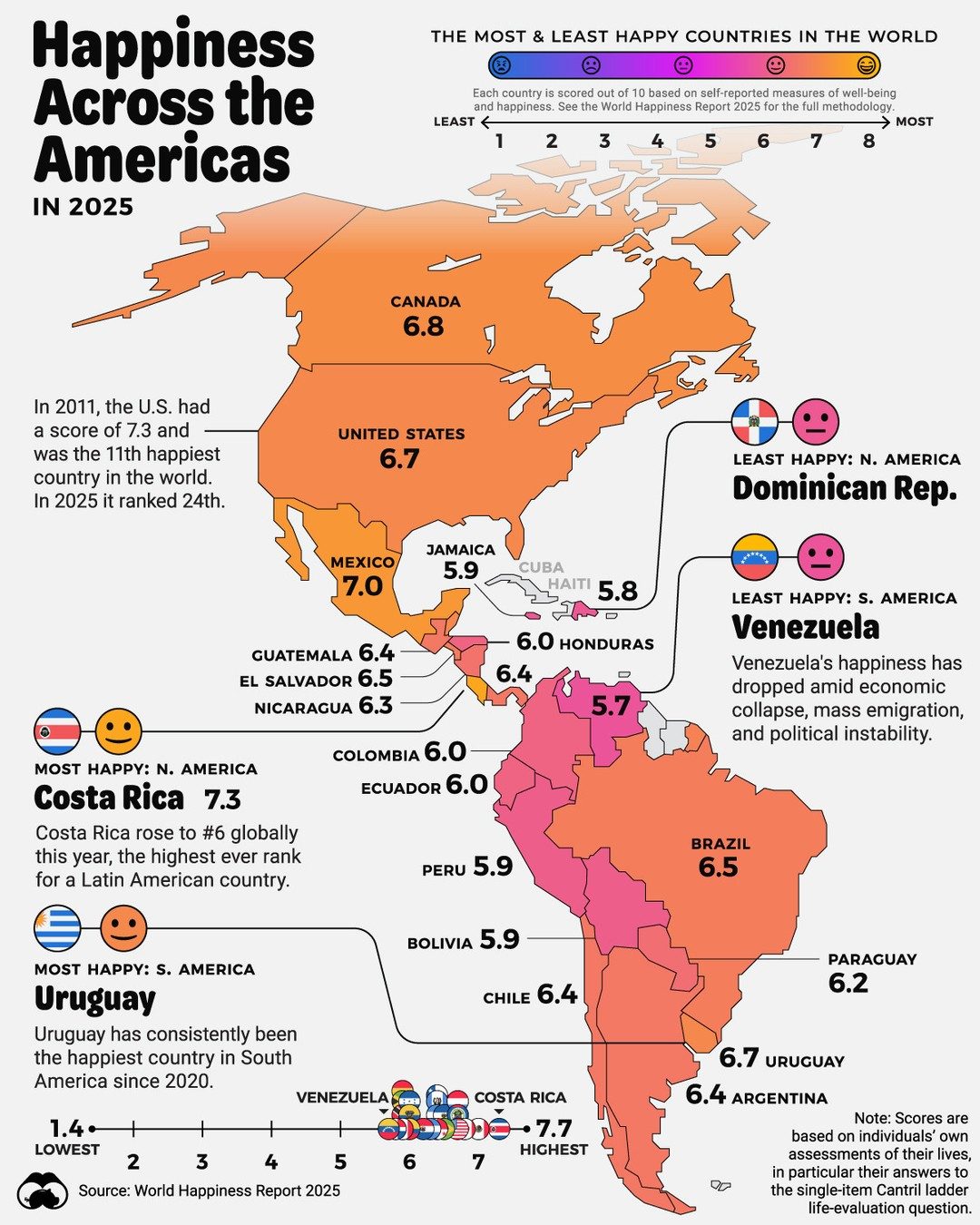
Costa Rica has secured the top spot as the happiest country in the Americas in 2025, according to the World Happiness Report. This significant achievement places Costa Rica at an impressive global rank of #6. Meanwhile, the United States has experienced a notable decline in its happiness ranking, falling to 24th position, which is its lowest-ever spot. This shift highlights the dynamic nature of happiness levels across the Americas, as influenced by various factors.
Why This Matters
The World Happiness Report is a comprehensive study that ranks global happiness based on individuals' own assessments of their lives. Happiness, in this context, is often tied to a sense of well-being, which encompasses factors like life satisfaction, social support, and freedom. Costa Rica's rise to the top of the Americas highlights a broader trend of increased well-being in Latin America, driven by strong social support, community engagement, and a focus on quality of life.
The Americas: A Mosaic of Happiness
The 2025 World Happiness Report provides a detailed map of happiness levels across the Americas. This region is home to a diverse range of countries, each with unique cultural, economic, and political landscapes. The report not only highlights the happiest and least happy countries but also sheds light on the socioeconomic factors contributing to these rankings.
The Happiest Countries
Costa Rica and Uruguay stand out as the happiest countries in South America, with Costa Rica ranking #6 globally. These countries have made significant strides in improving the quality of life for their citizens. Factors such as strong social support, high life satisfaction, and a robust sense of community contribute to their rankings. Costa Rica's reputation for ecological sustainability and a strong commitment to social welfare has propelled it to the top of the Americas' happiness list.
The Least Happy Countries
Venezuela and the Dominican Republic, on the other hand, rank as the least happy countries in the Americas. Venezuela's economic collapse, mass emigration, and ongoing political instability have taken a significant toll on the well-being of its citizens. These factors have led to a decline in happiness levels, reflected in the World Happiness Report. In contrast, the Dominican Republic faces challenges such as economic inequality and social unrest, impacting its happiness ranking.
Factors Influencing Happiness
The World Happiness Report considers several key factors when assessing global happiness levels. These include:
Social Support
Social support plays a crucial role in determining happiness levels. Communities with strong social networks, where individuals feel supported and valued, tend to report higher levels of well-being. This is evident in countries like Costa Rica, where community engagement and social cohesion are integral to the culture.
Life Satisfaction
Life satisfaction refers to an individual's overall sense of contentment with their life. Factors such as job satisfaction, financial stability, and personal fulfillment contribute to life satisfaction. In Costa Rica and Uruguay, high levels of life satisfaction are driven by a strong focus on work-life balance, personal well-being, and a sense of purpose.
Freedom
Freedom, in this context, refers to the degree to which individuals feel they have control over their lives and decisions. Countries with high levels of freedom generally report higher happiness levels, as individuals feel empowered to make choices that align with their values and aspirations.
GDP per Capita
Economic prosperity, as measured by GDP per capita, is another critical factor in determining happiness. While economic well-being is essential, it is not the sole determinant of happiness. Countries with a balanced approach to economic growth and social welfare often see higher happiness levels, as seen in Costa Rica and Uruguay.
Practical Tips for Enhancing Happiness
Based on the findings of the World Happiness Report, here are some practical tips for enhancing happiness at both the individual and community levels:
Foster Strong Social Connections
Building and maintaining strong social connections can significantly enhance overall well-being. Engage in community activities, spend quality time with friends and family, and participate in volunteer work to foster a sense of belonging and support.
Prioritize Life Satisfaction
Focus on aspects of life that bring you joy and fulfillment. Whether it's a fulfilling career, a hobby, or personal relationships, prioritizing activities that bring satisfaction can boost happiness levels.
Promote Freedom and Autonomy
Encourage environments where individuals have the freedom to make choices and take control of their lives. This can be achieved through policies that promote autonomy, independence, and personal empowerment.
Invest in Social Welfare
Communities and governments can invest in social welfare programs that address economic inequality, provide access to healthcare, and promote education. These initiatives can create a supportive environment that fosters happiness and well-being.
Maintain a Healthy Lifestyle
Engaging in regular physical activity, maintaining a balanced diet, and prioritizing mental health can significantly impact overall happiness. A healthy lifestyle supports both physical and mental well-being, contributing to a sense of fulfillment and contentment.
Important Takeaways
The 2025 World Happiness Report highlights the dynamic nature of happiness across the Americas. Key takeaways include:
- Happiness is influenced by a range of factors, including social support, life satisfaction, freedom, and economic prosperity.
- Costa Rica and Uruguay stand out as the happiest countries in the region, driven by strong social networks, community engagement, and a focus on well-being.
- Venezuela and the Dominican Republic face significant challenges that impact their happiness rankings, highlighting the need for targeted social and economic interventions.
Conclusion
Understanding the factors that contribute to happiness is essential for fostering well-being at both the individual and community levels. The 2025 World Happiness Report provides valuable insights into the diverse factors that influence happiness levels across the Americas. By prioritizing social support, life satisfaction, freedom, and economic prosperity, individuals and communities can create environments that promote happiness and well-being.
Watch the Reel
Questions readers ask
Why is Costa Rica considered the happiest country in the Americas?
Costa Rica's top ranking is attributed to its high levels of well-being, which are supported by robust social networks and active community involvement. These factors contribute to a strong sense of life satisfaction among its residents.
How does the 2025 World Happiness Report determine happiness rankings?
The report evaluates happiness based on individual assessments of life satisfaction. These assessments encompass various factors that contribute to a sense of well-being, including social support, community engagement, and personal contentment.
What is the significance of Costa Rica's #6 global ranking in the 2025 World Happiness Report?
Costa Rica's high global ranking underscores the country's success in fostering a positive living environment. It also serves as a benchmark for other countries in the Americas to evaluate their own well-being and happiness indicators.
How has the United States' happiness ranking changed in the 2025 report?
The United States has experienced a decline in its happiness ranking, falling to 24th position in the 2025 World Happiness Report. This is the lowest spot the US has ever held, indicating a shift in happiness levels influenced by various social and economic factors.
What factors contribute to Uruguay's high happiness ranking in the Americas?
Uruguay's high ranking can be attributed to similar factors as Costa Rica, including strong social support, community engagement, and a focus on life satisfaction. These elements contribute to a high sense of well-being among its residents.
Why is Venezuela ranked low in the 2025 World Happiness Report?
Venezuela's low ranking reflects significant challenges in social support, community engagement, and overall life satisfaction. These challenges can be attributed to a variety of economic and political factors that impact the well-being of its residents.
What can other countries in the Americas learn from Costa Rica's top ranking?
Countries in the Americas can learn about the importance of fostering strong social connections and promoting community engagement to enhance well-being. By understanding the factors that contribute to Costa Rica's success, other nations can develop similar initiatives to improve their residents' happiness and life satisfaction.
Related deep dives
Similar reads based on topic and creator.




Recent articles
Fresh deep dives from the latest Reels we unpacked.




Comments
Be the first to comment.