Costa Rica's Remarkable Reforestation Success
Costa Rica's journey from deforestation to reforestation is a testament to the power of environmental commitment. By the 1980s, the country had lost half of its forests, leaving vast areas barren and devastated. However, through concerted efforts and innovative policies, Costa Rica has not only halted this trend but also doubled its forest cover. This transformation highlights the potential for environmental recovery and serves as an inspiring model for other nations grappling with similar challenges.
Why this Matters
The success of Costa Rica's reforestation efforts underscores the importance of environmental stewardship. The country's transformation from a deforested landscape to lush, green forests is a stark reminder of the critical role that reforestation plays in combating climate change, preserving biodiversity, and ensuring the well-being of future generations.
Main Discussion
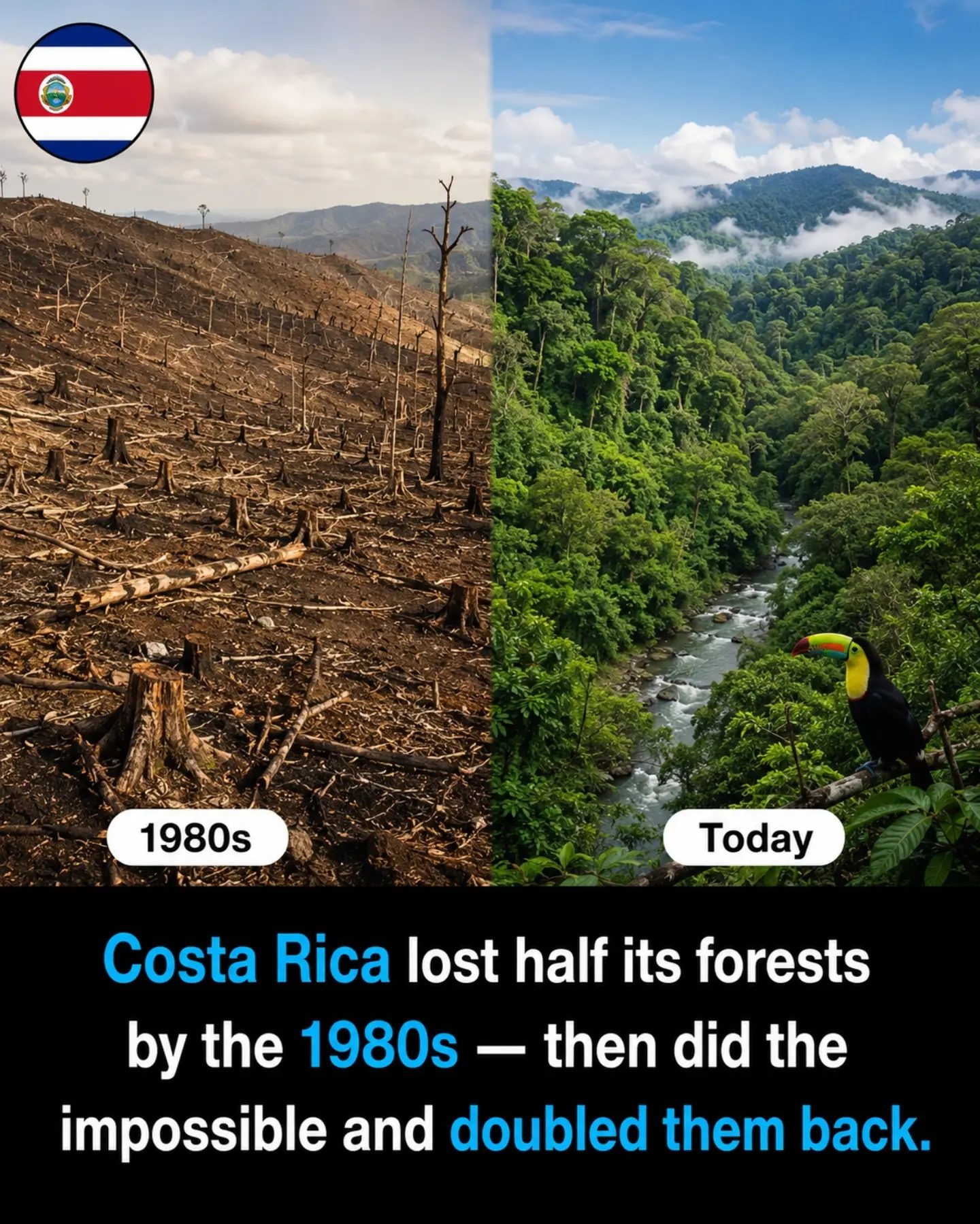
The stark contrast between the deforested landscape of the 1980s and the thriving forests of today is a powerful visual representation of Costa Rica's environmental achievements. The once-barren land, marred by burnt trees and desolation, has been revitalized into a vibrant ecosystem teeming with life.
Historical Context
Costa Rica's journey to reforestation began in earnest in the 1980s, a time when the country faced severe environmental degradation. Today it stands as a leader in reforestation and environmental conservation. The country's commitment to environmental sustainability is evident in its policies and initiatives aimed at restoring its natural landscapes.
Key Factors in Reforestation Success
Several key factors have contributed to Costa Rica's remarkable reforestation success. These include:
- Policy and Legislation: The implementation of strict environmental laws and regulations has played a crucial role in protecting and restoring the country's forests. Policies aimed at conservation and sustainable land use have been instrumental in reversing the deforestation trend.
- Community Involvement: Local communities have been actively involved in reforestation efforts, contributing to the success of these initiatives. Their participation ensures that the benefits of reforestation are widely shared and that the local population is invested in the preservation of their natural environment.
- Economic Incentives: Economic incentives, such as payments for ecosystem services, have encouraged landowners to participate in reforestation projects. These incentives provide financial support for sustainable land management and reforestation efforts, making it a viable economic alternative to deforestation.
- International Support: International support and collaboration have also been vital in Costa Rica's reforestation efforts. Partnerships with other countries and international organizations have helped to secure the resources and expertise needed to achieve these goals.
The Role of Biodiversity
Costa Rica's reforestation efforts have not only restored its forests but also significantly enhanced biodiversity. The country's rich biodiversity, including a wide array of plant and animal species, contributes to the health and resilience of its ecosystems. The presence of iconic species such as the toucan in the reforested areas highlights the success of these restoration efforts.
Practical Tips
For those interested in contributing to reforestation efforts, here are some practical tips:
-
Support Local Initiatives: Engage with local reforestation initiatives and support them through volunteering or financial contributions. Community involvement is key to the success of these projects.
-
Plant Trees: Participate in tree-planting activities and encourage others to do the same. Planting trees is a direct way to contribute to reforestation and help restore natural habitats.
-
Advocate for Policies: Advocate for policies that promote reforestation and environmental conservation. Encourage local governments and organizations to implement sustainable land management practices.
-
Reduce, Reuse, Recycle: Adopt sustainable practices in daily life to reduce the demand for resources that contribute to deforestation. Reduce, reuse, and recycle to minimize your environmental impact.
Important Takeaways
Costa Rica's reforestation success serves as a powerful example of what can be achieved through determination, policy, and community involvement. The country's experience highlights the importance of reforestation in combating environmental degradation and preserving biodiversity. By learning from Costa Rica's example, other nations can implement similar strategies to restore their natural landscapes and ensure a sustainable future for all.
Conclusion
The transformation of Costa Rica's landscape from a deforested wasteland to a thriving ecosystem is a testament to the potential for environmental recovery. Through a combination of policy, community involvement, and economic incentives, Costa Rica has achieved remarkable success in reforestation. This journey offers valuable lessons for other nations seeking to restore their natural environments and highlights the critical role that reforestation plays in preserving biodiversity and combating climate change. By embracing these principles, we can work towards a greener, more sustainable future.
Watch the Reel
Questions readers ask
How much of Costa Rica's forest cover was lost by the 1980s?
By the 1980s, Costa Rica had lost approximately half of its forest cover, leaving significant areas of the country barren and devastated. This period marked a critical point in the country's environmental history, highlighting the urgent need for reforestation efforts.
What policies contributed to Costa Rica's reforestation success?
Costa Rica implemented several innovative policies to combat deforestation and promote reforestation. These include the Payment for Environmental Services (PES) program, which incentivizes landowners to protect and restore forests, and strict regulations on deforestation. Additionally, the country has invested heavily in national parks and protected areas, covering nearly 30% of its territory.
How has Costa Rica's reforestation affected climate change?
Costa Rica's reforestation efforts have significantly contributed to mitigating climate change. By doubling its forest cover, the country has increased its carbon sequestration capacity, helping to reduce greenhouse gas emissions. The lush forests also provide essential ecosystem services, such as regulating water cycles and supporting biodiversity, which are crucial for adapting to and combating climate change.
What can other countries learn from Costa Rica's forest transformation?
Other countries can learn the importance of strong environmental commitment and innovative policies from Costa Rica's forest transformation. By prioritizing reforestation and environmental stewardship, nations can achieve significant environmental recovery, even after extensive deforestation. Costa Rica's success demonstrates that with the right strategies and dedication, it is possible to reverse environmental degradation and create a more sustainable future.
What role do national parks play in Costa Rica's reforestation efforts?
National parks play a crucial role in Costa Rica's reforestation efforts by protecting vast areas of forest from deforestation and providing habitats for diverse plant and animal species. These protected areas also serve as important carbon sinks, helping to mitigate climate change. Additionally, they offer opportunities for ecotourism, providing economic incentives for conservation.
How has Costa Rica's approach to deforestation changed over time?
Costa Rica's approach to deforestation has evolved significantly over time. Initially, the country faced substantial deforestation due to agricultural expansion and logging. However, starting in the 1990s, Costa Rica shifted its focus towards environmental stewardship and implemented policies that actively promoted reforestation. This change in approach has led to the country's remarkable forest recovery and serves as a model for other nations.
Related deep dives
Similar reads based on topic and creator.




Recent articles
Fresh deep dives from the latest Reels we unpacked.




Comments
Be the first to comment.