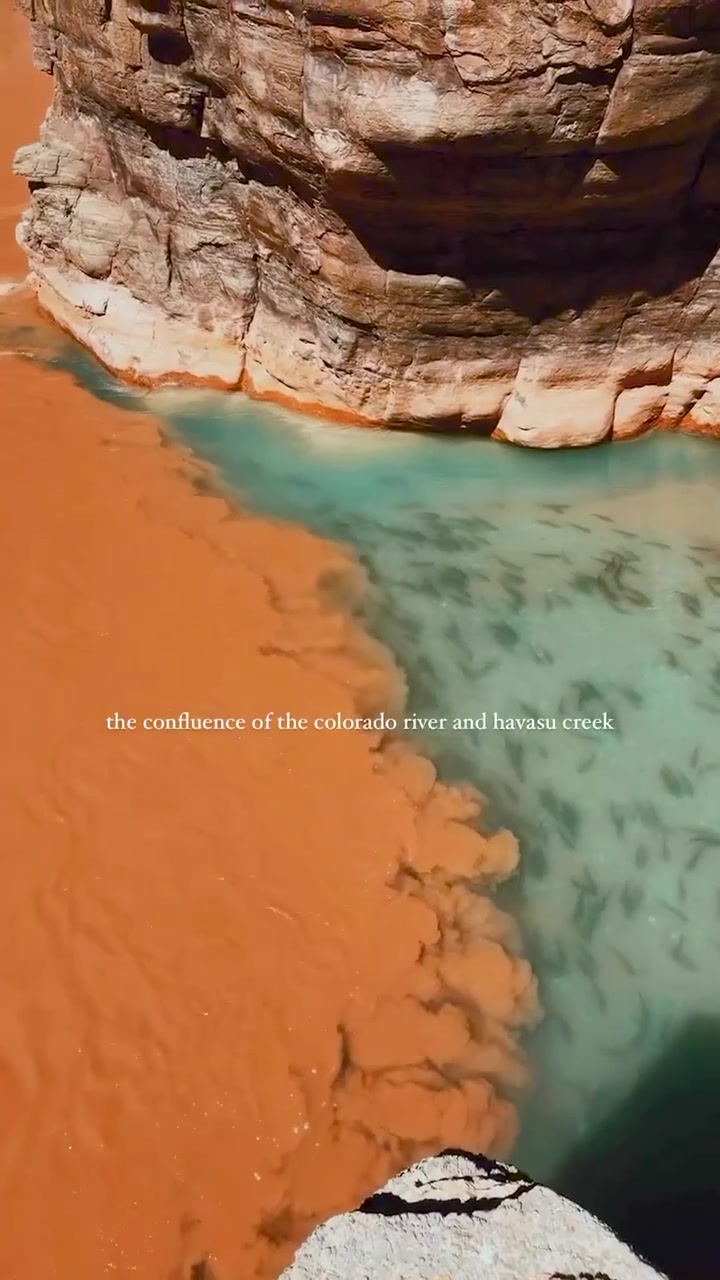
The confluence of the Colorado River and Havasu Creek is a natural spectacle that stands out even among the vast and diverse landscapes of the American Southwest. The two rivers meet in a visually stunning display of vibrant hues: the orange-red sediment of the Colorado River from nearby Grand Canyon contrast sharply with the turquoise waters of Havasu Creek.
The Colliding Colors of Colorado and Havasu
This confluence is a showcase of nature's artistry. The Colorado River drains a vast watershed, flowing through arid regions that lend its water a distinctive red-orange tint from the sediment. Havasu Creek, on the other hand, is known for its crystalline turquoise waters, which originate from natural springs rich in carbonate minerals. The meeting of these two water bodies creates a vivid contrast that is both unexpected and breathtaking. The confluence sits in a remote, rocky area, where the canyon walls frame the rivers' distinct colors. The visual impact is amplified by the aerial perspective, highlighting both the natural tapestry and the unique geology. The stark color contrast is not the confluence’s only distinctive feature. The surrounding landscape, with its rocky cliffs and dramatic vistas, adds layers of natural beauty. This confluence is also a point of interest for hikers, photographers, and adventurers seeking to witness the dramatic play of colors and lands. As visitors step through rocky terrain to visit this site, the experience is beyond just the visual spectacle. The confluence represents the merging of geological and hydrological systems. This confluence is part of a larger network of canyons and watercourses shaped by millions of years of erosion and sediment deposition. The vivid color contrast is a testament to the complex interplay of geology, hydrology, and climate. The area is also significant for wildlife, with a variety of species adapted to the unique ecosystem.Vistors flock here to gaze at these vivid colors. The confluence of the Colorado River and Havasu Creek highlights the uniquely striking natural beauty of the region.It makes a clear and meaningful connection to the larger ecological and geological dynamics at play in the Southwest. This confluence is one of several unique geological and hydrological features in the region — including the prominent Grand Canyon and the Moenkopi Plateau to the east.
Why this is a Visitor Hotspot — and a Conservation Challenge
It is no accident that this confluence is a hotspot for visitors and photographers. For landscape enthusiasts, the vivid color contrast and rocky canyon walls create an environment that is both dynamic and visually dramatic. Adventurers flock to the area for opportunities in hiking, photography, and exploration. The confluence also presents a vivid example of geological processes at work, making it a destination for educational tours and field studies. But the unique beauty of the Colorado and Havasu confluence doesn't come without challenges. The area faces threats from both natural and human activity. The waters of Havasu Creek, rich in mineral deposits, are crucial to the distinctive coloration. However, the delicate balance can be disrupted by upstream activities, such as mining, drilling, or changes in water flow. Drought and climate change affect the health of river ecosystems.
Aerially Serene, On the Ground is a Hike
The aerial view captures the stark contrast of the rivers and the rugged beauty of the canyon walls. Getting here is a sight in itself. The craggy terrain of the canyon drops down to the river, and the throughway unfolds along an arid and rough trail. The journey is just as much a part of the experience as the destination itself. Hiking trails offer visitors the opportunity to engage with the landscape up close. The hiking trails that lead to the confluence are not for the faint-hearted. But for those who venture, the experience is unforgettable. The terrain is rough, requiring visitors to navigate along rocky cliffs, with waterways carving straight through. The journey itself is an experience that requires preparation and caution, but dawn treks reveal mist rising from the river and the distinct skyline.
### The Unique Chemistry of Havasu’s Colors
The color of Havasu Creek is one of the most striking features of the confluence. The creek's turquoise hue, a shade so vivid that it almost appears artificial, is caused by the interaction of water with the local geology. Water from the creek flows into two kinds of rocks which leach carbonate minerals. The combination of these minerals with sunlight produces the unique color. The Colorado River, by contrast, carries sediments from a much wider watershed, which gives it a darker, earthier hue. The interplay of these two water bodies creates the breathtaking visual effect seen at the confluence.
### The Ecological Sentinels
The confluence is more than a sight to behold. It’s also an important ecological zone. The unique ecosystem supports a variety of plant and animal life, some of which are adapted to the specific conditions around the confluence. The clear waters of Havasu Creek provide habitat for certain species of fish, while the rocky cliffs and canyons are home to various birds and small mammals. The interplay of the rivers also influences nutrient flow and sediment deposition, which in turn shapes the ecosystem.
### Water Flow Two Ways
The dynamics of waterflow are also crucial to the confluence. The volume and velocity of the water from both rivers can change significantly, influenced by factors like seasonal precipitation and upstream activities. During times of heavy rain, the Colorado River can swell dramatically, altering the way the two rivers meet. Variations in water flow also impact sediment deposition and erosion patterns. This dynamic interplay constantly reshapes the landscape, making the confluence a living, evolving natural feature. Seasonal changes can dramatically alter the visual contrast and the ecological conditions. During the summer, the vegetation and wildlife thrive, while in winter, the landscape shifts to a dormant, more barren state. No matter the season, the confluence showcases the powerful forces of erosion and sedimentation.
Know Before You Go
If you're planning a trip to see the confluence, it’s essential to be well-prepared. The trek is challenging, and it’s a good idea to bring adequate gear and water. The area is remote, and there is limited infrastructure, so self-sufficiency is crucial.
- Weather Conditions: Check the weather forecast and plan accordingly. The trail can be slippery and dangerous during or after rain.
- Geographical Knowledge: Get a good map of the area and be familiar with the route to the confluence.
- Fit and Healthy: The trek is demanding and requires a basic level of fitness.
- Be aware of the varying water levels. The confluence can be inaccessible during times of high water.
The Colorado and Havasu Rivers are a testament to the power of natural forces and the beauty they create.
Watch the Reel
Questions readers ask
What causes the different colors of the Colorado River and Havasu Creek?
The Colorado River's red-orange hue comes from the sediment it carries from arid regions, while Havasu Creek's turquoise waters are due to natural springs rich in carbonate minerals. This contrast creates a vivid and dramatic display when the two rivers meet.
What makes the confluence of the Colorado River and Havasu Creek so visually striking?
The confluence is visually striking due to the dramatic contrast between the red-orange waters of the Colorado River and the turquoise waters of Havasu Creek. The rugged, rocky canyon walls surrounding the rivers also enhance the visual impact, making it a unique natural spectacle.
What kind of wildlife can be found near the confluence of the Colorado River and Havasu Creek?
The area around the confluence is significant for wildlife, with a variety of species adapted to the unique ecosystem. This includes both plants and animals that thrive in the confluence’s distinctive geological and hydrological conditions.
How do the geological and hydrological systems interact at the confluence of the Colorado River and Havasu Creek?
The confluence represents the merging of geological and hydrological systems. It is part of a larger network of canyons and watercourses shaped by millions of years of erosion and sediment deposition, showcasing the interplay of geology, hydrology, and climate.
How often do visitors come to see the confluence of the Colorado River and Havasu Creek, and how do they get there?
The confluence is a popular spot for hikers, photographers, and adventurers. Visitors typically need to navigate rocky terrain to reach the site, but the journey is part of the overall experience. The site is also a destination for educational tours and field studies.
What are some of the conservation challenges facing the confluence and how can visitors help?
The area faces threats from both natural and human activities. The delicate balance of the mineral-rich waters of Havasu Creek can be disrupted, so visitors should be mindful of their impact on the ecosystem. Following guidelines for responsible tourism can help preserve the area's unique beauty.
Related deep dives
Similar reads based on topic and creator.


Recent articles
Fresh deep dives from the latest Reels we unpacked.



Comments
Be the first to comment.