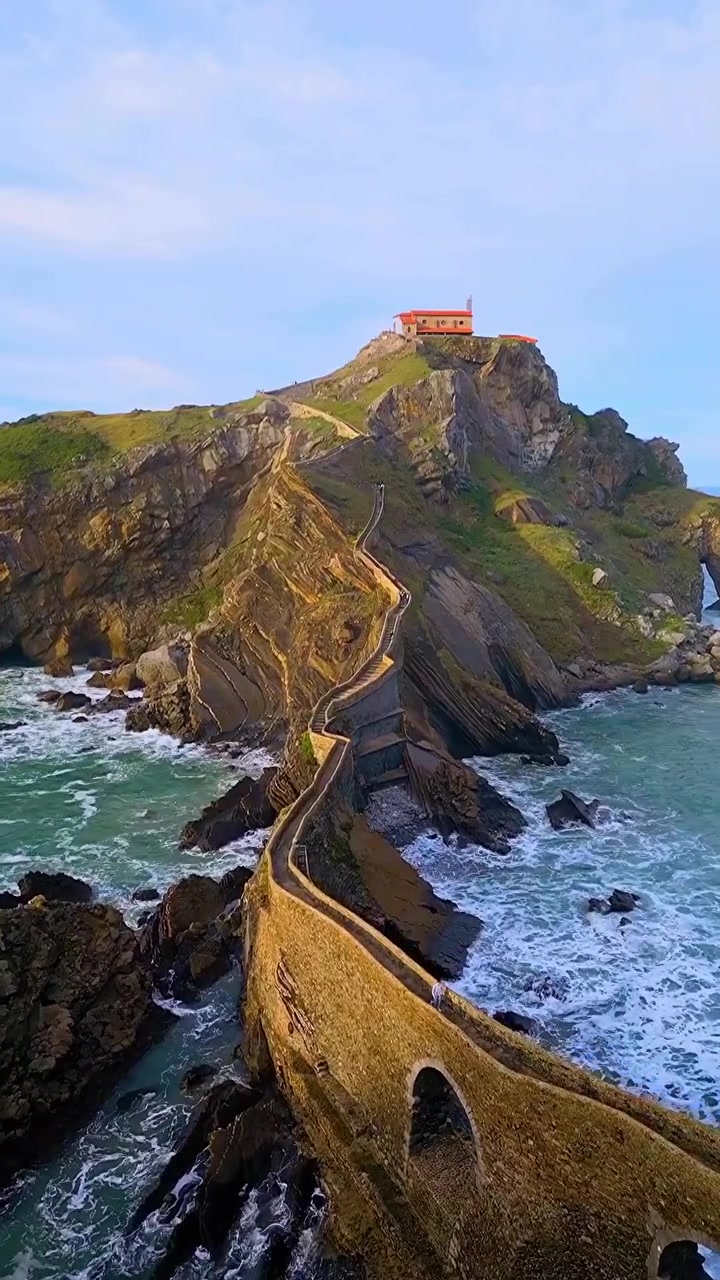
The cliffside staircase winds down toward the sea like a stone ribbon, each step etched into the sheer rock face. This isn't a mere fortified path; it's a bold architectural marriage between nature and human endeavor. A casual viewer might mistake the scene for an over-the-top movie set. But this is not an exaggerated backdrop. The scene is a real coastal landscape with intense natural beauty and an unexpected human touch: the stone staircase and a historic building built atop the cliff. The setting is a dramatic example of how humans have interacted with the most challenging natural environments.
A Stairway to the Sea
The staircase exists along a rugged cliff face that plunges into the ocean, a testament to the human desire for connection to the water. It's a winding path etched into the natural rock, a challenge for designers and builders. The staircase is distinctive for its seamless integration of human architecture with nature, mimicking the natural texture of the cliff while providing a practical route to the ocean. The stairs are built to handle the elements, the salt mist, and the wind. The result is a dramatic visual and a practical link between the lofty cliff and the sea. There's no pretense about the staircase — it's a utilitarian design that speaks to the practical needs of a coastal community. It's not merely a scenic path; the staircase bridges the land and the ocean. There are few structures that exist on such a dramatic scale without sacrificing function and safety. The drama of the setting isn't limited to the staircases. Atop the cliff is a historic building. Perhaps a fortress or a lighthouse, it's unmistakably ancient. The building is as much a part of the landscape as the cliff itself. Its presence adds to the grandeur of the cliff, but its purpose is not clear. It suggests a history of human use of the dramatic cliffside, and the architecture itself leaves much to the imagination.
The Draw of Dramatic Natural Settings
Dramatic landscapes like this coastal area, with its cliff, staircase, and sea, are compelling for their sheer novelty. So are the human structures that populate them, even if their uses remain mysterious. The entire composition invites viewers to imagine the lives of those who built and used the staircase and the ancient building up the cliff. These landscapes are more than just dramatic. They are reminders of the human drive to adapt and live in challenging environments. The staircase and the building atop the cliff are impressive because they are the work of ambitious explorers and builders who made the dramatic landscape their home. They give us a glimpse into a life lived on the edge.
Engineering and Materials
The staircase is an engineering marvel. It seems to slice through the concrete facade. It's a testament to the skill of the engineers and builders. It differs from conventional staircases: there is no visible support system to anchor the stairs. They appear to hang by the cliff via a cement-like adhesive. The building on the top is likewise impressive. Despite its age, it appears structurally sound, offering a place to stay. The choice of materials is crucial in such a setting. The stair case and building are made of materials that survive the passage of time. They are durable enough to withstand the harsh coastal weather.
Diving Through Time
The mysterious building at the top of the cliff is a historical puzzle. Its age offers a glimpse into a past era where explorers and settlers pushed the limits of their environment. While the building at the top is not as imposing as the staircase, it is equally mysterious. The stalwart structure serves as a reminder of the past. It stands as a testament to human endurance. Precisely because its purpose is murky, the building is a more compelling sight. It is not just a building; it is a silent time capsule, telling tales of the people who built it and those who used it for centuries. Its timeless architecture is a reminder of the changes in culture, economy, and philosophy. The structure is both a testament and a question mark to the human mind.
The Beauty of an Unfinished Clue
Every dramatic landscape offers a mystery. It is the mysterious nature of the building at the cliff's top that makes it more compelling. It is intrigue that piques the viewer's curiosity. What are the origins of this curious building? What purpose did it serve? There is no definitive answer to these questions. Because the building itself is relatively intact, it offers a rare insight into a forgotten period. Some of the answers are hidden away within the building's thick walls. Nevertheless, the more we look, the more questions arise. What sorts of people made this place their home? What was their day-to-day life like?
First Taste of the Cliff's Edge
Anyone can explore these mysterious cliffside wonders via technology, but immediate experiences are different. There is an intense sense of urgency when standing at the top of the cliff. You can almost feel the weight of history bearing down on you. To experience the staircase and the building atop the cliff directly, one should consider a coastal tour with guides who know the terrain well. The staircases descend to the ocean, so it's important to go with people who know the territory. The stone staircase is rough and uneven, so taking one's time and treading carefully is crucial. The building itself is right beside the cliff's edge. It is best to avoid going inside. The rugged beauty of this dramatic setting will stay with you long after you've descended the cliffs.
Guards of the Edge
The cliff and its buildings are silent sentinels that watch as the world changes. They are silent witnesses to the changes around the modern world. As the ocean itself, they remain constant despite the passage of time. Long after we are gone, the structures on the cliff will remain. The stone staircase and the historic building are an eternal marriage with the sea. They are the ultimate guardians of the shore.
Watch the Reel
Questions readers ask
What exactly is the cliff staircase, and where is it located?
The cliff staircase is a winding path carved into a 600-foot-tall cliff that descends into the sea. Its exact location isn't specified in the article, but it is described as part of a dramatic coastal landscape with a historic building at the top. The staircase is not a mere scenic path but a practical link between the cliff and the ocean, built to withstand harsh coastal elements.
How was the staircase built, and what makes its design unique?
The staircase is unique because it is etched directly into the natural rock face, mimicking the cliff's texture. It appears to be held by a cement-like adhesive, with no visible support system. This design integration with nature and the lack of a conventional support system make it a distinctive engineering feat.
What is the purpose of the historic building at the top of the cliff?
The purpose of the historic building is not explicitly stated. It could be a fortress, a lighthouse, or another type of ancient structure. Its age and mysterious function add to the dramatic allure of the setting, inviting viewers to imagine its past use and the lives of those who once inhabited the area.
How does the staircase withstand the harsh coastal environment?
The staircase is designed to handle the elements, including salt mist and strong winds. Its utilitarian design and the choice of materials ensure that it remains functional and safe, despite the challenging conditions. The materials used are crucial in such a setting, as they need to withstand the constant exposure to the sea and weather.
Is it possible to visit or access the staircase?
The article does not provide specific information on whether the staircase is accessible to visitors. Given its dramatic and challenging nature, it's likely that access would be restricted or carefully managed to ensure safety. It would be best to check local guidelines or tours if you're interested in visiting.
What kind of people might have built and used the staircase and the building?
The staircase and the building suggest a history of human use of the dramatic cliffside. They were likely built and used by ambitious explorers, builders, or early settlers who made the challenging environment their home. The structures give a glimpse into a life lived on the edge, adapting to and thriving in a harsh coastal setting.
Related deep dives
Similar reads based on topic and creator.



Recent articles
Fresh deep dives from the latest Reels we unpacked.




Comments
Be the first to comment.