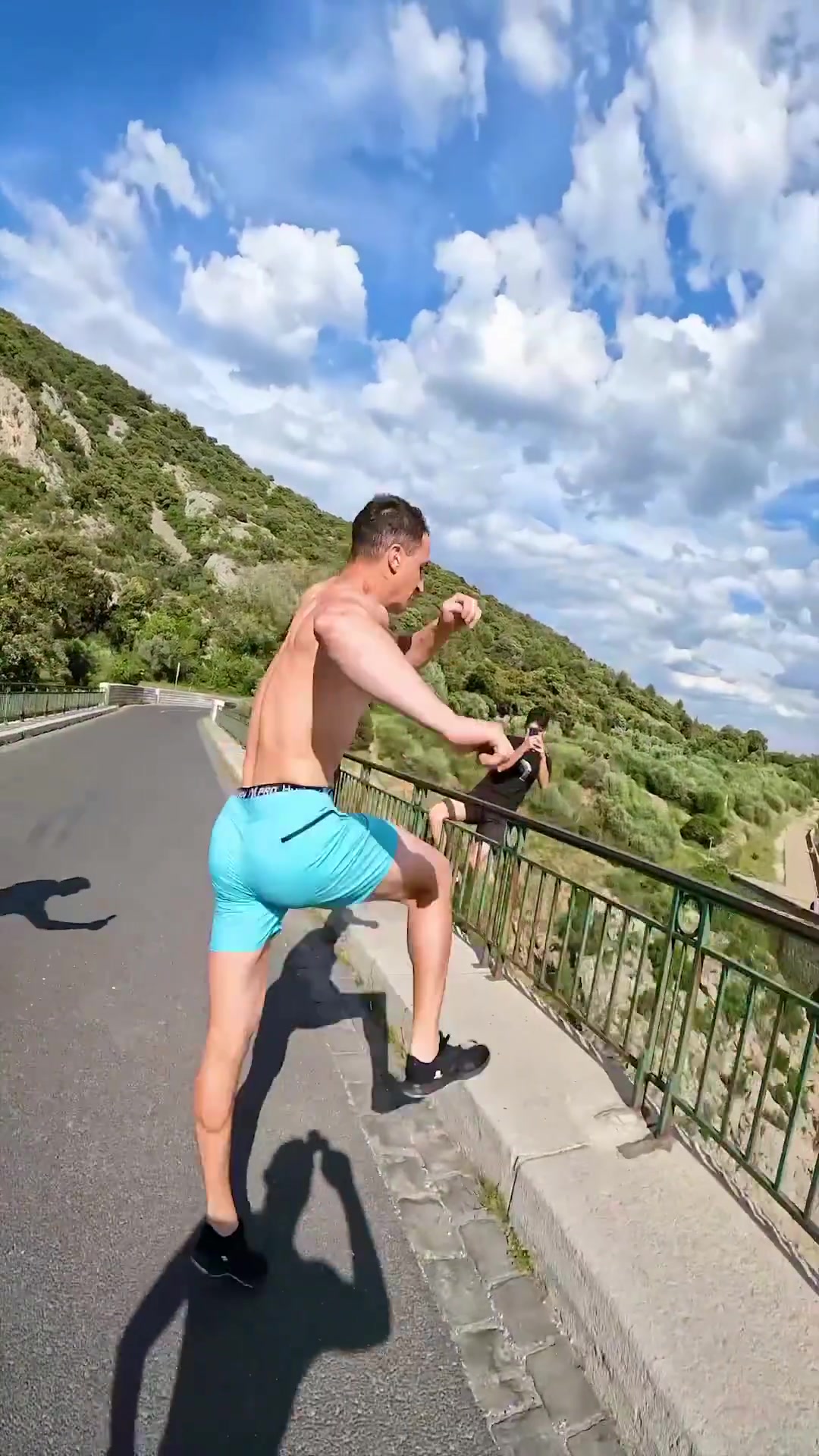
Cliff jumping is an adrenaline-fueled sport. video captures someone sprinting toward the edge of a stone bridge, leaping off, and slicing through the air before plunging into a river. The dramatic scene unfolds in a verdant landscape, with the stone bridge acting as a dramatic stage for this thrilling stunt.
The Draw of Cliff Jumping
Cliff jumping is a thrilling adventure, where the performer runs, jumps, and impacts a natural body of water. The act of leaping from a height heightens excitement due to the danger posed by height and the underlying water. Unlike swimming or diving, this activity is largely coordinated with nature, with cliffsides providing the launchpad. It’s about the thrill of the free fall. The natural environment and the risk of slipping or misjudging height make each jump unique and awe-inspiring. Cliff diving has a storied history, rooted in ancient ritualistic practices in Mexico, and evolved into a competitive sport in Europe during the 20th century. Today, professional cliff jumpers and daredevils push the limits of human capability and bravery, making it an adventure beloved by adrenaline junkies the world over. Professional cliff jumpers train rigorously, honing their diving techniques, perfecting their form, and mastering their mental focus. The jumps into water from great heights require precision, timing, and courage.
An Adventure Derived from Ancient Origins
Cliff jumping isn't a new phenomenon. The ancient Aztecs and Mayans performed ritualistic cliff dives, symbolizing their connection with nature. In 1910, the Stockholm Olympics featured a cliff jumping event which marked its official entry into modern sport. Today, the professional sport tests the limits of human bravery. This extreme sport marries adventure, nature, and risk. The sport requires precision and timing, a precise execution of form. Heightened adrenaline and the thrill of falling through air define cliff jumping. The sport plays into broader trends in extreme sports. It draws adventurers seeking a genuine connection with nature, while also harnessing the human instinct for risk.
Reckoning with the Elements
The Art of the Drop
Cliff jumping is about the drop, the initial push from the solid ground, followed by gravity-induced free fall and entry into liquid, and the person then fights gravity to float. Professional cliff jumpers say they experience an adrenaline rush not matchable by any other activity.
The High Stakes of Height;
Each cliff is unique, meaning that make every single jump an absolute, breathtakingly individual experience of risk. The height of the cliff, the surrounding waters, and the entry points are ever-changing. Jumping at different heights changes the speed at which the diver hits the water. The height of the cliff, the surrounding waters, and the entry points are ever changing so each dive is unique and takes immense concentration and focus. For the cliff jumper the airtime is the thrill, the rapture of flight, not the dive itself.
Nature’s Audience
Natural landscapes often provide mighty cliffs and deep waters. The scencery adds to the drama, enhancing the thrill and wonder. Some popular destinations for cliff jumping include Mexico's Pacific coast, which showcases high cliffs and deep waters, and the turquoise waters of New Zealand. At Mexicos cliffs, the cliffs are up to 65 feet high. But the sport isn’t just about the destination; it’s about the unique experience of each jump. An unexpected, but popular cliff jumping venue is the Aberdeen Waterfront’s Granite cliffs. The waterfront offers an exclusive view of the ocean and the surrounding cityscape.
Tackling Your First Cliff Jump
Cliff jumping is an intense sport. Some may want to avoid trying it as it is not a quick undertaking, and it requires a lot of practice. Those interested in trying cliff jumping are recommended to start small — maybe a three foot jump into a clean pool. Practicing daring jumps in a controlled environment allows for the development of courage and skills required for the extreme sport. Beginners should seek out a safe location with a flat entry, with cliffs of no more than 16 feet tall. A safe stretch of water lies around 10 feet away from the cliff, serving as a good spot for soft entry. Cliff diving can be dangerous. Taking a course or training with an experienced person can be lifesaving. Watching experienced individuals is a good way to learn.
Watch the Reel
Questions readers ask
What is the difference between cliff jumping and cliff diving?
Cliff jumping and cliff diving are often used interchangeably, but there's a nuance. Cliff jumping typically refers to the sport where participants leap from cliffs or bridges into water, often with less emphasis on the form and more on the thrill of the jump. Cliff diving, on the other hand, is more structured and often involves competitive elements, with divers focusing on precision and form, much like in Olympic diving. However, the terms are often used to describe the same activity, depending on the context.
How do cliff jumpers prepare for their jumps?
Professional cliff jumpers undergo rigorous training to master their techniques and mental focus. This includes perfecting their diving form, honing their timing, and practicing their jumps from various heights. The training also involves building mental resilience to handle the adrenaline rush and the inherent risks of the sport. They also study the unique conditions of each cliff, including the height, water depth, and entry points.
What kind of risks are involved in cliff jumping and how do jumpers mitigate them?
Cliff jumping involves significant risks, including the danger of hitting the water at the wrong angle, misjudging the height, and the ever-changing conditions of the cliff and water. Jumpers mitigate these risks through extensive training, careful planning, and precise execution. They also assess each jump individually, considering factors like water depth, weather, and their own physical and mental state. Safety equipment and experienced guides can also help minimize risks, though they do not entirely eliminate them.
Can anyone try cliff jumping, or is it only for professionals?
While cliff jumping is an extreme sport typically associated with professionals, there are opportunities for beginners to try it under controlled conditions. Many adventure parks and tour operators offer guided cliff jumping experiences, where safety measures are in place, and experienced guides provide instructions. However, it's crucial for beginners to understand the risks and follow all safety guidelines to minimize potential dangers.
What is the highest height from which a cliff jump has been successfully completed?
The highest recorded successful cliff jump is from a height of over 58 meters (190 feet) and has been completed by professional cliff jumpers. However, these jumps are extremely dangerous and are typically only attempted by highly trained and experienced athletes. The height can vary based on the conditions of the cliff and the water.
How does the natural environment impact the thrill of cliff jumping?
The natural environment plays a significant role in the thrill of cliff jumping, as the sport is heavily influenced by the unique conditions of each cliff and water body. The height of the cliff, the depth of the water, and the surrounding scenery all contribute to the excitement. The natural elements add unpredictability and a sense of adventure, making each jump a unique and thrilling experience. The scenery also enhances the drama and beauty of the sport, drawing adventurers seeking a genuine connection with nature.
Related deep dives
Similar reads based on topic and creator.



Recent articles
Fresh deep dives from the latest Reels we unpacked.


Comments
Be the first to comment.