Navigating the Claude AI Model Landscape
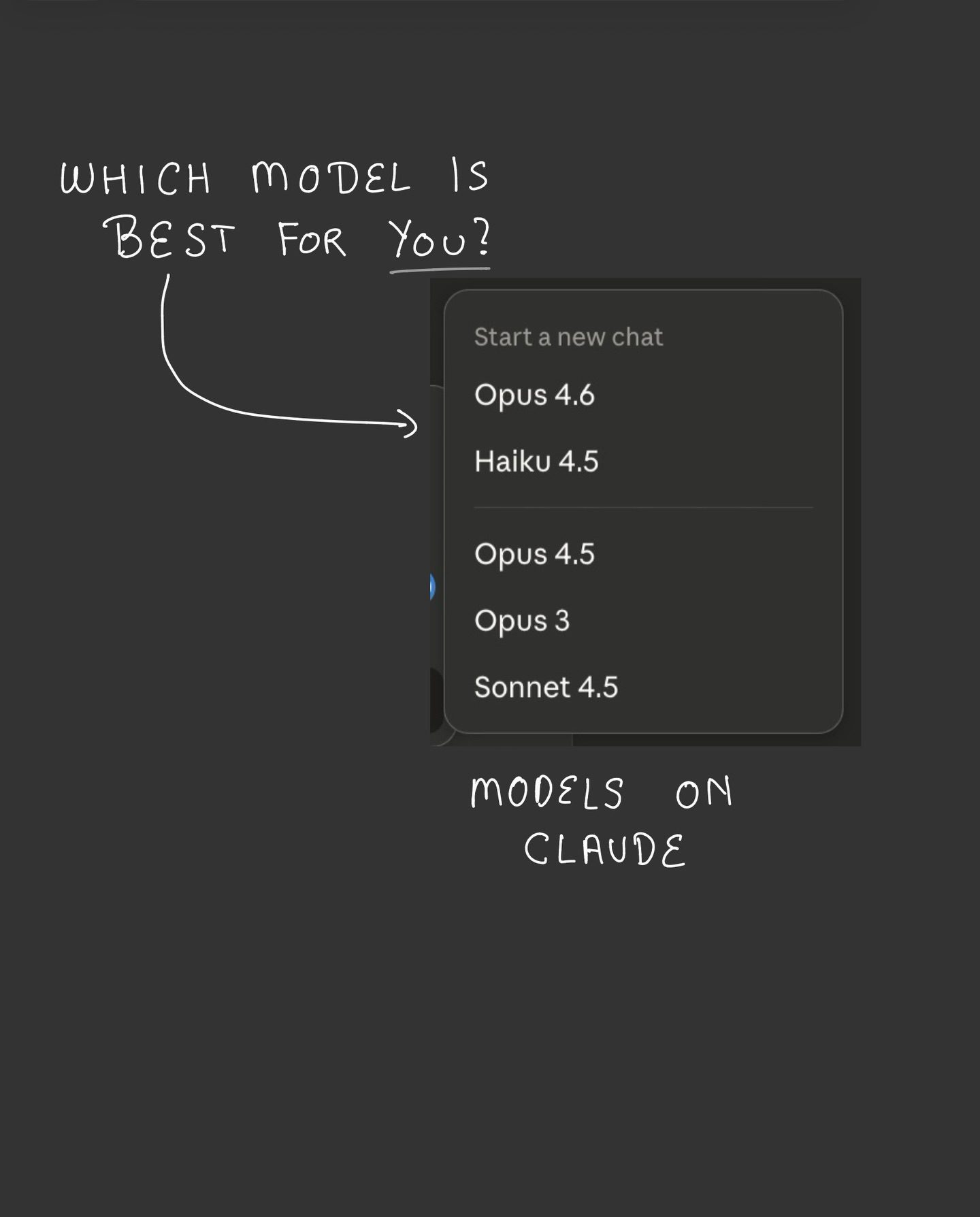
Claude offers a variety of AI language models, each tailored to different needs and use cases. Understanding the strengths and ideal applications of each model can help you make an informed decision about which one to use. Let's delve into the key features of the Opus, Sonnet, and Haiku models.
Why This Matters
Choosing the right AI model can significantly impact the efficiency and effectiveness of your tasks. Whether you're dealing with complex code, generating long-form content, or automating responses, the right model can streamline your workflow and enhance your productivity.
Opus Models
The Opus models are designed for tasks where accuracy and reliability are paramount.
Opus 4.6
Opus 4.6 is the go-to model when the stakes are high, and the problem is too expensive to get wrong. This model is built for high-stakes situations where precision and reliability are crucial. It excels in tasks that require meticulous attention to detail and complex problem-solving capabilities.
Opus 4.5
Opus 4.5 is a reliable model suitable for a variety of tasks. While it may not be the fastest, it offers a good balance between speed and accuracy. It is a versatile option that can handle a wide range of tasks efficiently.
Sonnet Models
The Sonnet models are known for their intelligence and efficiency, making them ideal for tasks that require both speed and sophistication.
Sonnet 4.6
Sonnet 4.6 is designed to impress with its smart capabilities while maintaining speed. This model is ideal for tasks that require both high intelligence and quick execution. It is particularly useful for generating high-quality content and debugging code.
Sonnet 4.6 + Extended Thinking
This enhanced version of Sonnet 4.6 includes an extended thinking feature, allowing the model to "think before it speaks." This makes it perfect for tasks that require in-depth analysis and thoughtful responses. It is particularly useful for complex decision-making processes and generating well-reasoned content.
Sonnet 4.5
Sonnet 4.5 is a reliable workhorse suitable for long-form content and code-related tasks. It excels in writing, editing, and repurposing content, as well as writing, debugging, and explaining code. This model is ideal for tasks that require sustained attention and detailed work.
Haiku Models
The Haiku models are known for their speed and efficiency, making them ideal for quick tasks and automation.
Haiku 4.5
Haiku 4.5 is the speed machine, not the smartest in the room, but the fastest by a mile. This model is ideal for quick classification, generating variations, and automating replies. It excels in tasks that require rapid processing and instantaneous responses, making it perfect for chatbots, FAQs, and automated reply systems.
Practical Tips
Choosing the right model depends on your specific needs and the nature of your tasks. Here are some practical tips to help you make the best choice:
- For High-Stakes Tasks: Use Opus 4.6 when accuracy and reliability are crucial. This model is designed to handle complex problems where the cost of failure is high.
- For Balanced Performance: Opt for Opus 4.5 if you need a reliable model that can handle a variety of tasks efficiently.
- For Speed and Sophistication: Choose Sonnet 4.6 when you need a model that is both intelligent and fast. This model is perfect for generating high-quality content and debugging code quickly.
- For In-Depth Analysis: Use Sonnet 4.6 + Extended Thinking for tasks that require thorough analysis and thoughtful responses. This model is ideal for complex decision-making and generating well-reasoned content.
- For Long-Form Content and Code: Go with Sonnet 4.5 for tasks that involve writing, editing, and repurposing content, as well as coding tasks that require detailed work.
- For Quick Tasks and Automation: Select Haiku 4.5 for tasks that require rapid processing and instantaneous responses. This model is perfect for chatbots, FAQs, and automated reply systems.
Important Takeaways
- Opus Models: Ideal for high-stakes tasks requiring precision and reliability.
- Sonnet Models: Perfect for tasks that demand both speed and intelligence, with options for extended thinking and long-form content.
- Haiku Models: Best for quick tasks and automation, offering rapid processing and instantaneous responses.
Conclusion
Understanding the strengths and ideal use cases of each Claude AI model can help you make an informed decision about which one to use. Whether you need precision and reliability, speed and sophistication, or quick automation, there is a Claude model tailored to meet your needs. By choosing the right model, you can enhance your productivity and efficiency, ensuring that your tasks are completed to the highest standard.
Watch the Reel
Questions readers ask
What are the key differences between Opus, Sonnet, and Haiku models in Claude AI?
The Opus, Sonnet, and Haiku models are designed for different tasks. Opus models excel in accuracy and reliability, making them ideal for high-stakes problem-solving. Sonnet models are optimized for generating swift, intelligent, and coherent content, while Haiku models are suited for quick, efficient, and conversational interactions.
Which Claude AI model is best for generating long-form content?
For generating long-form content, the Sonnet models are typically the best choice. They are optimized for creating coherent, engaging, and contextually relevant text, making them suitable for tasks like writing articles, reports, and stories.
When should I use an Opus model for my tasks?
Use an Opus model when you need high accuracy and reliability, such as in complex problem-solving, coding, or tasks that require precise and dependable outputs. Opus 4.6, in particular, is designed for handling tasks where the stakes are high.
What makes the Haiku model ideal for chat and customer service?
The Haiku model is designed for swift, efficient, and conversational interactions, making it perfect for chat and customer service roles. It can handle multiple queries at once, automating responses and providing quick and informative answers.
How do I decide which Claude AI model to use for my specific needs?
To decide which model to use, consider the nature of your task. If you need precision and reliability, choose an Opus model. For generating coherent and engaging content, opt for a Sonnet model. For quick and conversational interactions, the Haiku model is the best choice.
Can I use the same model for both long-form writing and quick responses?
While each model can handle a range of tasks, they are optimized for specific use cases. For the best efficiency, use Sonnet models for long-form writing and Haiku models for quick, conversational responses. Opus models are better suited for tasks requiring high accuracy and reliability.
What are the advantages of using the right AI model for my tasks?
Using the right AI model can significantly enhance your productivity and efficiency. It ensures that your tasks are completed with the necessary precision and speed, reducing the need for extensive revisions or corrections, and allowing for a smoother workflow.
Related deep dives
Similar reads based on topic and creator.

Recent articles
Fresh deep dives from the latest Reels we unpacked.




Comments
Be the first to comment.