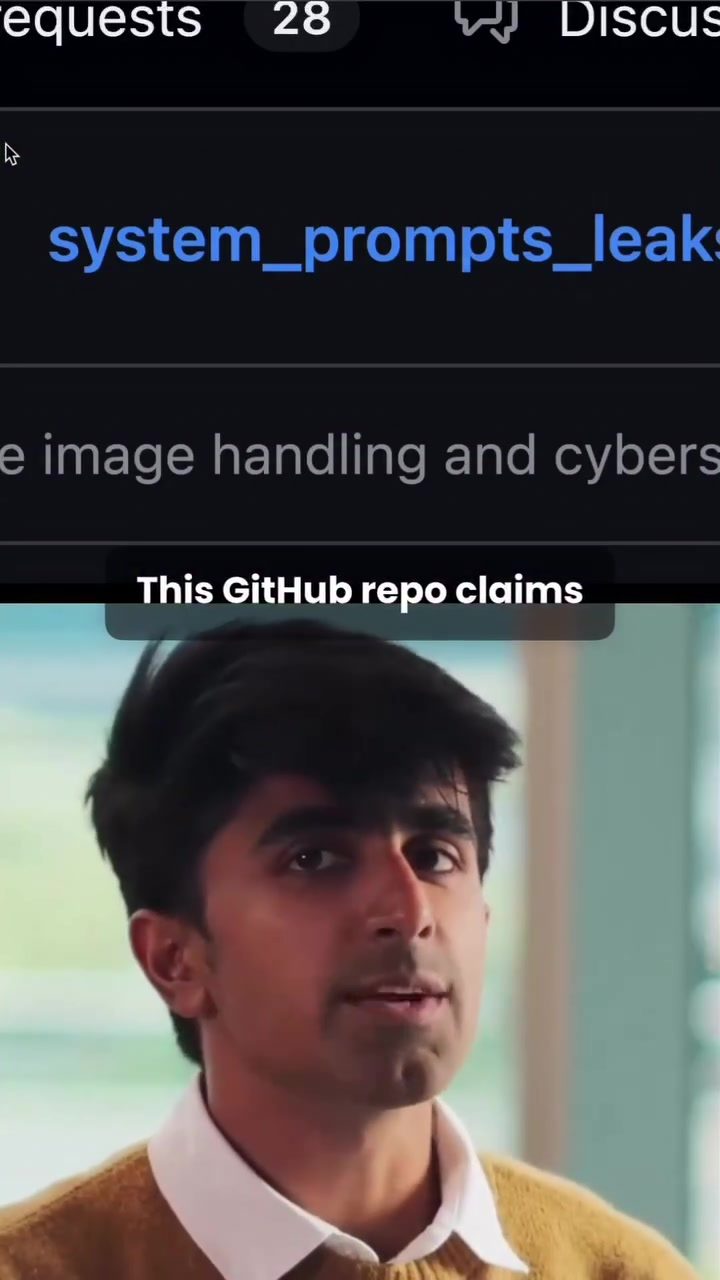
AI and Chatbot Development: Unveiling Anthropic's Claude Code
The recent emergence of a GitHub repository claiming to contain leaked system prompts from Anthropic has sparked significant interest in the AI community. This "goldmine" of information offers a unique opportunity to understand the underlying mechanics of high-performance AI models, particularly the chatbot Claude developed by Anthropic.
Why This Matters
System prompts are the hidden instruction layers given to an AI model before it responds to users. This layer defines how the model should behave, the tone it should use, and how to structure its answers. For developers and researchers, understanding these prompts can provide valuable insights into creating more effective and efficient AI models.
Claude, in particular, is a high-performance AI coding assistant. The Claude Code system prompt, which is currently circulating, has been meticulously studied to decode the structure and functionality of an advanced AI coding assistant. By analyzing these prompts, developers can gain a deeper understanding of how to enhance the output quality and consistency of their own AI models.
Understanding System Prompts
What Are System Prompts?
System prompts are essential components in the functioning of AI models. They act as a set of instructions that guide the AI's behavior and responses. These prompts are crucial for maintaining the model's performance and ensuring that it adheres to a consistent and predictable output.
The Role of System Prompts in AI
System prompts play a pivotal role in determining the quality and consistency of an AI model's outputs. By defining the behavior, tone, and structure of the AI's responses, system prompts help in creating a more reliable and user-friendly AI experience. For example, a well-crafted system prompt can ensure that an AI coding assistant provides clear, concise, and accurate responses to user queries, making it an invaluable tool for developers.
Claude: The AI Coding Assistant
Features and Capabilities
Claude, developed by Anthropic, is a state-of-the-art AI coding assistant that operates seamlessly in both web and mobile interfaces. It offers a range of features, including the ability to search past conversations, which enhances its functionality and user friendliness. This AI assistant is designed to provide high-quality and consistent responses, making it a valuable tool for developers and coders.
Integration and Usability
One of the standout features of Claude is its ability to integrate with various platforms. Whether you're working on a web interface or a mobile device, Claude can adapt to your needs, ensuring a consistent and reliable coding experience. Additionally, the ability to search past conversations allows users to reference previous interactions, enhancing the overall usability and efficiency of the AI assistant.
Practical Tips for Leveraging System Prompts
Analyzing System Prompts
To make the most of system prompts, it's essential to analyze and understand their structure. By studying the system prompts used by high-performance AI models like Claude, developers can gain insights into how to create more effective and efficient AI coding assistants. This involves breaking down the prompts to understand their components and how they interact with the AI model.
Implementing System Prompts
Once you have a clear understanding of system prompts, the next step is to implement them in your AI models. This involves integrating the prompts into the AI's instruction layer and ensuring that they guide the model's behavior and responses effectively. By doing so, you can enhance the performance and reliability of your AI models, making them more valuable to users.
Continuous Improvement
System prompts are not static; they can and should be refined over time. By continuously analyzing and improving your system prompts, you can ensure that your AI models remain effective and relevant. This involves gathering user feedback, monitoring the model's performance, and making necessary adjustments to the prompts.
Important Takeaways
- System prompts are crucial for defining the behavior, tone, and structure of AI models' responses.
- Leaked system prompts from models like Claude offer valuable insights into creating high-performance AI coding assistants.
- Claude by Anthropic is a high-performance AI coding assistant with features like searching past conversations and seamless integration with web and mobile interfaces.
- Analyzing and implementing system prompts can significantly enhance the quality and consistency of AI models' outputs.
Conclusion
The emergence of the GitHub repository containing leaked system prompts from Anthropic has provided a unique opportunity to delve into the inner workings of AI models, particularly the Claude coding assistant. By understanding and leveraging these system prompts, developers can create more effective and efficient AI models, enhancing their performance and user experience. Whether you're a seasoned developer or new to the field, exploring these prompts can offer valuable insights and take your AI projects to the next level.
Watch the Reel
Questions readers ask
What are Claude AI prompts and why are they significant?
Claude AI prompts are specific instructions given to the AI model before it generates responses. They are significant because they dictate the AI's behavior, tone, and response structure, essentially guiding how the AI interacts with users. By understanding and utilizing these prompts, developers can enhance AI performance and create more user-friendly assistants.
How does the GitHub repository related to Claude AI help developers?
The GitHub repository containing Claude AI prompts offers developers a unique opportunity to understand the underlying mechanics of high-performance AI models. By studying these prompts, developers can gain insights into how to improve their own AI models, making them more effective and efficient in various applications.
What can be learned from the system prompts used by Anthropic's AI models?
The system prompts used by Anthropic's AI models provide a blueprint for how to control an AI's behavior and responses. By examining these prompts, developers can learn how to fine-tune AI models to better suit specific tasks, improve conversational flow, and ensure responses are coherent and contextually appropriate.
How can understanding AI prompts improve chatbot performance?
Understanding AI prompts can significantly improve chatbot performance by allowing developers to better control the AI's output. This includes setting the appropriate tone, structuring responses effectively, and ensuring the AI behaves as intended. By aligning prompts with specific goals, developers can create more useful and engaging chatbots.
What opportunities do the leaked Anthropic AI prompts provide for researchers?
The leaked Anthropic AI prompts present researchers with a unique opportunity to analyze and experiment with high-performance AI model instructions. This can lead to innovative developments in AI assistant creation, improved user interactions, and a deeper understanding of how AI models process and generate responses.
How can developers utilize the GitHub repository to enhance their AI models?
Developers can use the GitHub repository as a resource to study and adapt the prompts used by Claude AI. By experimenting with these prompts, developers can identify patterns and techniques that can be applied to their own AI models. This can help in refining the AI's responses, improving its accuracy, and making it more aligned with user needs.
What are the potential benefits of studying Anthropic's system instructions for AI development?
Studying Anthropic's system instructions can provide valuable insights into how to design and implement effective prompts for AI models. This can lead to the development of more intuitive and user-friendly AI assistants, improved response generation, and enhanced overall AI performance in various applications.
Related deep dives
Similar reads based on topic and creator.




Recent articles
Fresh deep dives from the latest Reels we unpacked.




Comments
Be the first to comment.