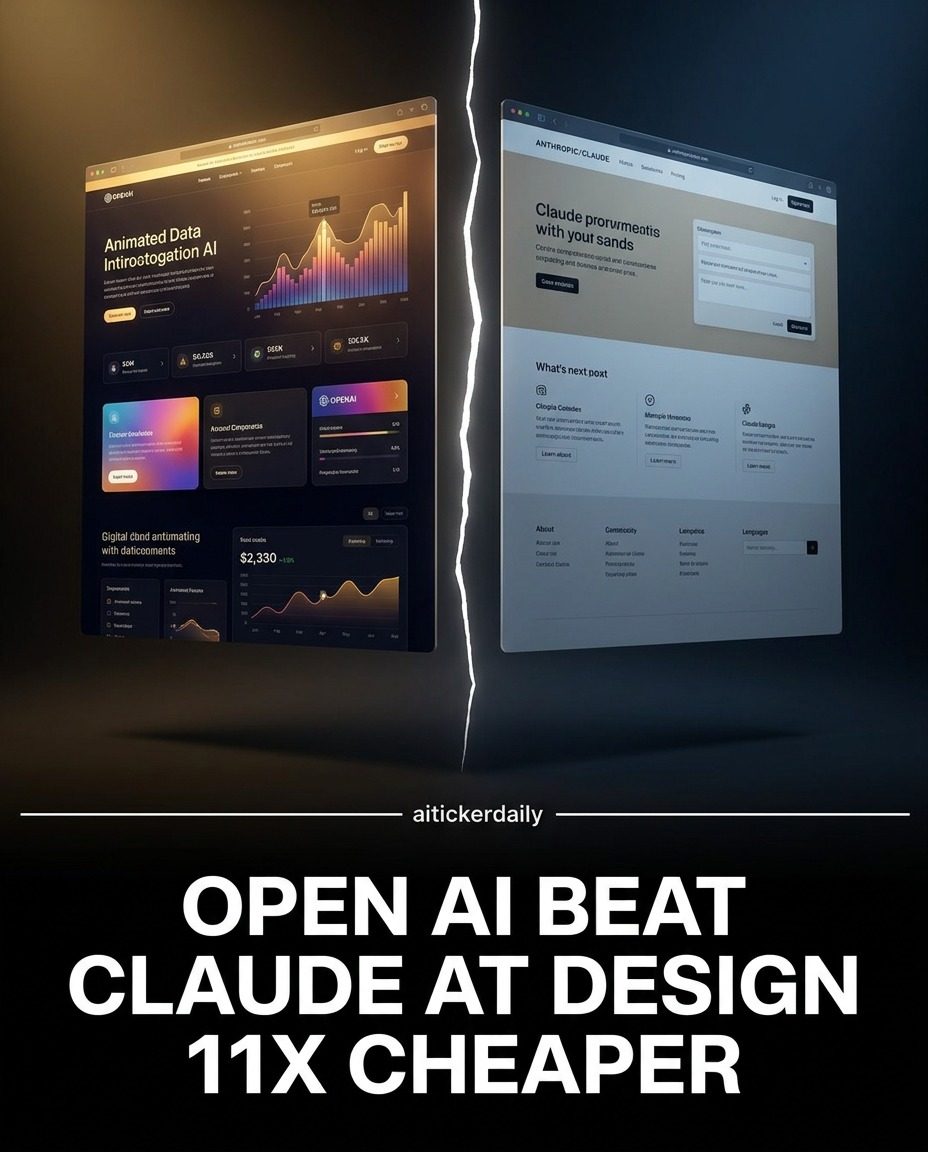
Claude AI vs. GLM-5.2: A New Frontier in AI-Enhanced Website Design
OpenAI's Claude AI has long been a benchmark for AI capabilities, especially in design-related tasks. However, the recent emergence of the open-source model GLM-5.2 from Z.ai is shaking up the industry. This model has toppled Claude Fable 5, Opus 4.6, and Opus 4.7 in website design, marking a significant shift in the AI landscape.
Context: Why This Matters
AI-driven website design is transforming how businesses and individuals create online platforms. The ability to generate both functional and aesthetically pleasing code is critical for efficiency and innovation. The comparison between Claude AI and GLM-5.2 provides valuable insights into the strengths and limitations of these tools, helping creators and businesses make informed decisions about which AI model to use.
Main Discussion
Introducing GLM-5.2
GLM-5.2 is an open-source model developed by Z.ai. It is notable for several reasons, including its MIT license, 744B parameters, and significantly lower cost compared to models such as Claude Fable 5. The cost comparison is striking: GLM-5.2 is priced at $1.40/$4.40 per million tokens while Claude Fable 5 costs $10/$50 per million tokens. This price gap makes GLM-5.2 an attractive option, especially for budget-conscious developers and organizations.
Performance Comparison
The performance of GLM-5.2 against Claude AI in design tasks is multifaceted. While GLM-5.2 excels in certain areas, it also has specific limitations. Key points of comparison include:
-
Where GLM-5.2 Wins:
- Code Generation: GLM-5.2 generates code that is not only functional but also efficient. It outperforms in generating clean, effective code for website design, making it an excellent choice for developers.
- Cost-Effectiveness: The significant cost advantage of GLM-5.2 makes it an ideal option for projects with limited budgets.
- Open-Source Flexibility: Being open-source, GLM-5.2 allows for customization and integration into various workflows, providing developers with more control.
-
Where Claude AI Excels:
- Complex Design Tasks: Claude AI, especially models like Claude Fable 5, Opus 4.6, and Opus 4.7, are highly capable in handling complex design tasks, including intricate layouts and advanced design elements.
- Advanced Features: Claude AI models are equipped with more sophisticated algorithms that can generate more detailed and refined code, which can be crucial for high-end design projects.
Template Strategy and Limitations
The template strategy is a key aspect of AI-driven design. For GLM-5.2, the strategy shows diminishing returns beyond 46K-57K characters. This means that while it is effective for smaller to medium-sized projects, larger projects may require more resources or a combination of tools to achieve the desired results. Additionally, the Opus paradox highlights the inconsistencies in performance across different tasks, emphasizing the need for a nuanced approach when using AI models for design.
The Open-Source Advantage
One of the key takeaways from this comparison is the growing importance of open-source models in the AI landscape. GLM-5.2 is not just catching up to proprietary models; it is setting new benchmarks. The open-source nature of GLM-5.2 allows for continuous improvement through community contributions, making it a dynamic and evolving tool.
Practical Tips
When to Use GLM-5.2
- Small to Medium-Sized Projects: GLM-5.2 is ideal for projects that do not require extensive customization or advanced design elements. Its cost-effectiveness and ease of use make it a practical choice for budget-conscious developers.
- Customization Needs: If you need a high degree of customization, GLM-5.2’s open-source nature allows for more flexibility in integrating it into your existing workflows.
When to Use Claude AI
- Complex Design Tasks: For projects that require intricate layouts and advanced design elements, Claude AI models are more suitable. Their sophisticated algorithms can handle more complex tasks with greater precision.
- High-End Projects: For high-end design projects, the advanced features and refined code generation of Claude AI models make them a better choice, despite the higher cost.
Balancing Cost and Performance
When choosing between GLM-5.2 and Claude AI, consider the specific needs of your project. If cost is a significant factor, GLM-5.2 offers a compelling alternative. However, if the project requires advanced design capabilities, the investment in Claude AI may be justified.
Important Takeaways
The Evolving AI Design Landscape
The emergence of GLM-5.2 highlights the evolving landscape of AI-driven website design. Open-source models are no longer just catching up; they are setting new standards in performance and cost-effectiveness. This shift challenges traditional notions of proprietary AI models and opens up new possibilities for developers and organizations.
The Need for Nuanced AI Integration
The performance comparisons between GLM-5.2 and Claude AI underscore the need for a nuanced approach to AI integration. Different AI models excel in different areas, and understanding these strengths and limitations is crucial for effective implementation. Whether you choose GLM-5.2, Claude AI, or a combination of tools, the key is to align the AI capabilities with your project's specific needs.
The Power of Open-Source
The open-source nature of GLM-5.2 is a game-changer. It allows for continuous improvement and customization, making it a dynamic tool for developers. The community-driven development model ensures that the model evolves with the needs of its users, providing a sustainable and adaptable solution for AI-driven design.
Conclusion
The comparison between GLM-5.2 and Claude AI offers valuable insights into the capabilities and limitations of AI-driven website design. While Claude AI remains a benchmark for advanced design tasks, GLM-5.2’s cost-effectiveness and open-source flexibility make it a compelling alternative. The choice between these models depends on the specific needs of your project, but both contribute to the evolving landscape of AI in design. As the field continues to advance, staying informed about these tools and their capabilities will be crucial for developers and businesses alike.
Watch the Reel
Questions readers ask
What makes GLM-5.2 a strong competitor to OpenAI's Claude AI in website design?
GLM-5.2 stands out due to its superior code generation capabilities and cost-efficiency. It has outperformed Claude AI in tasks such as generating functional and aesthetically pleasing website code, making it a compelling choice for developers.
How does GLM-5.2 benefit developers and projects with limited budgets?
GLM-5.2 offers significant cost savings compared to Claude AI, making it accessible for budget-conscious projects. Its open-source nature further reduces expenses by eliminating licensing fees, while still providing high-quality design and functionality.
What are the key differences between GLM-5.2 and Claude AI in terms of website design?
GLM-5.2 exceeds Claude AI in code generation, offering superior performance in creating both functional and visually appealing website elements. Additionally, GLM-5.2 is open-source, which provides users with greater flexibility and customization options.
Why is AI-driven website design becoming increasingly important?
AI-driven website design streamlines the development process, allowing for faster and more efficient creation of online platforms. It also enables the generation of innovative and aesthetically pleasing designs, which can significantly enhance user experience and engagement.
What are the advantages of using open-source AI models like GLM-5.2 for website design?
Open-source AI models like GLM-5.2 offer cost savings and flexibility. Users can modify the source code to suit their specific needs, and there are no licensing fees, making it an economical choice for both individuals and businesses.
How does GLM-5.2 compare to other AI models like Opus 4.6 and Opus 4.7 in website design tasks?
GLM-5.2 has demonstrated superior performance compared to models like Opus 4.6 and Opus 4.7 in website design tasks. Its advanced code generation capabilities make it a more reliable and efficient tool for creating high-quality websites.
What steps can I take to transition from Claude AI to GLM-5.2 for my website design projects?
Transitioning to GLM-5.2 involves familiarizing yourself with its features and capabilities, as well as updating your workflow to integrate the new model. You can start by experimenting with GLM-5.2 on small projects to assess its performance and then gradually incorporate it into larger-scale designs.
Related deep dives
Similar reads based on topic and creator.




Recent articles
Fresh deep dives from the latest Reels we unpacked.




Comments
Be the first to comment.