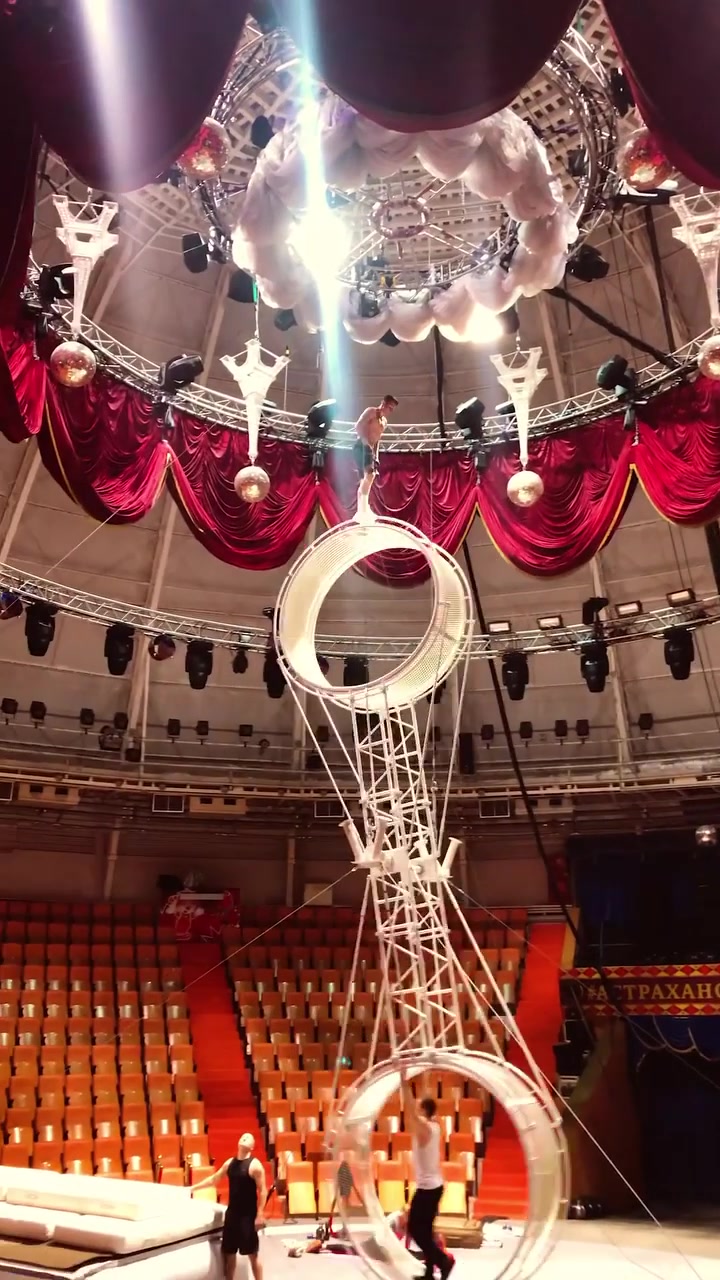
A circus performer demonstrates an astonishing skill — they rotate and move fluidly within a rotating metal hoop, the hoop suspended by an invisible complex structure. They execute acrobatic moves effortlessly. Standing in a spa tent with seating, stage lighting illuminates the space, adding to the vibrant atmosphere. The hoop circus performer is a classic and the video exemplifies it. This feat of skill combines acrobatics, balance, and precision control over the rotating hoop. Inside it, the performer completes the most complicated maneuvers. A rotating metal hoop is a cirque tool. The hoop rotates at one point, allowing performers to move around inside it. To achieve the stunning movements the performer can push the hoop with one hand and hang from the hand with the hand. Perform air flips. To ensure the performer is safe, the hoop is suspended by a complex structure. This structure is usually a combination of ropes, pulleys, and supports. The hoop circus is a testament to the performer's agility and acrobatic skill. The circus tent creates a vibrant and dynamic atmosphere. Performing circus arts has several benefits. It improves strength, flexibility, and cardiovascular health. Performing circus arts can also boost mental resilience. For those seeking physical challenges, building strength, flexibility, and coordination, circus arts offer a dynamic way to achieve these goals. The hoop circus performance is one of the oldest forms of circus art. The hoop circus can be traced back to ancient times. The first known hoop circus performances were performed in ancient Egypt. In the circus tent, the performer rotated the hoop. They traveled up to it, picking it up and rotating it vertically. The performer hung in the hoop and then dropped to the ground, spinning the hoop.
The bleeding edge of circus arts
The show looks like a display of acrobatic skill. The circus arts exhibit the human body's strength and flexibility. Similar to gymnastics, circus arts require physical strength, agility, and coordination. It is not just a display of physical prowess; it is also a display of mental resilience and creativity. Although acrobatism is the core of the hoop circus act, it is often combined with other skills. These can include juggling, clowning, or aerial arts. The circus is a spectacle which entertains people of all ages. The circus provides participants with a sense of accomplishment. An old style of twirling for one audience, the hoops inside the tent stand at the center of the show.
The Rotating Hoop
The performer twirls, pedals, and rotates the hoop for the show. The hoop is a tool used in circus arts. It is designed for solo acrobatic performances. It allows the performer to pivot on the hoop and perform flips. The hoop is also designed to allow the performer to be inverted inside it. The hoop is made of metal. It is usually about 12 to 15 feet in height. The hoop rotates around a central axis. The performer has to twist and turn to move inside the hoop. The hoop can be rotated horizontally or vertically.
Rigging System
A performer on stage spins inside the ring as the media focuses on the artist's moves within the metal hoop. The hoop is suspended by a complex structure. The circus tent combines ropes, pulleys, and other supports. This structure holds the hoop in place and allows the performer to move around inside it. The rigging system can be adjusted to change the height and rotation of the hoop. It can also be used to adjust the speed at which the hoop rotates.
The Acrobat
The hoop performer is a classic example of a circus artist. They demonstrate their agility and skill by manipulating the hoop. The performer stands inside the hoop and begins to rotate it. The hoop is rotated horizontally and vertically. The performer walks and dances inside the hoop. Part of the circus tricks with their hands, flipping the hoop and landing it in different positions.
The Circus Tent
The circus tent is the traditional venue for circus performances. It is a large, circular structure with seating for the audience. It also features a stage area for the performers. The tent also creates a vibrant and dynamic atmosphere. Stage lighting illuminates the space, adding to the spectacle. The tent also has an audience seating area, which provides the venue for the circus. The hoop artist is one of the most popular acts in the circus. It combines acrobatic skill, strength, and grace. In the circus tent, the hoop performer twirls the metal hoop for the audience as the tent lights up and the crowd watches.
Safety and Training
The hoop can be potentially dangerous. The hoop has to be perfectly balanced, and the performer has to be skilled. This ensures the performer is safe. Circus arts require extensive training and practice. This includes physical conditioning, strength, flexibility, and coordination training. The performer also needs to have a high level of mental resilience. This helps them manage the risks associated with the performance. Undergoing extensive training is required to master the hoop. This includes practicing the movements and stunts. They also need to be comfortable with the heights and the equipment.
Watch the Reel
Questions readers ask
What exactly is a hoop circus performance?
A hoop circus performance is an acrobatic act where a performer moves and rotates inside a large, suspended metal hoop. The performer executes various acrobatic moves, such as flips and twists, while the hoop itself rotates. It's a blend of strength, balance, and precision control, often set against a vibrant backdrop with stage lighting.
How does the hoop stay suspended and rotate?
The hoop is suspended by a complex structure typically made of ropes, pulleys, and supports. This rigging system allows the hoop to rotate around a central axis, enabling the performer to move inside it. The performer can also push the hoop with one hand and hang from it, adding to the dynamic movements.
What are the benefits of performing circus arts like the hoop circus?
Performing circus arts offers numerous benefits, including improved strength, flexibility, and cardiovascular health. It also boosts mental resilience, as it requires a high degree of focus and coordination. For those seeking a physical challenge, circus arts provide a dynamic way to build these skills.
How long has the hoop circus been around?
The hoop circus is one of the oldest forms of circus art, with its origins traced back to ancient times. The first known hoop circus performances were recorded in ancient Egypt, showcasing its enduring appeal and historical significance.
What other skills might be combined with hoop circus performances?
While acrobatics is the core of the hoop circus act, performers often incorporate other skills to enhance the spectacle. These can include juggling, clowning, or aerial arts, adding variety and entertainment value to the performance.
Is the hoop always rotated in the same way?
The hoop can be rotated both horizontally and vertically, depending on the performer's routine and the desired moves. This versatility allows for a wide range of acrobatic maneuvers, making each performance unique and exciting.
What materials are used to make the hoop?
The hoop is typically made of metal and is usually about 12 to 15 feet in height. This sturdy construction ensures the performer's safety while allowing for the dynamic movements and rotations required in the performance.
Related deep dives
Similar reads based on topic and creator.



Recent articles
Fresh deep dives from the latest Reels we unpacked.


Comments
Be the first to comment.