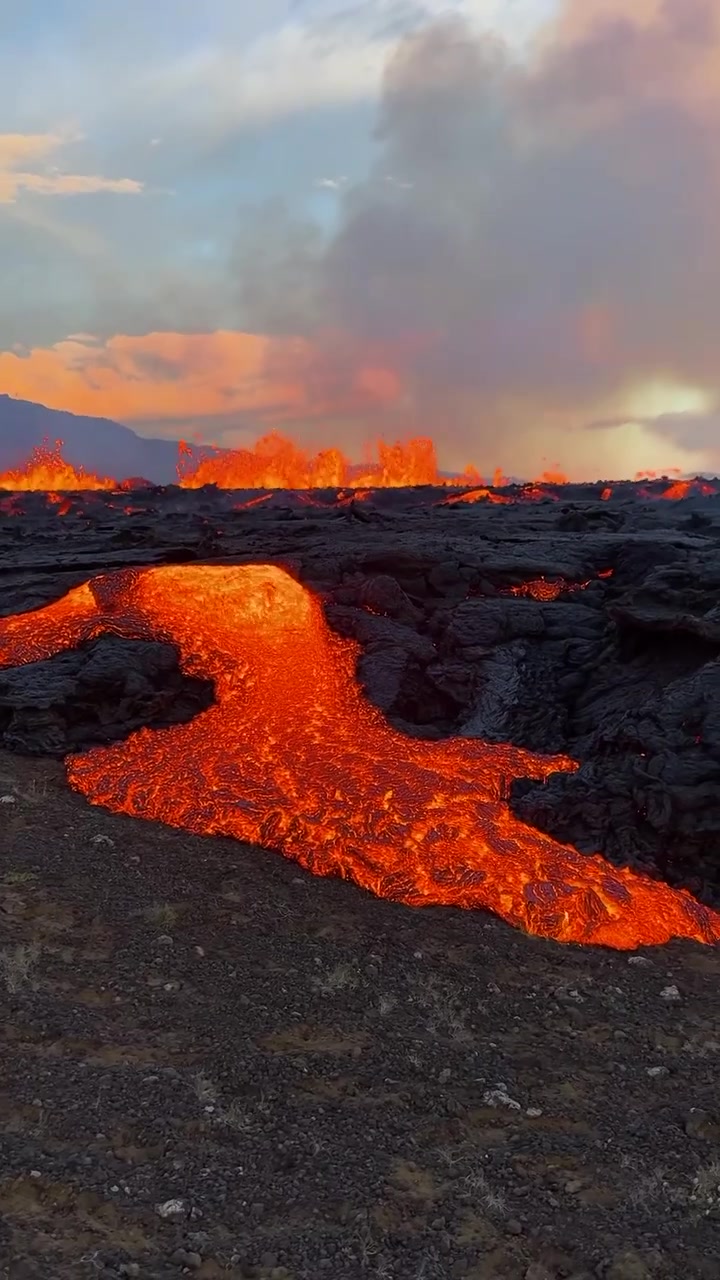
Iceland is a land that breathes fire, a geological marvel with 30 active volcanic systems that have shaped its rugged terrain. In a short but powerful clip, photographer Chris Burkard captured the untamed spirit of a volcanic eruption. There is an epic quality to the scene: fire and smoke erupt from the ground while a sunset sky paints the background in a fierce clash of colors.
Volcanic Eruptions: Nature's Explosive Force
Volcanic eruptions are the result of the Earth’s shifting tectonic plates, treating Iceland to more frequent fire shows than most places on the map. Most eruptions do not last for extended periods, and they produce springs that can be so hot that you can cook eggs in them. Due to Iceland's volcanic activity, it is a hot spot for plates. Iceland sits along the Mid-Atlantic Ridge, which is a huge tectonic boundary where lava can surface. Molten lava flows can reach extreme temperatures, up to 2,100 degrees Fahrenheit. This can melt through anything in its way. The lava’s connection to the Earth’s core makes it vitally important for the Earth's geology, yet it is a potentially dangerous substance. There are two main types: a’a, a chunky, sharp flow that moves slowly and pahoehoe, a smooth and fast-flowing lava. Iceland has both that makes travel to the North Atlantic island uniquely rewarding. The island’s unique geological makeup makes it a sight to behold.
Mother Nature’s Fury Fuels Iceland’s Identity
Earthquakes are integral to Iceland’s geological history. They happen almost every day, and volcanic eruptions happen every few years. Iceland has plenty of ways to witness volcanic activity. Iceland is known for its geothermal spas and boiling mud pits, that are a result of the volcanic activity. The landscape itself is a product of some past volcanic eruption. Moreover, the country’s lush greenery is possible due to molten lava and andesite sediments. Iceland’s Black Sand Beach Vik, which is made up of black sand and basaltic lava, is a testament to this. Iceland is among the first destinations that come to mind when talking about volcanoes. Adventurers and geologists flock to the country’s side to witness a volcanic eruption. Iceland has been documented to be a geological hotspot since Roman times. Iceland’s volcanic eruptions cover most of its terrain. Geysers and glaciers are also a part of the country's volcanic activity. The country is home to more than 300 volcanoes. These volcanoes create a unique body of water known as the Blue Lagoon.
The Lava Flow
The molten lava flows down the side of the mountain in a serpent shape. Due to the friction the lava faces, it produces a fiery display as it moves. This molten lava has an orange hue. Fire and smoke spill out of the mountain, creating an epic black and orange display. The video shows the lava at an extreme close-up. The lava's vivid yellowish orange color is clearly visible. Fire and smoke are the second most noticeable things in this video.
The Eruptions' Impact
Iceland is the ultimate destination for anyone looking to witness volcanic activity. The island’s unique geological makeup makes it a sight to behold. Iceland is known for its geothermal spas and boiling mud pits, that are a result of the volcanic activity. The landscape itself is a product of some past volcanic eruption. Earthquakes are integral to Iceland’s geological history. Iceland has plenty of ways to witness volcanic activity. Over 30 active volcanic systems are part of the frequent volcanic activity on the island. Iceland's volcanic activity is a result of the molten lava flows that are a catastrophic display of nature.
Iceland’s Sky
The eruption takes place at an impressive location: under a sunset sky. The sky’s purples and blues color the volcanic activity. This is a landscape shot captured at dusk, showing the fire and smoke billowing in from the volcanic eruption. This display is a spectacle in itself. The video shows the lava at an extreme close-up. The lava's vivid color is clearly visible. The video also showcases fire and smoke, and it captures the eruptions beautifully.
Planning a Trip to See an Icelandic Volcanic Eruption
- Timing: Timing your visit to Iceland can make witnessing an eruption more likely, according to their frequency. While eruptions happen every few years, the period between eruptions can vary.
- Preparation: Pack appropriate gear. Hiking and exploring can be dangerous and should not be taken lightly. If looking to hike the volcanic terrain, pack waterproof shoes and clothing.
- Guided Tours: Consider a guided tour. Iceland has a lot of experienced professionals who can help you navigate the country. They can help you witness the eruption in a safe way. Before visiting, make sure to consult reliable guides and trusted sources. Tempting to get close: Keep a safe distance, however, the volcanic activity can be thrilling. It can be tempting to get close, especially when it comes to the lava and the volcanic activity. Make sure to keep a safe distance and follow the rules.
- After the visit: Iceland is an endless source of stories and memories.
Watch the Reel
Questions readers ask
What makes Iceland such a unique place for volcanic activity?
Iceland's unique geological makeup is a result of its location along the Mid-Atlantic Ridge, a major tectonic boundary. This makes it a hotspot for volcanic activity, with 30 active volcanic systems and frequent eruptions. Additionally, the country's diverse volcanic features, such as geysers, glaciers, and the famous Blue Lagoon, make it a prime destination for geologists and adventurers.
What are the two main types of lava that can be found in Iceland?
Iceland has two main types of lava: a’a, which is chunky and sharp, moving slowly, and pahoehoe, which is smooth and fast-flowing. Both types of lava contribute to the country's unique landscape, making it a rewarding destination for travelers.
How does the volcanic activity in Iceland impact its landscape and environment?
The volcanic activity in Iceland has significantly shaped its landscape, creating features like the Black Sand Beach Vik, geothermal spas, and boiling mud pits. The molten lava and andesite sediments have also contributed to the country's lush greenery, making it a unique and breathtaking destination.
What safety precautions should visitors take when witnessing a volcanic eruption in Iceland?
While Iceland is a prime destination for witnessing volcanic activity, visitors should be aware of the extreme temperatures and potentially dangerous nature of the lava. It is important to follow local guidelines and safety protocols, and keep a safe distance from the eruption to avoid any risks.
How often do volcanic eruptions occur in Iceland, and what can visitors expect to see?
Volcanic eruptions in Iceland happen every few years, and the country is known for its frequent fire shows. Visitors can expect to see fiery displays of lava, smoke, and ash, as well as other geological features like geysers, glaciers, and the famous Blue Lagoon.
What is the significance of the Mid-Atlantic Ridge in relation to Iceland's volcanic activity?
The Mid-Atlantic Ridge is a major tectonic boundary that runs through Iceland, making it a hotspot for volcanic activity. This ridge is where the Earth’s tectonic plates are moving apart, allowing lava to surface and creating the country’s unique geological features.
How does the lava's connection to the Earth's core make it important for geology?
The lava's connection to the Earth’s core makes it vitally important for the Earth's geology as it provides insights into the planet's internal processes. Additionally, the lava's extreme temperatures and potentially dangerous nature make it a fascinating subject for scientific study.
Related deep dives
Similar reads based on topic and creator.

Recent articles
Fresh deep dives from the latest Reels we unpacked.


Comments
Be the first to comment.